Note: we are an independent blog. Our content doesn't constitute financial advice. We strive for accuracy, but please always cross-check inflation numbers directly with the BLS. We may receive compensation from some services and products reviewed on this site (learn more).
Reprise Financial (www.reprisefinancial.com) is a U.S.-based personal loan and debt consolidation lender that helps consumers simplify their unsecured debts through fixed-rate installment loans (NOT the same as debt settlement). Headquartered in Irving, Texas, the company is known for its quick approval process, albeit higher interest rates than banks. Unlike traditional debt settlement firms, Reprise Financial provides loans to pay off existing debts rather than negotiating with creditors. Below is our honest review so you can decide if it’s the right fit for your situation…
#1 Rated Debt Relief Company in 2025?
If you’re struggling with debt and want an alternative to taking out another loan, we recommend reviewing New Era Debt Solutions. New Era helps clients settle existing debt for less than owed, without requiring any new credit or borrowing.
Credit Requirement: Fair to good credit (typically 600+)
Leadership Team
The leadership team of Reprise Financial is composed of seasoned executives with deep backgrounds in consumer lending and financial services. It’s important to note that Reprise Financial is a brand name (DBA) used for the company’s personal loan division. The parent company and employer is Skopos Financial, LLC, which was founded in 2012 and originally focused on auto loans.
The key executives have a significant shared history, with several holding senior roles at OneMain Holdings (a major personal loan company) before joining Reprise.
Key Executives
Joseph Tomei (Chief Executive Officer): As CEO, Mr. Tomei oversees the entire operation of both Skopos Financial and the Reprise Financial brand. His background is heavily focused on corporate strategy in the consumer finance sector. Before taking on the CEO role, he was the Executive Vice President of Strategy and Business Development at OneMain Holdings.
David Hogan (President & Chief Operating Officer): Mr. Hogan manages the company’s day-to-day operations. He brings extensive experience from some of the largest names in consumer banking. His previous roles include serving as the Chief Analytics and Marketing Officer at Springleaf Financial Services (which acquired and became OneMain) and holding senior positions at PNC Financial Services Group and JPMorgan Chase.
Ravi Mittal (Chief Financial Officer): As CFO, Mr. Mittal is responsible for the company’s financial strategy and capital markets.Like Mr. Tomei, he also comes from OneMain Holdings, where he was a Vice President & Managing Director.His prior experience includes roles as a Vice President at the Royal Bank of Scotland and an Investment Analyst at GE Capital.
Other Key Leaders
Priya Reddy (Chief Data Officer & VP of Enterprise Data Management): A key figure in the company’s tech-driven approach, Ms. Reddy leads the data strategy and digital transformation.She was also with Skopos Financial before the Reprise brand’s expansion and previously held data-focused roles at Santander Consumer USA.
Kevin Kleibrink (Chief Technology Officer): Manages the technology infrastructure that powers the Reprise loan platform.
Michael Kortering (Chief Credit Officer): Oversees the company’s lending standards and credit risk models, which are crucial for a lender that serves borrowers with fair credit.
Legitimacy, Ratings & Reviews
BBB Rating: A+
TrustPilot: 4.7/5 (1,000+ reviews)
Google Reviews: 4.6/5 average
Reprise Financial is a legitimate personal loan lender offering quick funding and transparent repayment terms. Customer reviews highlight its user-friendly online process, while a few note higher interest rates for those with lower credit scores. It’s a good option for debt consolidation — but for borrowers who are already struggling with missed payments, a debt settlement company like New Era may be more effective.
Check If You Qualify with New Era Debt Solutions
If you’re unable to qualify for a personal loan or prefer not to borrow more, New Era Debt Solutions can help you settle existing debt instead of refinancing it. Their programs often save clients 30%–50% off what they owe (note that there are risks to your credit profile).
Fast approvals: Pre-qualification and funding in as little as 1 business day.
Fixed-rate loans: Predictable monthly payments with no hidden fees.
Simple online application: Entire process completed digitally.
Reports to credit bureaus: On-time payments can help rebuild credit.
Reprise Financial Cons 👎
Not debt relief: You are taking on a new loan to pay old debts.
Interest costs: Rates can be high for borrowers with fair credit.
May not solve deeper debt issues: Consolidation doesn’t reduce the amount owed, only restructures it.
State availability: Not available in every U.S. state.
Debt Types They Help With
Credit card consolidation
Medical bills
Personal loans
Retail and department store cards
Unsecured credit lines
Check If You Qualify with New Era Debt Solutions
Don’t want another loan? New Era Debt Solutions helps you settle unsecured debt for less than you owe — no credit requirement, no new borrowing, and no upfront fees.
1. The review mentions a 9.99%–36% APR. Does Reprise charge any other fees?
Yes. This is a critical point not in the review. Reprise Financial charges an origination fee on its loans.
This is a one-time fee that is deducted from your loan proceeds before the money is sent to you. For example, if you are approved for a $10,000 loan with a 6% origination fee ($600), you will receive $9,400 in your bank account.
This fee can vary significantly based on your state of residence and your credit profile but is a standard part of their lending model.
2. Will checking my rate on the Reprise website affect my credit score?
No. This is a key feature of their application process.
Pre-qualification (Checking Your Rate): Reprise uses a soft credit inquiry (soft pull) to show you potential loan offers, including your estimated interest rate and loan amount. A soft pull is not visible to other lenders and does not affect your credit score.
Full Application (Accepting a Loan): If you like an offer and decide to officially apply, Reprise will then perform a hard credit inquiry (hard pull). This is visible on your credit report and can temporarily lower your score by a few points.
3. Who is the actual lender? Is Reprise Financial a bank?
No, Reprise Financial is not a bank. This is an important distinction.
Reprise is a “lending platform” or financial technology company. The actual loans are originated by WebBank, a Utah-based, FDIC-insured industrial bank. WebBank is a very common partner for many fintech companies (like LendingClub and others) that provides the legal and banking framework to issue loans across the country. You are applying through Reprise, but your loan agreement will be with WebBank.
4. The review says “fair credit (600+).” Can I qualify with a lower score?
Yes. While the review gives a general guideline, Reprise is known for working with a wider credit spectrum than many traditional lenders.
Third-party reviews and data show that Reprise will consider borrowers with bad-to-fair credit, sometimes with scores as low as 560 to 580. This makes it an option for those who may not qualify elsewhere. However, you must expect that borrowers with lower scores will be offered rates at the highest end of the 36% APR range.
5. What if I want to pay the loan off early? Is there a prepayment penalty?
No. Reprise Financial does not charge a prepayment penalty. You can make extra payments or pay off the entire loan balance at any time without incurring an additional fee. This is a significant advantage, as it allows you to save money on future interest.
6. The review lists “unsecured” debt. Does Reprise offer any other type of loan?
Yes. In addition to its standard unsecured personal loans, Reprise also offers secured personal loans where you can use your car as collateral. This may help you:
Qualify for a loan if you wouldn’t otherwise be approved.
Get a larger loan amount.
Secure a lower interest rate than you would be offered for an unsecured loan.
However, this is a high-risk option. If you fail to make payments, the lender has the right to repossess your vehicle.
If you owe back taxes or are dealing with liens, levies, or a looming audit, you will see a lot of titles in your search for help: tax debt lawyer, enrolled agent, CPA, and “tax relief specialist.” The goal of this guide is to explain what a tax debt lawyer actually does, how the role differs from other practitioners, how to choose the right professional for your situation, and a practical shortlist of firms to consider. I keep this neutral and focused on what matters most for outcomes.
What is a tax debt lawyer and what do they do?
A tax debt lawyer is an attorney who focuses on tax and IRS controversy and collections. Their core responsibilities include:
Representing you before the IRS and state tax authorities
Stopping or releasing levies and garnishments when facts support it
Getting you compliant by filing or amending missing returns
Preparing and submitting Offers in Compromise when you qualify
Requesting penalty abatement and handling reasonable cause arguments
Navigating audits and appeals
Advising on business payroll tax issues and trust fund recovery exposure
Protecting attorney-client privilege and giving legal advice when disputes escalate
Note that you do NOT always need a lawyer. Enrolled Agents (EAs) and CPAs are licensed to represent taxpayers before the IRS and resolve most collection matters. Where lawyers are critical is when you need legal strategy, negotiations may lead to appeals or litigation, there is criminal exposure, or your case is complex and multi-jurisdictional.
How to choose the right professional
Use this checklist before you sign an engagement letter.
Match credentials to your problem
Missing filings and a straightforward payment plan can be handled by an EA, CPA, or attorney.
Complex audits, aggressive collections, payroll tax, or potential criminal issues favor a tax attorney.
Meet the person who will actually work your case Ask for the name and license of your primary representative and a direct line or email. If you only speak to sales staff, pause. That’s a red flag.
Insist on a written plan and flat scope A good engagement letter spells out the phases: investigation and transcripts, compliance cleanup, resolution strategy, and follow-through.
Understand fees and refund policies Many firms bill a flat fee by phase. Ask what is included, what triggers add-on fees, and how you can cancel.
Check for transparency and cadence You should receive regular updates, access to a secure document portal, and realistic timelines. Avoid guarantees of “pennies on the dollar.”
Verify ethics and standing For attorneys, check state bar records. For EAs, confirm status through the IRS directory. Look for a complaints process and professional liability coverage.
Evaluate fit and expectations The best indicator of success is whether the firm aligns with IRS standards, not whether the salesperson sounds confident.
The typical resolution process
Discovery: Signed authorization, transcripts pulled, deadlines identified
Compliance: Unfiled returns prepared and submitted; current withholding or estimates fixed
Financials: Budget built to IRS Collection Financial Standards to determine eligibility
Submission: Installment plan, hardship, or Offer in Compromise filed and negotiated
Monitoring: Notices handled and reminders set to keep you compliant
Pricing, timelines, and what is realistic
Now, tax debt attorneys don’t work the same way as debt settlement or relief companies (e.g.: New Era Debt Solutions, CuraDebt, National Debt Relief, etc). They charge flat fees or hourly fees. Ask for their detailed pricing schedule!
Pricing: Many individual cases fall into tiered flat fees that reflect complexity. Multi-year or business payroll tax files cost more. Hourly billing is common for audits and appeals.
Timelines: Simple payment plans can be weeks. Offers in Compromise often take months. Expect back-and-forth with the IRS.
Realistic outcomes: Most cases end in a payment plan or hardship, with penalties reduced when the facts support it. Offers in Compromise are approved when the numbers fit the program rules, not because a firm promises one.
11 Tax Debt Attorneys to Consider
Below is a practical, neutral list of firms and service models. I rank Five Star Tax Resolution first for readers who want a balanced, practitioner-led approach with clear communication. I also include other paths that might fit different needs. This is not an exhaustive list and not a guarantee of results. Always interview more than one provider.
What they do well: Practitioner-led files, clear scopes, focus on compliance first, and steady communication so you are not guessing where your case stands. Suitable for back taxes, levies, liens, installment agreements, hardship, offers, and audits. Best for: Individuals and small business owners who want a named licensed rep to run the case and a written plan by phase.
#2. Local Tax Attorney (solo or boutique) — Best for complex legal strategy
What they do well: Hands-on counsel, local knowledge, and direct attorney access. Strong fit for audits, appeals, payroll tax, and state-specific issues. Best for: Cases that may escalate legally or where you want in-person meetings.
#3. Enrolled Agent practice — Best for cost-effective collections work
What they do well: Daily IRS collections experience, efficient transcript work, and practical solutions based on standards. Best for: Compliance cleanup, payment plans, hardship requests, and many offers.
#4. CPA firm with controversy team — Best if you also need tax prep and planning
What they do well: Integrates bookkeeping, tax return preparation, and resolution under one roof. Best for: Ongoing business clients and individuals who want holistic tax management.
#5. National tax relief firm — Best for scale and extended availability
What they do well: Large staff, intake speed, and coverage across jurisdictions. Tax Relief Advocates is an example of such a firm if you need some ideas. Best for: High-volume processing needs and straightforward cases where you prefer larger teams.
#6. State-focused tax counsel — Best for state revenue department issues
What they do well: Deep familiarity with a specific state’s procedures, settlement units, and appeals channels. Best for: Sales and use tax, state payroll tax, franchise tax, and state liens.
#7. Payroll tax specialist — Best for 941 and trust fund exposure
What they do well: Navigates trust fund recovery penalty exposure and business cash-flow workouts. Best for: Employers behind on payroll deposits who need triage and a plan.
#8. Audit and appeals boutique — Best for examination disputes
What they do well: Evidence gathering, reasonable cause narratives, and appeals brief writing. Best for: Field or office audits, exam reconsiderations, and penalty defense.
#9. Low-income taxpayer clinic or legal aid — Best for qualifying taxpayers
What they do well: Free or low-cost representation for eligible individuals. Best for: Qualifying low-income taxpayers facing collections or audits.
#10. DIY with IRS tools — Best for small balances and confident filers
What it offers: Online payment agreements, transcript access, and basic hardship requests. Best for: Smaller, straightforward balances where you are comfortable managing forms and deadlines.
#11. Business workout consultant with tax focus — Best for multi-creditor situations
What they do well: Parallel negotiations with lenders, vendors, and tax agencies to stabilize cash flow. Best for: Businesses that need a broader restructuring plan along with tax resolution.
Questions to ask any firm before you hire
Who will be my licensed representative, and how do I contact them directly
Can I see a written scope and flat fee for each phase of work
Based on my transcripts and financials, what are the realistic outcomes
How often will you update me, and what portal or system will we use
What is excluded from the fee, and how do changes in scope get approved
What is your cancellation and refund policy
How will you help me stay compliant so I do not default an agreement
Documents to prepare before the first call
All IRS or state notices and prior agreements
List of unfiled years and recent filed returns
Two to three months of bank statements and pay stubs
A monthly expense breakdown and any extraordinary expenses
For businesses: recent P&L, payroll records, and sales tax filings
Red flags to avoid
Guarantees of “pennies on the dollar” or offers without a financial analysis
Pressure to sign the same day without a written plan
No access to the licensed practitioner assigned to your file
Vague or open-ended fees without a scope
Refusal to discuss IRS standards and how your case fits them
Overly “salesy” team that isn’t willing to hear details about your case
Bottom line
A tax debt lawyer can be the right choice when your situation carries legal risk, involves complex audits or appeals, or you want privilege and attorney-level advocacy. For many collection cases, an EA or CPA can also deliver excellent results. The key is fit, transparency, and a disciplined process.
If you want practitioner-led guidance with steady communication and a structured plan, Five Star Tax Resolution is my first place to interview. I still encourage you to speak with at least one local attorney or EA as a second opinion, compare fees and scope, and choose the team that explains your options clearly, sets realistic expectations, and puts everything in writing.
Optimal Debt Solutions (www.OptimalDebtSolutions.com) is a Debt Relief company offering a variety of services such as Debt Settlement, Credit Counseling, Debt Consolidation, and Negotiation Services. Their mission is to help Americans struggling with unsecured debt reduce what they owe and regain financial control. While they have a growing presence in the debt relief space, reviews for Optimal Debt Solutions are somewhat mixed, so make sure to explore all your options before committing.
#1 Rated Debt Relief Company in 2025?
Looking for the #1 Rated Debt Relief & Settlement Company in 2025? Our top recommendation isNew Era Debt. They’ve earned the most 5-star reviews among all the companies we evaluated and don’t charge upfront fees.
Service Available in: Most U.S. states (not available in OR, VT, WV, and CT)
Years in Operation: Since 2018
Legitimacy, Ratings & Reviews
Optimal Debt Solutions is a registered debt settlement company, but they are not yet an accredited member of the American Association for Debt Resolution (AADR). Their reviews vary depending on the platform.
BBB Rating: Not BBB Accredited
Google Reviews: 4.3/5 stars (87 reviews)
TrustPilot Reviews: 4.5/5 stars (223 reviews)
Yelp Reviews: 3.5/5 stars (14 reviews)
While many customers have reported positive experiences, particularly praising the firm’s support staff and program structure, others have cited slow response times and unclear communication. If customer experience and national reputation are your top priorities, we recommend you look into New Era Debt Relief first.
Services Offered by Optimal Debt Solutions
According to their website, here are the services offered:
Debt Settlement: They negotiate with creditors to settle debts for less than what’s owed.
Debt Consolidation: For those with qualifying credit, they may offer options to consolidate multiple debts into one monthly payment.
Credit Counseling: They assign a counselor to help you understand your debt situation and explore potential options.
Debt Management Plans (DMP): Customized repayment plans to simplify payments and reduce interest.
Financial Education: Resources to help consumers understand budgeting, savings, and credit management.
Pros 👍:
No Upfront Fees: They only charge after a successful settlement is reached.
Free Consultation: You can speak with a counselor to understand your options before enrolling.
Negotiation Expertise: Their negotiators reportedly have strong relationships with major creditors.
Cons 👎:
Limited Availability: Their services aren’t available in every U.S. state.
Not AADR Accredited: As of 2025, they are not listed as accredited members of the American Association for Debt Resolution.
BBB Status: They are not currently accredited by the Better Business Bureau, which may be a concern for some consumers.
Debt Types They Can Help With
Optimal Debt Solutions focuses on unsecured debts. Here’s a list of debt types they typically work with:
Credit Card Debt
Medical Bills
Personal Loans
Private Student Loans
Lines of Credit
Collections & Charge-Offs
They do not handle secured debts such as mortgages or auto loans, and they also do not provide direct legal advice or tax resolution services.
Final Thoughts
While Optimal Debt Solutions may be a good fit for some, we highly recommend you first look into our top-rated provider for 2025: New Era Debt Solutions. Their no-upfront-fee model, A+ BBB rating, and thousands of positive reviews make them the standout choice this year. They also may charge lower percentages than other debt relief companies, but we encourage to compare pricing from 2-3 companies before making a decision, as prices are known to change.
Frequently Asked Questions (FAQ) About Optimal Debt Solutions
1. Is Optimal Debt Solutions a lender?
No, Optimal Debt Solutions is not a lender. They do not issue loans or provide lending services. Instead, they help clients negotiate, settle, or consolidate existing unsecured debts through third-party financial tools and partners.
2. Can I use Optimal Debt Solutions if I have good credit?
Yes, but it depends on your goals. If you have good credit and are simply looking to simplify your debt through a consolidation loan, you might be better served by working with a lender or bank directly. Optimal Debt Solutions is more focused on helping individuals who are struggling with debt, late payments, or collection accounts.
3. Will I be sued if I enroll in a debt settlement program?
There is always a risk that creditors could take legal action if you stop making payments… especially during a debt settlement negotiation period. Optimal Debt Solutions may attempt to reduce this risk by negotiating quickly, but lawsuits are a potential risk in any debt settlement program.
4. How long does it take to complete a debt settlement program?
Most clients complete their program within 24 to 48 months. However, the timeline depends on your total debt, ability to make monthly payments into the program, and how fast settlements are reached with your creditors.
5. What fees does Optimal Debt Solutions charge?
Fees typically range from 15% to 25% of the total debt enrolled in the program. These fees are only charged after a successful settlement is reached, in compliance with FTC guidelines. Always request a breakdown of potential fees before signing up.
6. Will enrolling affect my credit score?
Yes, debt settlement programs can negatively impact your credit score in the short term because they often involve stopping payments to creditors. However, many clients find the long-term benefits, such as becoming debt-free… outweigh the temporary credit impact.
7. Is Optimal Debt Solutions suitable for federal student loan debt?
No, federal student loans are not eligible for debt settlement through Optimal Debt Solutions. For federal loans, it’s best to explore government-sponsored options like income-driven repayment plans, deferment, forbearance, or Public Service Loan Forgiveness (PSLF).
8. What happens if I drop out of the program halfway?
If you cancel your enrollment before a settlement is reached, you will not be charged fees. However, you may still owe the full amount to your creditors, and any progress made during negotiations may be lost. It’s important to speak to a representative before exiting to understand the consequences.
9. Can I negotiate with creditors myself instead of using Optimal Debt Solutions?
Yes, it’s entirely possible to negotiate with creditors on your own. However, it requires time, persistence, and some financial knowledge. Many people turn to debt relief companies like Optimal for professional help because they may get better settlement terms and avoid the stress of doing it alone.
10. Is Optimal Debt Solutions better than a nonprofit credit counseling agency?
Not necessarily. Nonprofit credit counseling agencies typically offer Debt Management Plans (DMPs), which don’t reduce the principal owed but may reduce interest rates. Optimal Debt Solutions focuses more on settlement and negotiation, which can reduce your total debt owed. Your choice should depend on your financial goals and current credit standing.
Logo of New Era Debt Solutions (credit: neweradebtsolutions.com)
New Era Debt Solutions (https://neweradebtsolutions.com/) is a well-established, legitimate debt settlement company (NOT a credit counselor) that’s been helping people get out of debt since 1999, which makes it one of the oldest debt settlement providers in America. Based in Camarillo, California, they operate nationwide (EXCEPT Maine, Oregon, and Iowa), and specialize in negotiating with creditors to settle unsecured debts, like credit card debt, personal loans and others for less than what you owe.
Check if You Qualify First
Considering debt settlement? New Era offers a free consultation to help you assess whether their program fits your situation. No commitment required.
New Era Debt Solutions takes the #1 spot in our debt relief company rankings this year due to their combined score of 4.84/5 stars, at time of press, as you can see below. This objective score takes into account their ratings on multiple third-party review sites, like the BBB, Google Reviews, TrustPilot and others.
New Era Debt Solutions has a good profile on Google reviews
What Services Does New Era Debt Offer?
New Era primarily offers debt settlement services, meaning they work with your creditors to reduce the total amount you owe. This service is specifically for unsecured debt (like credit cards, medical bills, personal loans and certain other types of debt). Their service cannot help for things like mortgages or student loans.
New Era Debt aims to create a plan that helps you become debt-free in as little as 24 to 48 months. One of the standout aspects of New Era is that they don’t charge any upfront fees. You only pay them when they’ve successfully settled your debt and you have agreed with their plan.
New Era Debt vs Others
It’s important to note that New Era Debt Solutions is a debt settlement company, not a credit counseling nonprofit. Therefore, they don’t do Debt Management Plans (DMP’s) and instead they simply negotiate with your creditors to settle for a much lower debt. This means you will take a credit score hit, but much lesser than that of a bankruptcy’s. Their service is similar to companies like CuraDebt, TurboDebt, Accredited Debt Relief and others.
If you’re wondering how New Era Debt compares to other providers who may offer similar (but different) options on how to deal with your debt, see the table below:
Feature / Factor
New Era Debt Solutions
Family Credit Management (FCM)
Bankruptcy (Chapter 7)
Type of Program
Debt Settlement
Debt Management Plan (DMP)
Legal Debt Discharge
Typical Debt Reduction
30–60% of enrolled debt
Interest reduction only
Up to 100% (full discharge)
Upfront Fees
❌ None
✅ Usually $0–50 setup fee
✅ Court & lawyer fees (~$1,500–$2,000)
Ongoing Fees
14%–23% of enrolled debt (only if settled)
$25–$75/month (varies by state)
❌ None after filing
Impact on Credit Score
❌ Negative (missed payments + settlement)
⚠️ Neutral to slightly negative
❌ Severe (stays for 7–10 years)
Time to Completion
24–48 months
36–60 months
~6 months (Chapter 7)
Covered Debts
Unsecured (credit cards, personal loans)
Unsecured (credit cards, medical, etc.)
Most unsecured debts
Creditor Negotiation
✅ Negotiates balance reductions
✅ Negotiates lower interest rates
❌ No negotiation — legal discharge
Eligibility Requirements
Must have financial hardship
Verifiable income + willingness to pay
Must pass a means test
Credit Counseling Required?
❌ No
✅ Yes
✅ Yes (pre-filing requirement)
Legal Protection from Creditors?
❌ No (until settled)
❌ No (voluntary plan)
✅ Yes (automatic stay)
Best For…
Settling large unsecured debts without bankruptcy
Paying debts in full with lower interest
Wiping out debts with no repayment
NOTE: make sure you study all the options above to find the right method to tackle your debt. They all have their pros and cons, depending on your situation.
If you’re comparing debt relief options and want to understand how settlement might apply to your debt, you can use New Era’s free assessment tool to get a clearer picture.
In terms of reputation, New Era Debt Solutions has solid reviews across multiple platforms, as we covered earlier in the “company’s snapshot” section. They hold an A+ rating with the Better Business Bureau (BBB).
On Trustpilot, they’ve received mostly positive reviews, with customers praising them for professionalism and their ability to reduce large amounts of debt. Like any company, there are a few negative reviews, but those are often about the downsides of debt settlement itself (such as its impact on credit scores), rather than the company’s service.
Management Team
New Era’s CEO, Dan Smith, has a strong background in finance and a focus on ethical, transparent practices. The company is committed to not only helping clients get out of debt but also educating them on how to stay out of it in the future. They pride themselves on being a debt settlement company that actually does the work in-house—they do not outsource anything, so you’re always dealing with New Era directly.
Which States Do They Cover?
New Era Debt Solutions serves clients across the United States, except in the states of Maine, Oregon, and Iowa as we covered in the beginning of this article. This may change in the future, so it’s always a good idea to fill out their pre-qualification form to see if your address allows debt settlement and if New Era operates there.
What’s the Process Like?
When you sign up, you’ll first have a consultation to review your financial situation. After that, they’ll create a plan tailored to your debt and begin negotiating with your creditors. You’ll make monthly payments into an escrow account while New Era works to settle your debts for less than what you owe. It’s a fairly straightforward process, but as with any debt settlement plan, it’s important to know that your credit score will take a hit. While under negotiation, there are also risks like collection calls or lawsuits.
Is New Era Debt Solutions Right for You?
New Era Debt Solutions has been around for over 20 years, and their track record, coupled with strong reviews and no upfront fees, makes them a legitimate option if you’re considering debt settlement. They are especially appealing if you’re struggling with large amounts of unsecured debt and need an alternative to bankruptcy. That said, debt settlement isn’t for everyone—make sure to understand the pros and cons before diving in.
If you’re dealing with overwhelming debt due to this high-inflation economic landscape, and are looking for a company that can help you decrease and/or pay off your debt, and has a great reputation, New Era could be the right fit for you. Make sure you take advantage of their free consultation to ask which of their various debt relief options is best for you.
FAQ
Here’s a frequently asked questions (FAQ) section covering the most common questions new users have about New Era Debt Solutions:
1. How much does New Era Debt Solutions charge?
New Era charges between 14% and 23% of the initial enrolled debt amount. There are no upfront fees; they only get paid when they successfully negotiate a debt reduction. This is a contingency-based fee structure.
2. What types of debt does New Era handle?
They handle unsecured debts like credit card debt, personal loans, private student loans, medical bills, and some types of business debts. They do not handle secured debts like mortgages or car loans.
3. Will using New Era affect my credit score?
Yes, debt settlement, regardless of which company you choose to work with, will negatively impact your credit score. Settling a debt means paying less than the full amount owed, which creditors deem a negative event. However, the impact is less damaging than bankruptcy.
4. Is New Era Debt Solutions accredited and reputable?
Yes, New Era has BBB accreditation and has an A+ rating. They have generally positive reviews from clients on platforms like TrustPilot and the BBB website.
5. Where is New Era available?
New Era is accessible in 46 states as well as Washington D.C. and the Virgin Islands. They do NOT operate in Maine, Oregon, and Iowa.They collaborate with the Consumer First Legal Network to offer services in certain states where they may not directly operate.
6. What happens if a creditor refuses to settle?
If a creditor refuses to negotiate, they could potentially take legal action, which might result in lawsuits or wage garnishments. However, most creditors prefer to negotiate rather than pursue costly legal action.
7. How long does the debt settlement process take?
The typical debt settlement program with New Era takes around 28 months. The exact duration depends on the amount of debt, your monthly contributions, and how quickly creditors agree to settlements.
8. Can I cancel my program with New Era Debt Solutions?
Yes, clients can cancel their program with New Era at any time. However, any funds put towards fees or those that are in the dedicated account may be subject to the terms of the cancellation agreement.
Debt relief isn’t one-size-fits-all. If you’re considering settlement, it might be worth seeing if you qualify through a no-pressure consultation with New Era.
Amine Rahal
Amine is an entrepreneur, investor and financial writer that covers the US economy, inflation, alternative investments, cryptocurrencies and more. He has been involved in the space for over a decade.
Lauren Brown
Lauren has over 13 years of experience in wealth management and financial planning. She is a CFA charterholder and holds a Bachelor’s degree in Finance. Lauren has worked with several asset management firms, offering wealth advisory and portfolio management services to high-net-worth clients.
In the U.S., interest rate caps—especially when it comes to protecting consumers from predatory lending—are largely regulated at the state level. This means that the maximum interest rates lenders can charge vary depending on which state you live in and the type of loan we’re taking out. Let’s break down how this works across different states.
What Qualifies as a “Predatory Loan”?
First, let’s compare a traditional loan you would get from a bank versus a “predatory loan” you would get from an alternative lender:
Feature
Traditional Bank Loan
Predatory Loan
Interest Rate
Low to moderate (typically 3% to 12% APR)
Very high (can exceed 50% APR, sometimes 300%+)
Loan Terms
Fixed terms (usually 1 to 30 years)
Short terms (often 2 weeks to a few months)
Repayment Structure
Monthly payments, often with amortization
Lump-sum payment or frequent, high payments
Fees and Charges
Transparent, disclosed upfront
Hidden fees, high fees, or penalties
Borrower Qualification
Strict requirements (credit score, income, etc.)
Minimal qualification (often no credit check at all)
Regulatory Oversight
Highly regulated by federal and state laws
Often operates in regulatory gray areas
Purpose of Loan
Typically for major purchases (homes, cars, education)
Often for emergency or short-term needs
Impact on Credit Score
Positive impact if paid on time, reported to credit bureaus
Negative impact, often not reported positively to credit bureaus
Borrower Rights
Strong consumer protections, recourse available
Limited recourse, predatory practices common
Rollover/Renewal
Generally not allowed or unnecessary
Frequent rollovers, trapping borrowers in cycles
Lender’s Intent
Long-term relationship, repayment is expected
Profit from borrower’s inability to repay on time
Essentially, a predatory loan is a type of loan that takes advantage of borrowers in vulnerable and dire financial situations. These loans often come with excessively high interest rates, hidden fees, or deceptive terms that make it difficult for borrowers to repay the loan.
Federal Protections
Before diving into state specifics, it’s worth noting that there is a federal cap in place for certain groups. The Military Lending Act (MLA) caps interest rates at 36% APR for active-duty service members and their dependents on most consumer loans. This law provides a strong layer of protection, but it only applies to military members. You can learn more about the MLA on the Consumer Financial Protection Bureau (CFPB) website.
State-Level Interest Rate Caps
Interest rate caps for everyone else are set by state laws, and these can vary widely:
California
Payday Loans: In California, payday lenders can charge up to $15 per $100 borrowed, which can equate to an APR of over 400% depending on the term of the loan.
Installment Loans: For loans over $2,500, there’s no cap on interest rates.
Payday Loans: Colorado has one of the stricter caps, limiting payday loan interest rates to 36% APR. This was implemented after voters approved a 2018 ballot measure to curb high-interest payday loans.
All Loans: New York has a strict usury law that caps interest rates at 16% for most types of consumer loans. Charging above 25% is considered criminal usury.
More Info: For more on New York’s laws, the New York State Department of Financial Services is a good resource.
South Dakota
Payday Loans: Like Colorado, South Dakota caps payday loan rates at 36% APR. This cap was set after a successful 2016 ballot initiative aimed at protecting consumers from predatory lending practices.
More Info: Learn more on the South Dakota Division of Banking website.
Texas
Payday Loans: Texas doesn’t cap interest rates directly for payday loans, but it does regulate fees. This can still lead to APRs that exceed 400%, depending on the loan’s terms, which is extremely high.
More Info: The Texas Office of Consumer Credit Commissioner provides more information on lending laws in the state.
Illinois
All Loans: As of 2021, Illinois capped interest rates at 36% APR for all consumer loans, including payday loans, through the Predatory Loan Prevention Act.
All Loans: Utah has no cap on interest rates, making it one of the most lender-friendly states in the U.S. This means payday lenders and other high-interest lenders can charge extremely high rates. Beware of Utah-based lenders.
More Info: For more, see the Utah Department of Financial Institutions.
Know Your Rights & Do Your Due Diligence
These state-specific laws are crucial because they determine how much protection you have against predatory lending practices. In states with strict caps like New York or Colorado, consumers are generally safer from exorbitant interest rates. But in states like Utah or Texas, the lack of caps means consumers need to be extra cautious when taking out loans.
Predatory loans have put many American consumers in dire financial situations, exacerbating their debt and pushing them into bankruptcies. If you are dealing with high debt and are struggling to pay your bills, consider debt settlement instead of requesting another loan which will most likely put you deeper into debt.
Finding Out More
If you’re considering taking out a loan, it’s a good idea to first check what the interest rate caps are in your state. You can usually find this information through your state’s Department of Financial Services or a similar regulatory body. Additionally, theConsumer Financial Protection Bureau (CFPB) offers a wealth of resources on consumer rights and protections.
By understanding these caps, you can better protect yourself from predatory lending practices and make more informed financial decisions.
If debt problems are mounting and pressure from creditors has become overwhelming, seeking professional help can ease the burden. Instead of forging the difficult path alone, strategizing with experts reduces the economic and psychological strain.
But, is Oak View Law Group the right partner to get you out of debt?
Better Business Bureau (BBB) Reviews: 4.7/5 (12 reviews)
Pros and Cons
For a quick breakdown of how Oak View Law Group stacks up, please see the list below:
Pros:
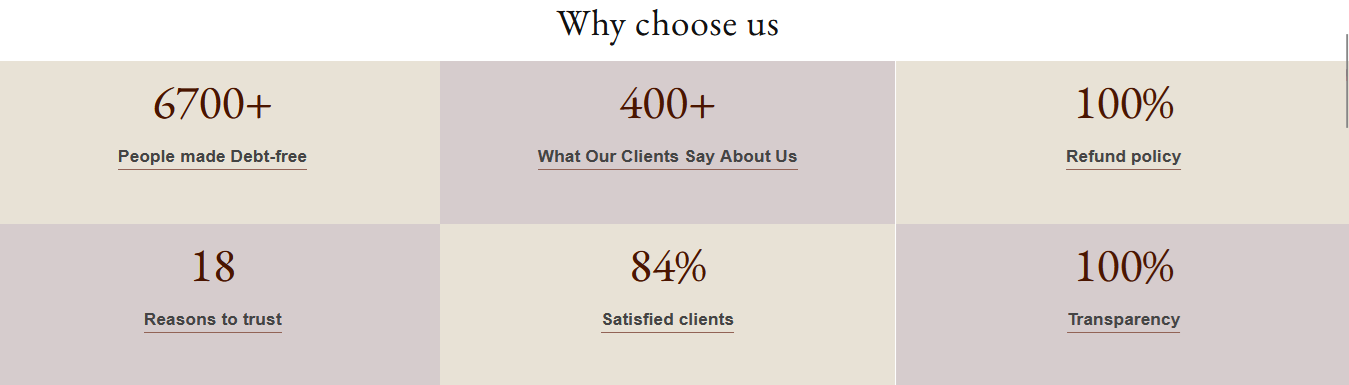
Has helped more than 6,700 clients become debt-free
Its team of experts has experience across 15 segments of consumer law
There is a “No-Questions-Asked Refund Policy”
Oak View Law Group provides professional guidance and mentorship throughout the debt-relief process
Oak View Law Group can often settle your debts at 40% to 60% of the outstanding balance
There are services for auto, medical, and student loan debt
Highly rated by clients
Cons:
Fees are federally regulated but can be high in some cases
What is Oak View Law Group?
Helping more than 6,700 clients become debt-free, Oak View Law Group is a consumer law firm headquartered in California. It specializes in debt relief, debt consolidation, and bankruptcy services. The group helps clients save money, avoid lawsuits, and has a team of experts with experience across 15 segments of consumer law. Moreover, Oak View Law Group has a “No-Questions-Asked Refund Policy,” where your fees and trust account balance are reimbursed if you’re unsatisfied with the service.
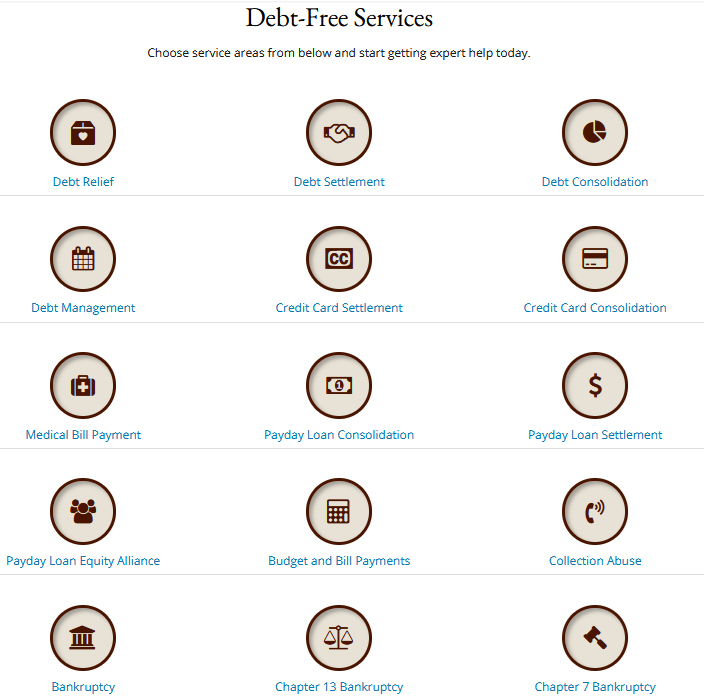
Some of Oak View Law Group’s services include:
Debt Consolidation
Debt Settlement
Chapter 7 Bankruptcy
Chapter 13 Bankruptcy
Payday Loan Consolidation
Payday Loan Settlement
For more insights on the value of these services, the Federal Trade Commission (FTC) has a helpful guide on How To Get Out of Debt.
How Can Oak View Law Group Help Me?
Working with a credit professional is like having an experienced coach to draw up plays on your behalf. And like any sport, it allows for a clearer strategy to achieve the team’s goals.
Oak View Law Group provides professional guidance, mentorship, and develops an effective debt-relief strategy, similar to a licensed insolvency trustee (LIT). Our partner site has an extensive guide on The Benefits of a LIT, which can help you determine if a consumer proposal or bankruptcy is the best strategy. Some of the differences include:
You often forfeit more personal assets in bankruptcy
Bankruptcy has a greater impact on your credit score
An initial bankruptcy stays on your credit report for six years or more versus three years with a consumer proposal
Similarly, Oak View Law Group provides parallel guidance to a LIT. By weighing the pros and cons of several scenarios, its team can help improve your financial health by achieving the following:
Lower monthly payments and interest charges
Devise a plan for manageable monthly payments
Reduce or eliminate late fees
Reduce or eliminate collection calls
What Is Oak View Law Group’s Settlement Program?
When working with Oak View Law Group, its team handles the day-to-day negotiations with creditors. For example, they manage creditor calls, negotiations, bill payments, and ensure you can enjoy your professional and personal lives with minimal disruption.
How Long Does It Take to Become Debt-Free?
Depending on the amount owed and your excess income, estimates can vary widely. In a nutshell: it often depends on how much funds you want to allocate to debt repayments.
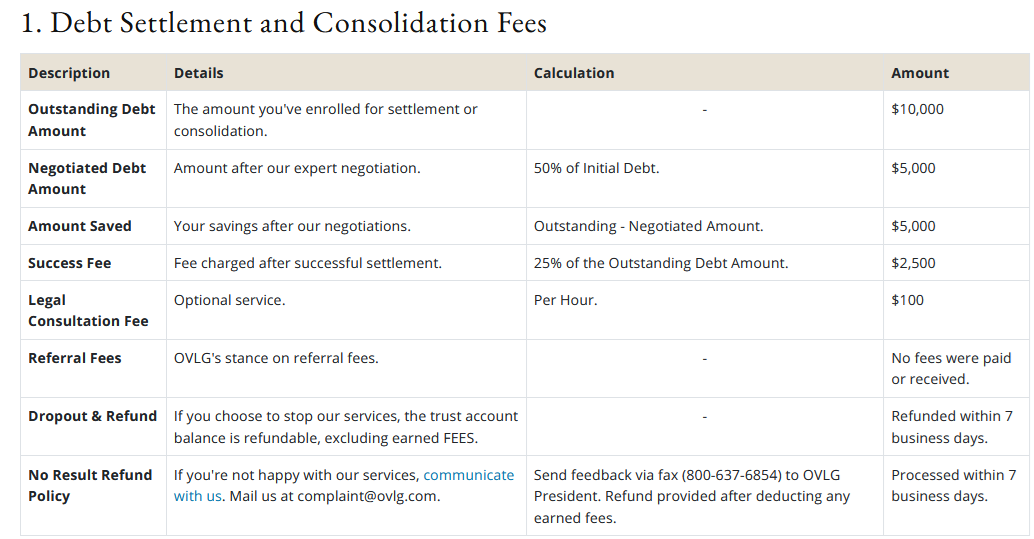
For example, let’s say you have $10,000 in debt and Oak View Law Group negotiates a 50% settlement. You have to pay $5,000 and can choose a lump-sum payment or monthly installments.
The firm notes that “As per the industry trends and our experience, debt can be settled at 40% to 60%, but we always negotiate for the lowest settlement percentage possible to save more for our clients.”
Thus, if you can cut the collection amount in half by working Oak View Law Group, it should greatly enhance the speed at which you become debt-free.
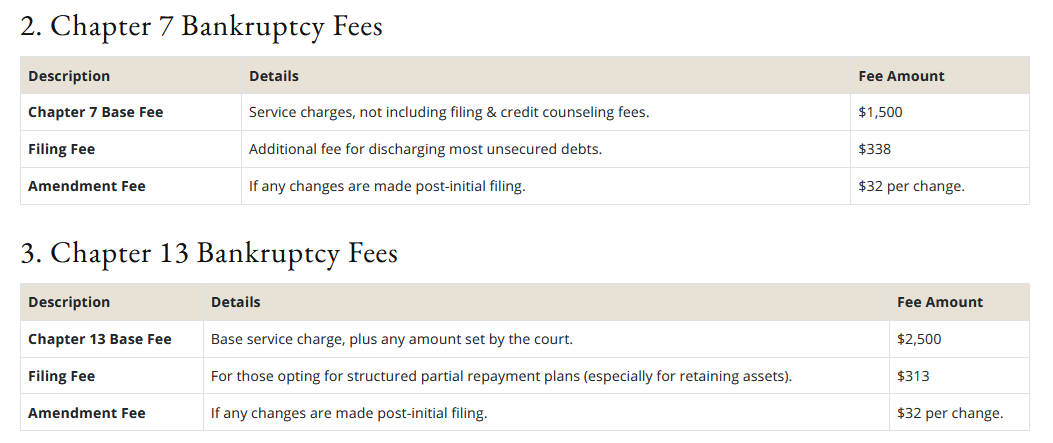
What Does Oak View Law Group Charge In Fees?
Adhering to FTC guidelines, Oak View Law Group’s fees are outlined in the graphics below:
What Other Services Does Oak View Law Group Provide?
If you’re struggling with auto, medical, or student loan debt, Oak View Law Group can assist in these areas too.
Regarding auto loans, the firm can help if the vehicle has been repossessed, sold, or is being processed by a third-party collection agency.
For overdue medical bills, the firm notes that healthcare companies “do not provide settlement offers.” Consequently, Oak View Law Group can only help you negotiate a manageable repayment plan.
Likewise, student loan companies do not provide settlement plans either, and Oak View Law Group can only help if the account has been transferred to collections.
How Do Clients Rate Oak View Law Group?
While the firm doesn’t have a lot of Google or Trustpilot reviews, the vast majority of clients were satisfied with Oak View Law Group’s services. Many cited efficient settlement procedures and noted how Oak View Law Group provided support and guidance throughout the process. A few of the testimonials read:
Oak View Law Group was able to settle my huge payday loan debts. The staff were very helpful and understanding. I can’t believe how fast and easy they were able to settle my debt.Much respect to Oak View Law Group. Thank you for getting me out of debt.
OVLG assisted me in resolving three payday loan debts. Mr Sanchez assured me that all debts would settled by the projected date and I would have access to himself, agents, and my account online. The process went just as planned, he communicated with me every step of the way and was patient to answer all my concerns. I would definitely return as well as recommend OVLG.
I have worked with OVLG, specifically, Diego, and I cannot say enough good things that he and OVLG have done for me. They have helped me so much and are diligent, professional, and understanding. I am truly amazed at how quickly Diego replies. Great company, great assistance. They truly give you hope.
As a result, not only does Oak View Law Group develop strategies for effective debt relief, but it also shows empathy when dealing with difficult situations.
Are We Believers In Oak View Law Group?
Because client testimonials are the best indicator of distinguished service, Oak View Law Group’s reviews speak for themselves. By providing guidance, mentorship, and working with clients every step of the way, the firm has developed a compassionate reputation.
Moreover, if Oak View Law Group can negotiate debt settlements at 40% to 60% of the outstanding balance, the cost savings can greatly outweigh the service fees. On top of that, the “No-Questions-Asked Refund Policy” adds further credibility and reduces your risk if you’re unhappy with the process.
All in all, there is a lot to like about Oak View Law Group, and if your debts have become unmanageable, it may be the right firm for you.