
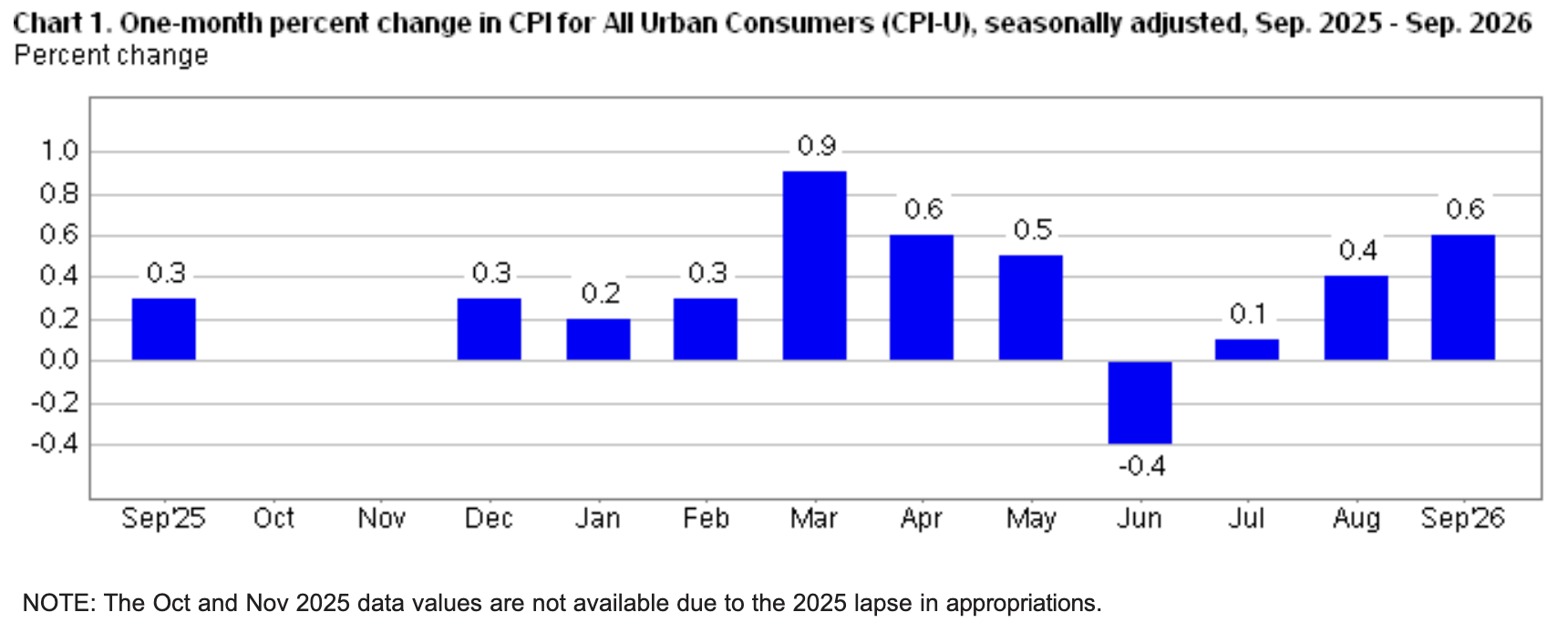
The September 2026 Consumer Price Index of All Urban Consumers (CPI-U) report indicates that inflation rose by 0.6% this month, up from a 0.4% jump in August. These data were released at 8:30 am EST on October 14, 2026, by the Bureau of Labor Statistics (BLS). Before seasonal adjustment, the year-over-year (Y-o-Y) inflation rate in the all-items index grew by 3.7%, above the 3.4% increase from August.
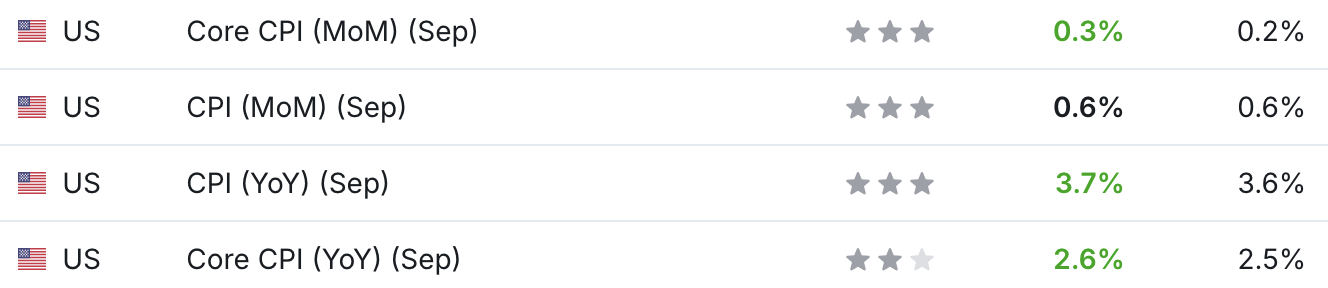
This month’s results surpassed economists’ consensus estimates. The table below is courtesy of Investing.com. The left column represents September’s figures, while the right column represents forecasters’ expectations. As you can see, both CPIs were slightly hotter than anticipated.
Moreover, with the US-Iran war still unresolved, and inflation concerns festering, Cleveland Federal Reserve president Beth Hammack said on October 12 that “I see inflation pressures as relatively broad-based rather than concentrated in one component. And it’s not just the supply side. Demand-side pressures coming from the AI build-out are raising prices. Because of the breadth of inflationary pressures, my baseline forecast is that it will take some time for inflation to return to 2%, even with appropriate monetary policy.”
As such, while she advocated for higher interest rates, the committee will have to decide as a group whether or notmore hikes are needed in the months ahead.
Food Prices
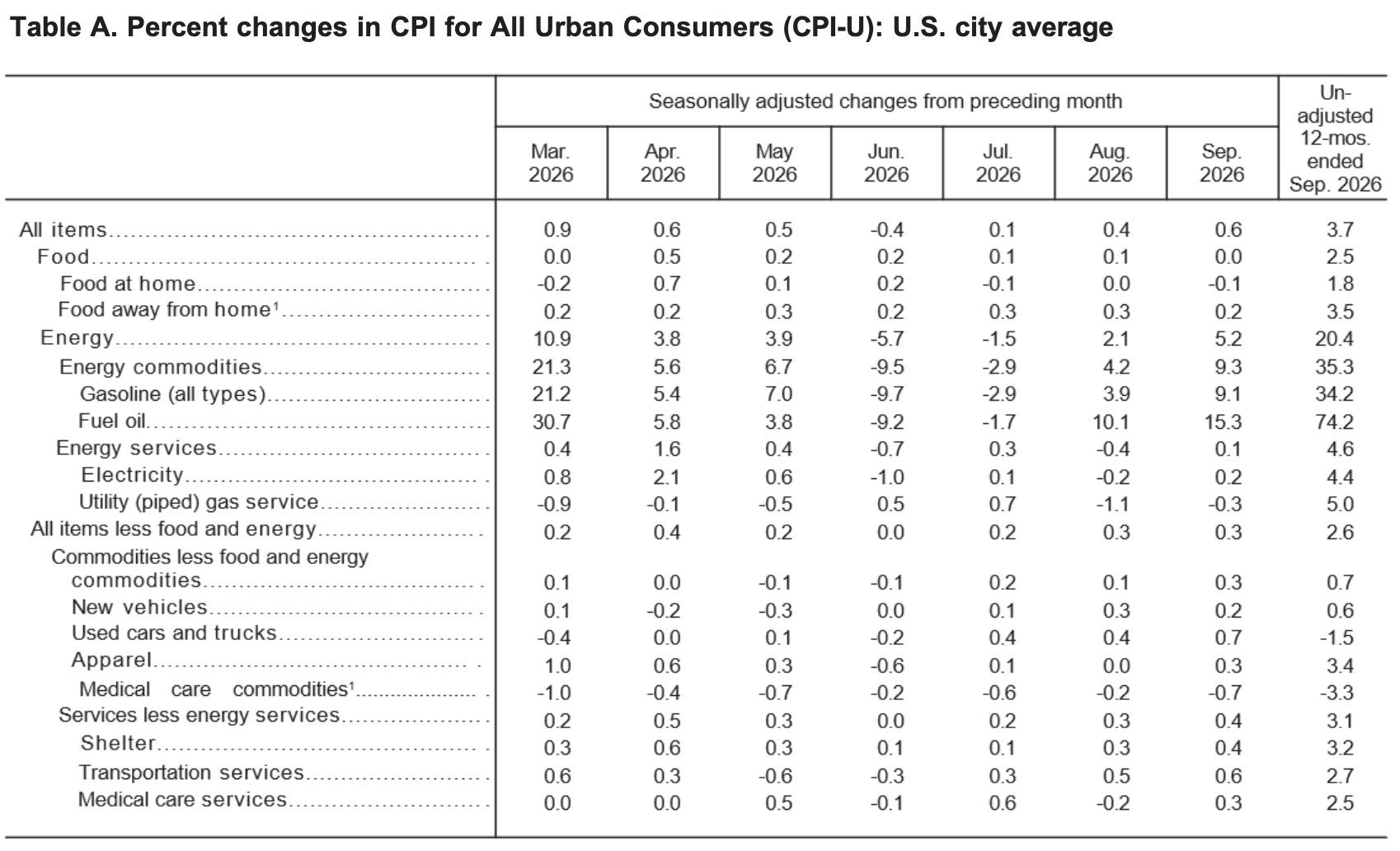
The food index was flat in September after increasing by 0.1% in August. Three of the major grocery indices recorded deflation, while three increased.
- Cereals and bakery products (+0.1%)
- Meats, poultry, fish, and eggs (-0.5%)
- Dairy and related products (-0.9%)
- Fruits and vegetables (+0.5%)
- Nonalcoholic beverages (+0.9%)
- Other food at home (-0.2%)
In addition, the food away from home index increased by 0.2%, as restaurant inflation surpassed grocery inflation once again in September.
Energy Prices
The energy index rose by 5.2% MoM in September, well above the 2.1% increase from August. Gasoline prices jumped by 9.1%, while electricity rose by 0.2%, and natural gas fell by 0.3%.
Core CPI
The September core CPI rose by 2.6% Y-o-Y, up from 2.4% in August. Below is an itemized breakdown of the various components:
- Shelter index: (+0.4%) [August: +0.3%]
- Rent index: (+0.2%) [August: +0.2%]
- Owners’ equivalent rent: (+0.3%) [August: +0.2%]
- Motor vehicle insurance: (+0.1%) [August: -0.8%]
- Medical care services: (+0.3%) [August: -0.2%]
- Physician services: (+0.0%) [August: +0.0%]
- Hospital services: (+0.7%) [August: +0.0%]
- Airline fares: (+1.2%) [August: +2.7%]
Seasonally Unadjusted CPI
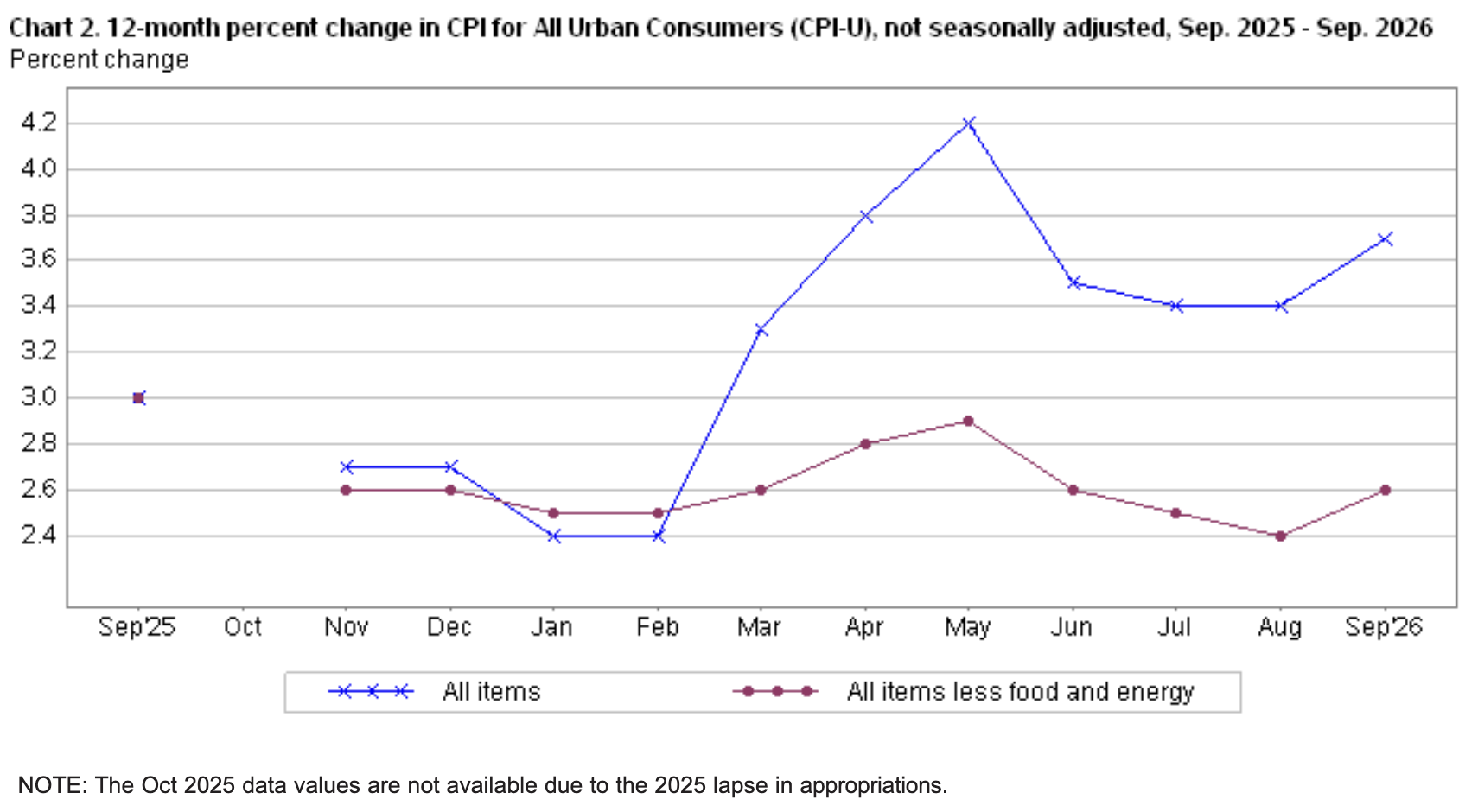
Before seasonal adjustments, the CPI-U for September 2026 increased by 3.7% Y-o-Y to an index level of 336.940. Since these figures are unadjusted, they include regular seasonal price fluctuations that can create volatility in the results.
More Tough Choices
After raising interest rates at the last monetary policy meeting, the Fed confronts a bond market that’s pricing in more restrictive policy. And while arguments can be made for, or against, further increases in the overnight lending rate, recent economic data paints a mixed picture.
For example, US nonfarm payrolls missed expectations on October 2, and average hourly earnings (wage inflation) also materially underperformed. Consequently, the labor market does not seem to be a source of inflation, which helped ignite the spiral in 2021-2022.
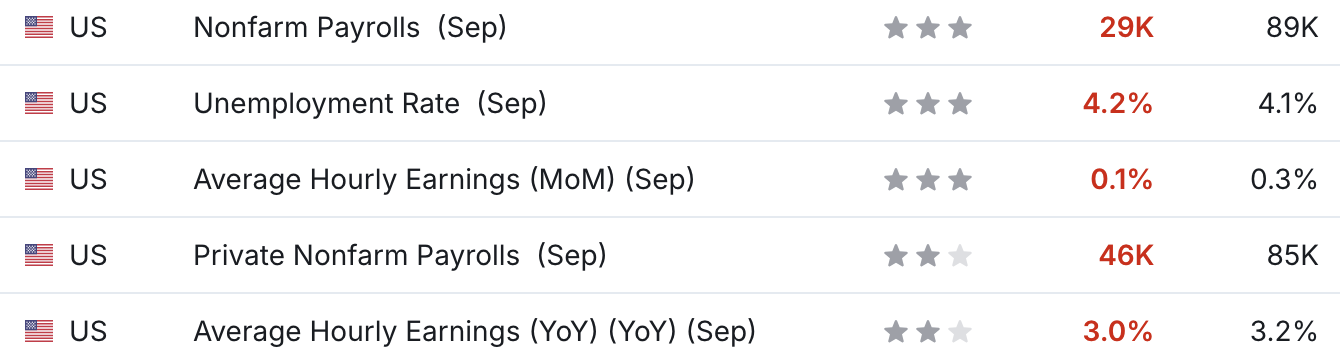
To that point, the BLS added in the October 2 release:
“The change in total nonfarm payroll employment for July was revised down by 31,000, from +21,000 to -10,000, and the change for August was revised down by 29,000, from +162,000 to +133,000. With these revisions, employment in July and August combined is 60,000 lower than previously reported.”
So, while inflation remains the primary concern, the other half of the Fed’s dual mandate could come under pressure as interest rates rise.
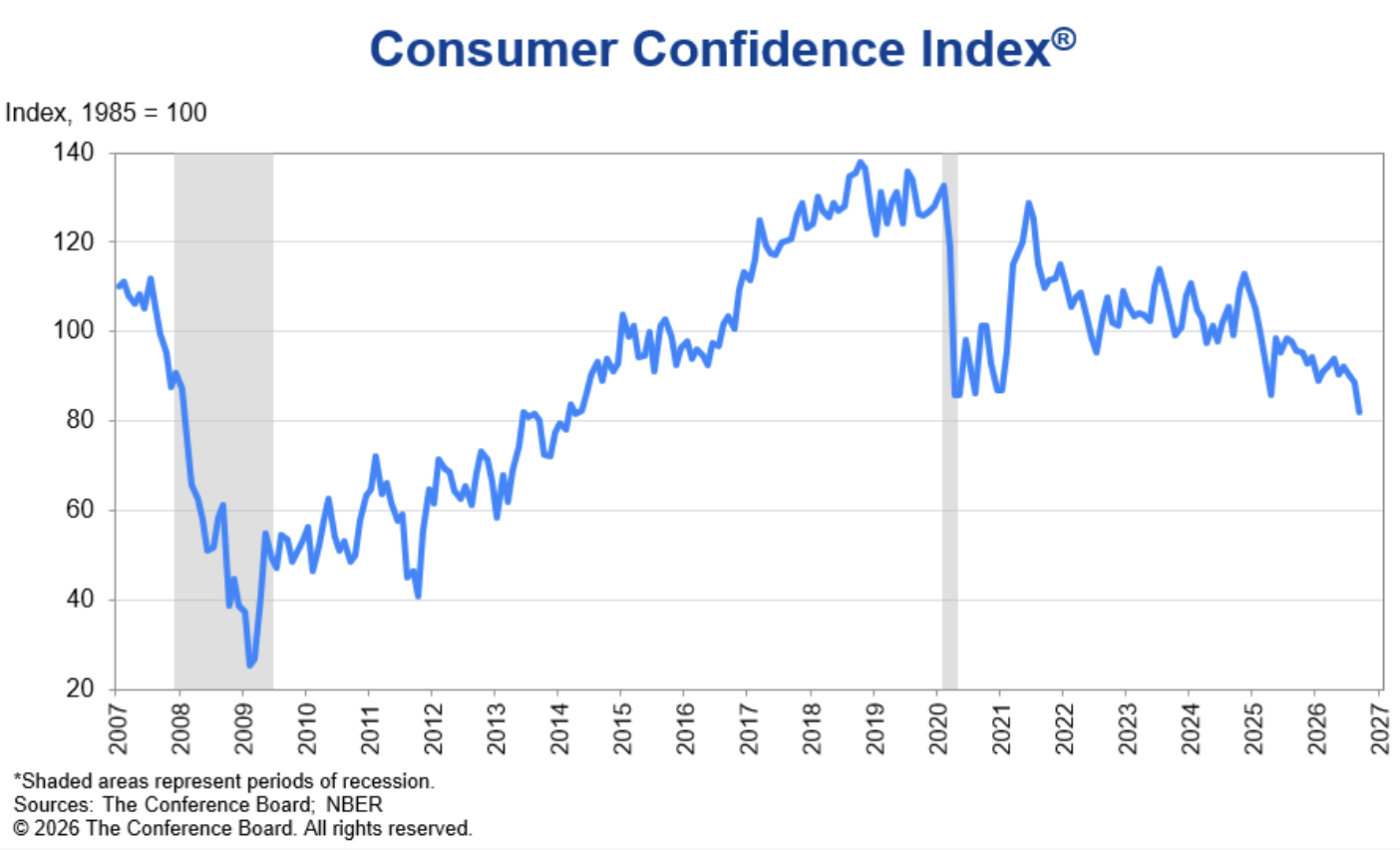
Similarly, The Conference Board released its US Consumer Confidence Index on September 29. An excerpt read:
“The Consumer Confidence Index deteriorated notably in September, following two prior months of softening. The Present Situation Index fell sharply, while the Expectations Index slipped further into negative territory. Consumer appraisals of current business conditions became negative for the first time since September 2024. Perceptions of the current labor market also worsened, though remained within positive territory.”
As it stands, the index is at its lowest level in more than a decade, surpassing the low realized during the COVID-19 pandemic.
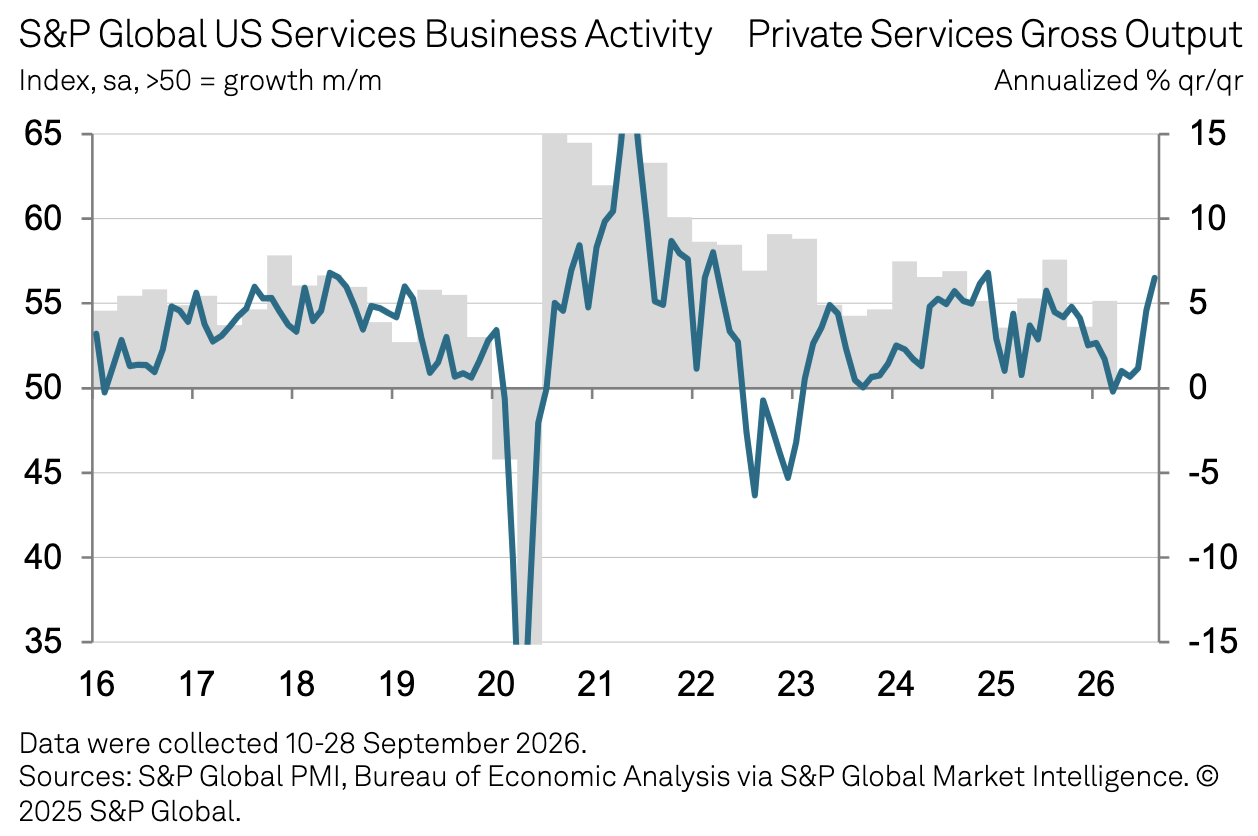
On the flip side, S&P Global released its US Services PMI on October 5. The report stated:
“US service sector business activity surged higher in September, rising at the fastest pace in over five years on the back of a further sharp increase in new orders….
“With total new orders rising rapidly again in September and some companies able to fill previously vacant positions, workforce numbers increased for the third month running. Moreover, the rate of job creation was the fastest since June 2022.”
As you can see, the robust results contrast the data from the BLS and The Conference Board. Therefore, the Fed will need to decide which results deserve the most attention when deciding its next move.
As for gold, it continues to suffer alongside higher interest rates and a stronger US dollar. And while several assets need interest rates to decline to prosper once again, Bank of America strategists said on October 12 that patience could be a virtue. They wrote:
“Gold rallied alongside equities when the market was not concerned about rising rates. Yet, when the Fed turned hawkish, inflation rose and the dollar appreciated, the yellow metal came under substantial pressure. The takeaway: gold will in all likelihood only bottom out once concerns over inflation/the Iran war subside, USD stops appreciating, and the Fed is no longer in a tightening cycle….
“We remain cautious near-term as the macro environment remains challenging: we have an average 4Q26 forecast of $4,000/oz, but then expect prices to average $4,813 in CY27.”
So, while volatility may persist, gold should stabilize and appreciate once the macro outlook becomes more favorable.
Are you thinking about diversifying into precious metals? Talk to your financial advisor about initiating a gold IRA account today, allowing you to invest in this red-hot asset on a tax-advantaged basis. Additionally, our complimentary CPI inflation calculator remains at your disposal, enabling you to assess inflation’s impact on your finances. Please seek the guidance of a financial advisor before making any investment decision.
As a worthwhile option, Augusta Precious Metals specializes in precious metal IRAs, helping to roll your existing retirement accounts, such as a 401 (k), into IRAs backed by physical gold or silver. You can also purchase bullion directly, and the company has an exceptional reputation, with either AAA or 4.5 to 5-star reviews across multiple ratings agencies.
For more alternatives, our guide on the Top 12 Best Gold Investment Firms covers the pros and cons of the top dealers available. You can compare items like product availability, investment minimums, and buyback policies to determinethe right option for you.
Furthermore, if higher interest rates have complicated your financial outlook, seeking professional advice can help ease the burden.
Accredited Debt Relief has strong public ratings, BBB A+ accreditation, ACDR membership, IAPDA-certified specialists, and a substantial company-stated track record (1.3M+ clients, $15B+ resolved, 15+ years). As a result, if unsecured debts like credit cards or personal loans have become unmanageable, Accredited Debt Relief may be a worthwhile resource.
Similarly, Beyond Finance is one of the US’s largest debt consolidation companies, helping Americans streamline their unsecured claims. You have access to a built-in financial wellness program with accredited financial therapists, and the firm also has thousands of 4.5+ star reviews across multiple platforms. Therefore, an introductory call may be helpful in deciding the correct path for your unique situation.


Alex Demolitor is a financial writer and cross-asset analyst who completed the CFA Program, passing all three levels of the CFA exams. He has a Bachelors degree from King's College in Ontario and specializes in the fundamental analysis of stocks, bonds, commodities, and FX, with a focus on U.S. and Canadian economic indicators like CPI and inflation. His market analysis has appeared on major publications such as FXEmpire, Investing.com, and AdvisorPedia.