by Alex Demolitor | Oct 14, 2026 | Definitions
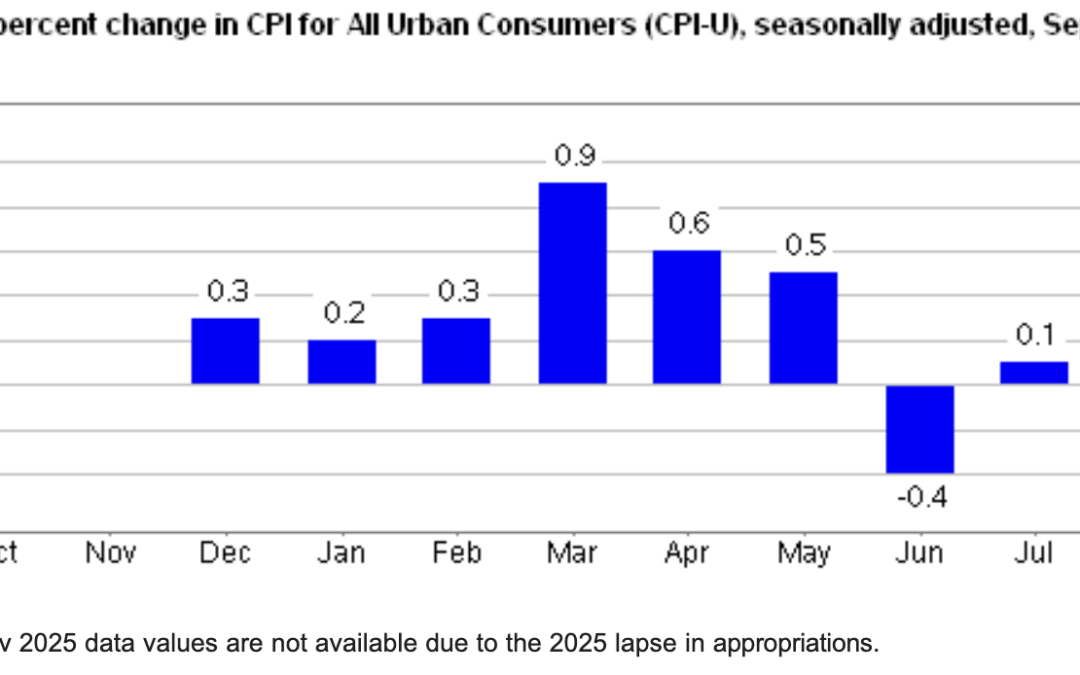
The September 2026 Consumer Price Index of All Urban Consumers (CPI-U) report indicates that inflation rose by 0.6% this month, up from a 0.4% jump in August. These data were released at 8:30 am EST on October 14, 2026, by the Bureau of Labor Statistics (BLS). Before seasonal adjustment, the year-over-year (Y-o-Y) inflation rate in the all-items index grew by 3.7%, above the 3.4% increase from August.
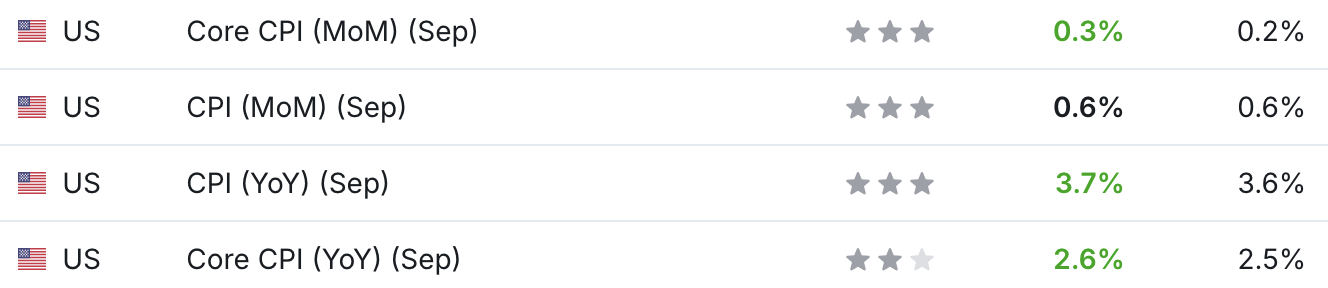
This month’s results surpassed economists’ consensus estimates. The table below is courtesy of Investing.com. The left column represents September’s figures, while the right column represents forecasters’ expectations. As you can see, both CPIs were slightly hotter than anticipated.
Moreover, with the US-Iran war still unresolved, and inflation concerns festering, Cleveland Federal Reserve president Beth Hammack said on October 12 that “I see inflation pressures as relatively broad-based rather than concentrated in one component. And it’s not just the supply side. Demand-side pressures coming from the AI build-out are raising prices. Because of the breadth of inflationary pressures, my baseline forecast is that it will take some time for inflation to return to 2%, even with appropriate monetary policy.”
As such, while she advocated for higher interest rates, the committee will have to decide as a group whether or notmore hikes are needed in the months ahead.
Food Prices
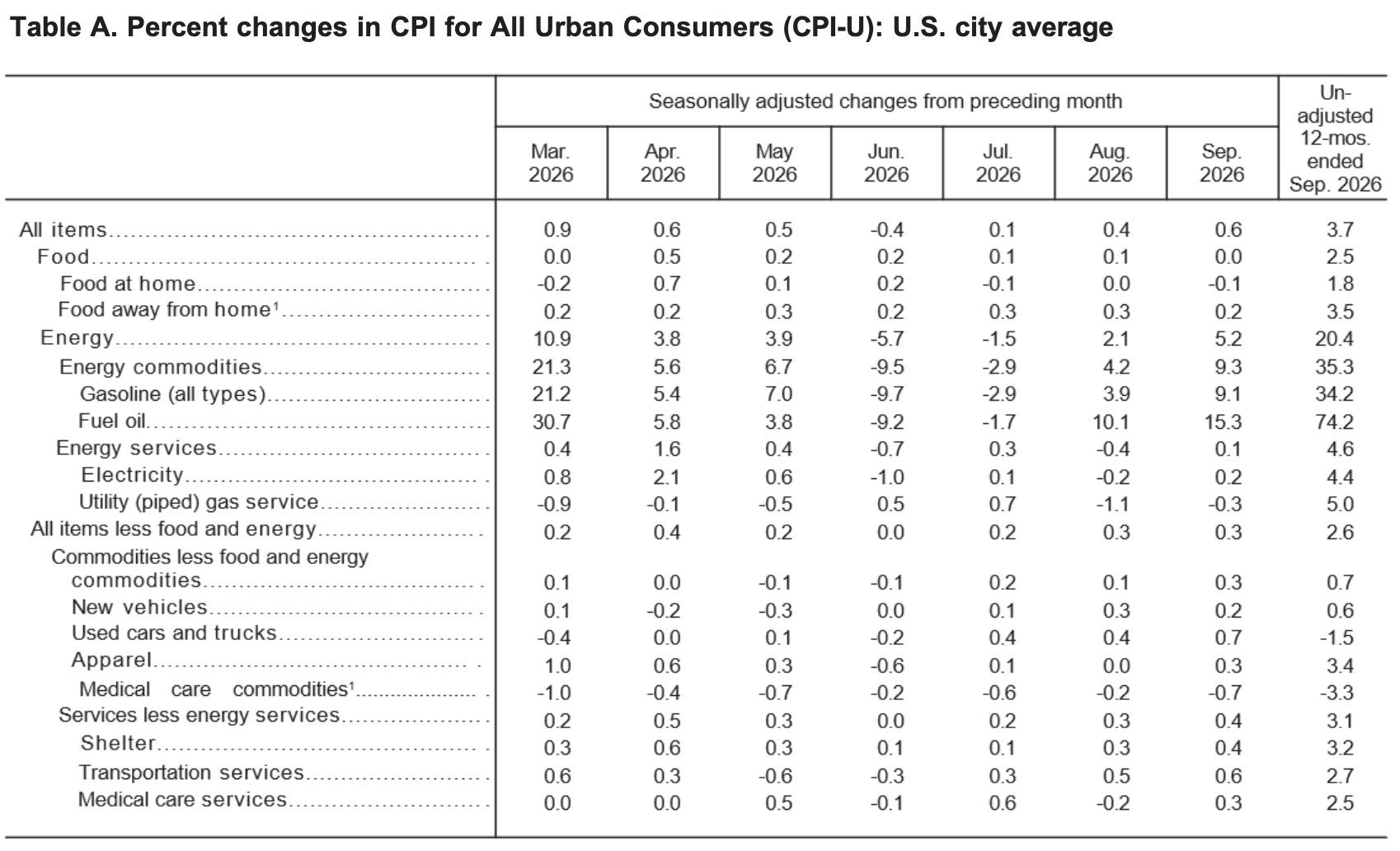
The food index was flat in September after increasing by 0.1% in August. Three of the major grocery indices recorded deflation, while three increased.
- Cereals and bakery products (+0.1%)
- Meats, poultry, fish, and eggs (-0.5%)
- Dairy and related products (-0.9%)
- Fruits and vegetables (+0.5%)
- Nonalcoholic beverages (+0.9%)
- Other food at home (-0.2%)
In addition, the food away from home index increased by 0.2%, as restaurant inflation surpassed grocery inflation once again in September.
Energy Prices
The energy index rose by 5.2% MoM in September, well above the 2.1% increase from August. Gasoline prices jumped by 9.1%, while electricity rose by 0.2%, and natural gas fell by 0.3%.
Core CPI
The September core CPI rose by 2.6% Y-o-Y, up from 2.4% in August. Below is an itemized breakdown of the various components:
- Shelter index: (+0.4%) [August: +0.3%]
- Rent index: (+0.2%) [August: +0.2%]
- Owners’ equivalent rent: (+0.3%) [August: +0.2%]
- Motor vehicle insurance: (+0.1%) [August: -0.8%]
- Medical care services: (+0.3%) [August: -0.2%]
- Physician services: (+0.0%) [August: +0.0%]
- Hospital services: (+0.7%) [August: +0.0%]
- Airline fares: (+1.2%) [August: +2.7%]
Seasonally Unadjusted CPI
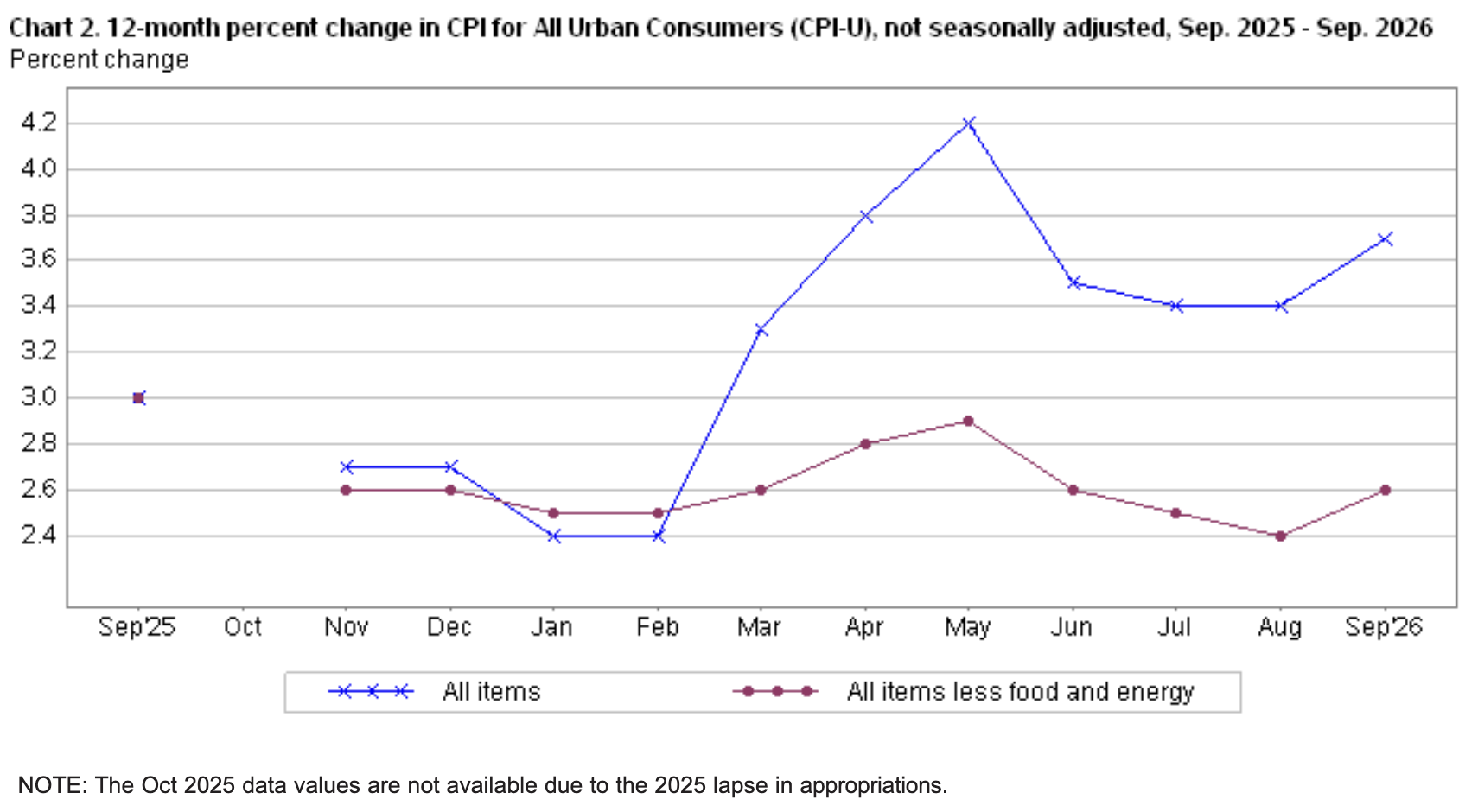
Before seasonal adjustments, the CPI-U for September 2026 increased by 3.7% Y-o-Y to an index level of 336.940. Since these figures are unadjusted, they include regular seasonal price fluctuations that can create volatility in the results.
More Tough Choices
After raising interest rates at the last monetary policy meeting, the Fed confronts a bond market that’s pricing in more restrictive policy. And while arguments can be made for, or against, further increases in the overnight lending rate, recent economic data paints a mixed picture.
For example, US nonfarm payrolls missed expectations on October 2, and average hourly earnings (wage inflation) also materially underperformed. Consequently, the labor market does not seem to be a source of inflation, which helped ignite the spiral in 2021-2022.
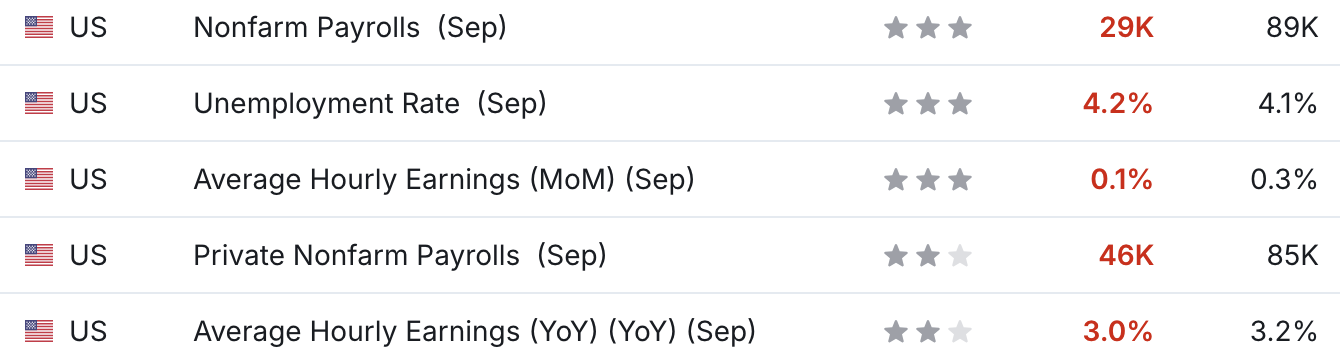
To that point, the BLS added in the October 2 release:
“The change in total nonfarm payroll employment for July was revised down by 31,000, from +21,000 to -10,000, and the change for August was revised down by 29,000, from +162,000 to +133,000. With these revisions, employment in July and August combined is 60,000 lower than previously reported.”
So, while inflation remains the primary concern, the other half of the Fed’s dual mandate could come under pressure as interest rates rise.
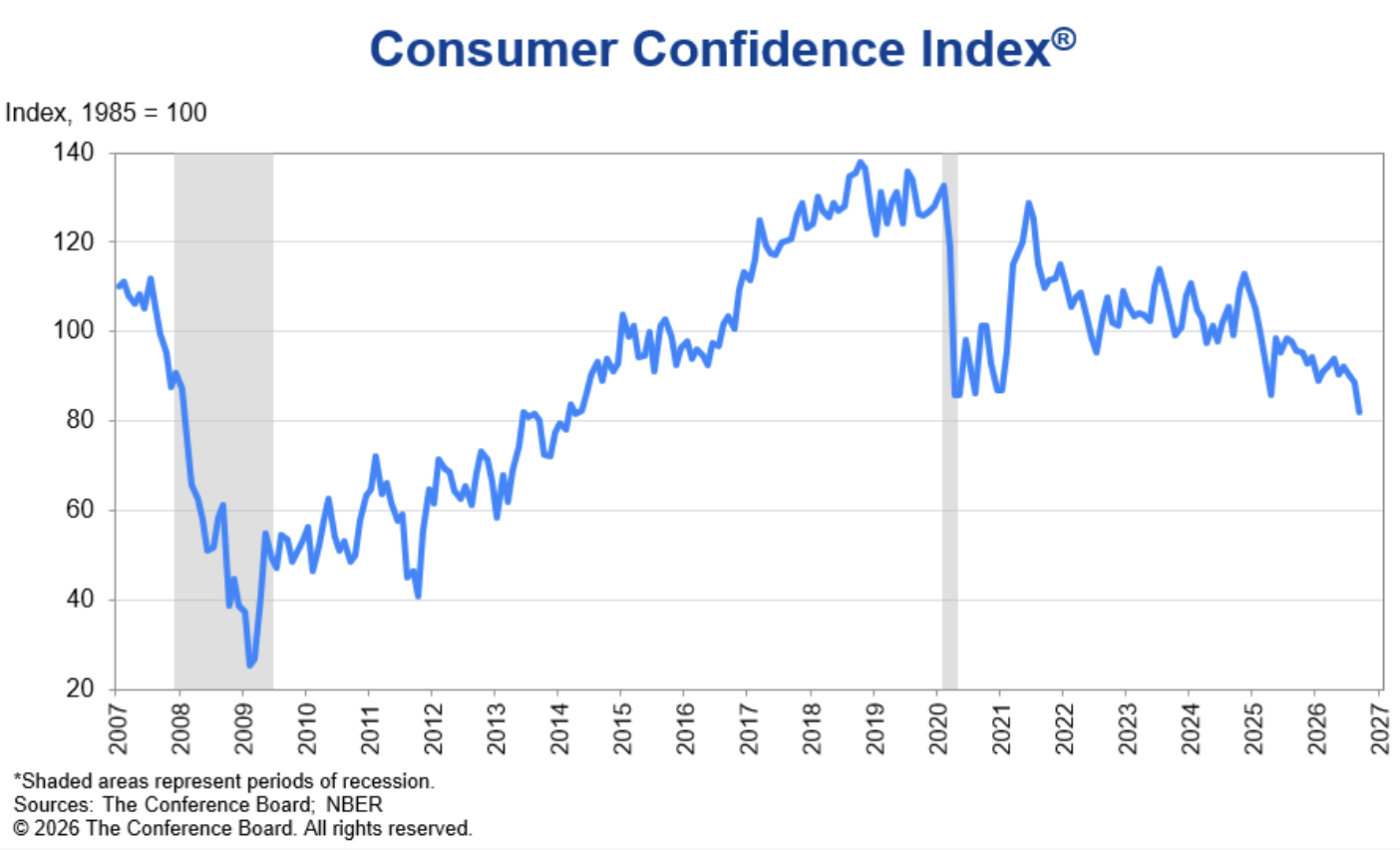
Similarly, The Conference Board released its US Consumer Confidence Index on September 29. An excerpt read:
“The Consumer Confidence Index deteriorated notably in September, following two prior months of softening. The Present Situation Index fell sharply, while the Expectations Index slipped further into negative territory. Consumer appraisals of current business conditions became negative for the first time since September 2024. Perceptions of the current labor market also worsened, though remained within positive territory.”
As it stands, the index is at its lowest level in more than a decade, surpassing the low realized during the COVID-19 pandemic.
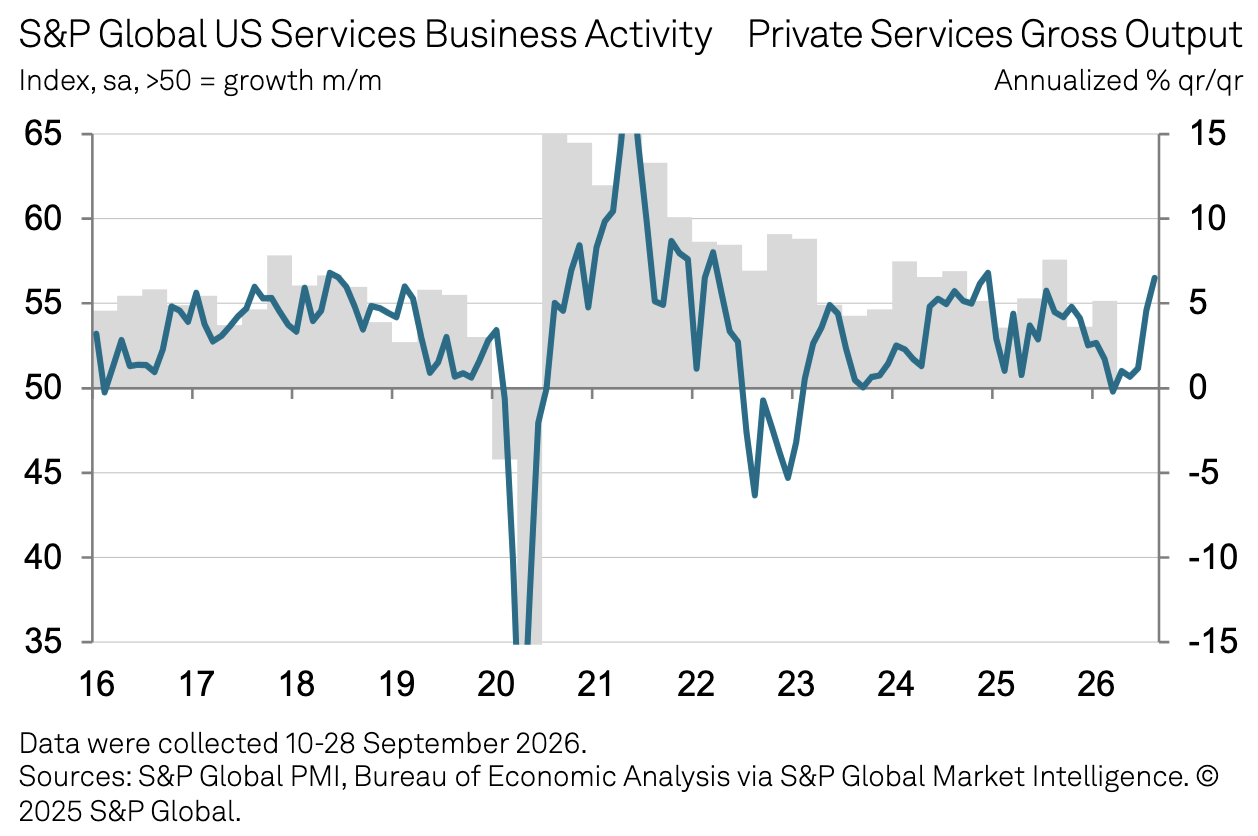
On the flip side, S&P Global released its US Services PMI on October 5. The report stated:
“US service sector business activity surged higher in September, rising at the fastest pace in over five years on the back of a further sharp increase in new orders….
“With total new orders rising rapidly again in September and some companies able to fill previously vacant positions, workforce numbers increased for the third month running. Moreover, the rate of job creation was the fastest since June 2022.”
As you can see, the robust results contrast the data from the BLS and The Conference Board. Therefore, the Fed will need to decide which results deserve the most attention when deciding its next move.
As for gold, it continues to suffer alongside higher interest rates and a stronger US dollar. And while several assets need interest rates to decline to prosper once again, Bank of America strategists said on October 12 that patience could be a virtue. They wrote:
“Gold rallied alongside equities when the market was not concerned about rising rates. Yet, when the Fed turned hawkish, inflation rose and the dollar appreciated, the yellow metal came under substantial pressure. The takeaway: gold will in all likelihood only bottom out once concerns over inflation/the Iran war subside, USD stops appreciating, and the Fed is no longer in a tightening cycle….
“We remain cautious near-term as the macro environment remains challenging: we have an average 4Q26 forecast of $4,000/oz, but then expect prices to average $4,813 in CY27.”
So, while volatility may persist, gold should stabilize and appreciate once the macro outlook becomes more favorable.
Are you thinking about diversifying into precious metals? Talk to your financial advisor about initiating a gold IRA account today, allowing you to invest in this red-hot asset on a tax-advantaged basis. Additionally, our complimentary CPI inflation calculator remains at your disposal, enabling you to assess inflation’s impact on your finances. Please seek the guidance of a financial advisor before making any investment decision.
As a worthwhile option, Augusta Precious Metals specializes in precious metal IRAs, helping to roll your existing retirement accounts, such as a 401 (k), into IRAs backed by physical gold or silver. You can also purchase bullion directly, and the company has an exceptional reputation, with either AAA or 4.5 to 5-star reviews across multiple ratings agencies.
For more alternatives, our guide on the Top 12 Best Gold Investment Firms covers the pros and cons of the top dealers available. You can compare items like product availability, investment minimums, and buyback policies to determinethe right option for you.
Furthermore, if higher interest rates have complicated your financial outlook, seeking professional advice can help ease the burden.
Accredited Debt Relief has strong public ratings, BBB A+ accreditation, ACDR membership, IAPDA-certified specialists, and a substantial company-stated track record (1.3M+ clients, $15B+ resolved, 15+ years). As a result, if unsecured debts like credit cards or personal loans have become unmanageable, Accredited Debt Relief may be a worthwhile resource.
Similarly, Beyond Finance is one of the US’s largest debt consolidation companies, helping Americans streamline their unsecured claims. You have access to a built-in financial wellness program with accredited financial therapists, and the firm also has thousands of 4.5+ star reviews across multiple platforms. Therefore, an introductory call may be helpful in deciding the correct path for your unique situation.

by Alex Demolitor | Sep 11, 2026 | Definitions
The August 2026 Consumer Price Index of All Urban Consumers (CPI-U) report indicates that inflation rose by 0.4% this month, up from a 0.1% increase in July. These data were released at 8:30 am EST on September 11, 2026, by the Bureau of Labor Statistics (BLS). Before seasonal adjustment, the year-over-year (Y-o-Y) inflation rate in the all-items index grew by 3.4%, matching the print from July.
This month’s results mostly aligned with economists’ consensus estimates. The table below is courtesy of Investing.com. The left column represents August’s figures, while the right column represents forecasters’ expectations. As you can see, there weren’t many surprises.

Yet, as the US-Iran war intensifies and oil prices surge, Fed policy is back in the spotlight. Although interest rates have risen materially, many analysts expect the Fed to increase its policy rate at next week’s meeting. There are several crosscurrents the committee must navigate, which makes the decision highly crucial for the US economy and the financial markets.

Food Prices
The food index increased by 0.1% in August, matching the 0.1% rise in July. Four of the major grocery indices increased this month, one was flat, and one decreased.
- Cereals and bakery products (+0.0%)
- Meats, poultry, fish, and eggs (+0.1%)
- Dairy and related products (+0.3%)
- Fruits and vegetables (-0.4%)
- Nonalcoholic beverages (+0.2%)
- Other food at home (+0.1%)
In addition, the food away from home index increased by 0.3%, as restaurant inflation surpassed grocery inflation once again.
Energy Prices
The energy index rose by 2.1% MoM in August after dropping by 1.5% MoM in July. Gasoline prices jumped by 3.9%, while electricity fell by 0.2%, and natural gas by 1.1%.
Core CPI
The August core CPI rose by 2.4% Y-o-Y, down from 2.5% in July. Below is an itemized breakdown of the various components:
- Shelter index: (+0.3%) [July: +0.1%]
- Rent index: (+0.2%) [July: +0.3%]
- Owners’ equivalent rent: (+0.2%) [July: +0.3%]
- Motor vehicle insurance: (-0.8%) [July: -0.3%]
- Medical care services: (-0.2%) [July: +0.6%]
- Physician services: (+0.0%) [July: +0.2%]
- Hospital services: (+0.0%) [July: +0.5%]
- Airline fares: (+2.7%) [July: +2.2%]

Seasonally Unadjusted CPI
Before seasonal adjustments, the CPI-U for August 2026 increased by 3.4% Y-o-Y to an index level of 334.980. Since these figures are unadjusted, they include regular seasonal price fluctuations that can create volatility in the results.
A Fork In the Road
While higher oil prices remain troublesome for inflation, it’s difficult for the Fed to control geopolitics and the pricing pressures that follow. As a result, core inflation is typically the best metric to follow — since it excludes the effects of food and energy. However, market participants seem keen on forcing the Fed’s hand, which makes for difficult decisions in the weeks ahead.
For example, US nonfarm payrolls greatly exceeded expectations on September 4. The economy added 162,000 net new jobs, and the unemployment rate held steady near multi-year lows. Consequently, the labor market outlook remains solid, which could allow the Fed to focus solely on inflation.

In contrast, the rapid rise in Treasury yields and oil prices is causing immense stress in the subprime bond market. Lenders charge an interest rate ‘spread’ above government bonds to compensate for potential default risks. And with the spread on CCC & Lower bonds (the riskiest borrowers) surging, stressed companies will face even more trouble refinancing their loans and obtaining credit.
As such, a rate hike will likely only worsen the situation, potentially creating a default event that shifts the Fed’s problem in the other direction.

But despite the juggling act, market participants have officially chosen the former. The chart below highlights how the US oil price (blue) and the US 2-Year Treasury yield (black) have soared in recent weeks. The 2Y is a known proxy for the federal funds rate, and given its rapid ascent, investors expect more than one rate hike to materialize in the months ahead.

As for gold, it remains caught in the volatility, as higher interest rates are typically bearish for the yellow metal. However, Goldman Sachs increased its year-end 2026 gold price forecast to $4,900 (from $4,600) on August 28, citing central bank purchases as the main driver. The report noted:
“Goldman Sachs Research expects central banks to buy an average of 50 tonnes of gold per month in 2026, up from an average of 17 tonnes per month before 2022.
“Central bank purchases accelerated to 100 tonnes per month in June 2026 (on a three-month seasonally adjusted basis) from 66 tonnes the previous month, according to Goldman Sachs Research’s nowcast of central bank activity. China’s central bank was the largest identifiable buyer in the market in June.”
Thus, while headline-driven swings may persist, gold’s structural outlook remains constructive.

Are you thinking about diversifying into precious metals? Talk to your financial advisor about initiating a gold IRA account today, allowing you to invest in this red-hot asset on a tax-advantaged basis. Additionally, our complimentary CPI inflation calculator remains at your disposal, enabling you to assess inflation’s impact on your finances. Please seek the guidance of a financial advisor before making any investment decision.
As a worthwhile option, Augusta Precious Metals specializes in precious metal IRAs, helping to roll your existing retirement accounts, such as a 401 (k), into IRAs backed by physical gold or silver. You can also purchase bullion directly, and the company has an exceptional reputation, with either AAA or 4.5 to 5-star reviews across multiple ratings agencies.
For more alternatives, our guide on the Top 12 Best Gold Investment Firms covers the pros and cons of the top dealers available. You can compare items like product availability, investment minimums, and buyback policies to determine the right option for you.
Furthermore, if higher interest rates have complicated your financial outlook, seeking professional advice can help ease the burden. Accredited Debt Relief has strong public ratings, BBB A+ accreditation, ACDR membership, IAPDA-certified specialists, and a substantial company-stated track record (1.3M+ clients, $15B+ resolved, 15+ years). As a result, if unsecured debts like credit cards or personal loans have become unmanageable, Accredited Debt Relief may be a worthwhile resource.
Similarly, Beyond Finance is one of the US’s largest debt consolidation companies, helping Americans streamline their unsecured claims. You have access to a built-in financial wellness program with accredited financial therapists, and the firm also has thousands of 4.5+ star reviews across multiple platforms. Therefore, an introductory call may be helpful in deciding the correct path for your unique situation.
by Amine Rahal | Aug 26, 2026 | Definitions

I have been reviewing debt relief companies for over twenty years, and I have a simple test before I recommend anyone: can I independently verify who they are, what they charge and what their customers say? First Advantage Debt Relief fails that test on every count. As of August 2026 the company has no Better Business Bureau profile, no Trustpilot profile, no verified Google Business listing, no published fee schedule, and its own website is returning an SSL error and will not load at all.
That does not automatically make it a scam, and I am not calling it one. It does mean I cannot tell you it is safe, and when the subject is your unsecured debt, “I cannot verify this” and “proceed at your own risk” are the same sentence. Below is exactly what I checked, what came back, and where to go instead.
Before you hand your details to anyone, work out what you actually need. Our two minute quiz compares settlement, consolidation, nonprofit counseling and bankruptcy against your real numbers, with nothing to buy at the end.
Find Your Best Debt Relief Option
Already decided settlement is right and want a firm you can verify? New Era Debt Solutions charges no upfront fees and has the highest share of five-star reviews we track.
First things first: there are two “First Advantage” companies
A large share of the people landing on this page are looking for the wrong company, so let me clear that up immediately.
| |
First Advantage (fadv.com) |
First Advantage Debt Relief |
| What it does |
Employment background screening and identity verification |
Markets debt settlement to consumers |
| Size |
Around 80,000 customers, 200 million screens a year, publicly traded |
Unknown, no verifiable public record |
| Headquarters |
Atlanta, Georgia |
Listed as Delaware |
| Related? |
No. Despite the shared name, we found no corporate relationship between the two. |
If you got here because an employer ran a background check on you, you want fadv.com and nothing on this page applies to you. If you got here because you are carrying credit card debt and saw an ad, keep reading.
What I checked, and what came back
Here is the verification pass in full, run in August 2026. I have shown you the misses as well as the hits, because the misses are the story.
| Check |
Result |
What it means |
| Company website loads |
No |
Both firstadvantagedebtrelief.com and the www version return a Cloudflare 525 SSL handshake error |
| BBB business profile |
None found |
A BBB search returns no results for the company name |
| Trustpilot profile |
None found |
The Trustpilot page for the domain does not exist |
| Verified Google Business listing |
None found |
No standalone verified profile with customer reviews |
| Published fee schedule |
None |
Third-party reviews report 15 to 25 percent of enrolled debt, unconfirmed by the company |
| AFCC or IAPDA membership |
Not found |
The two industry bodies most settlement firms join |
| Named, verifiable leadership |
Not confirmed |
See the correction note below |
| Domain exists and resolves |
Yes |
The domain is registered and behind Cloudflare, it just will not serve a page |
A correction to our earlier review
The previous version of this page carried several claims I have not been able to substantiate, and I would rather correct them in public than quietly delete them. It stated a BBB rating of A, a Google rating of 4.6 and a Trustpilot rating of 4.5. None of those three profiles exist. It also described the company as an arm of AmeriSave Mortgage Corporation and named three executives as its leadership. I could find no independent evidence of any corporate relationship between First Advantage Debt Relief and AmeriSave, and I have removed those names accordingly. The same page also contradicted itself, describing leadership as “not publicly listed” a few paragraphs after naming three people. All of it is gone.
I am telling you this because a review is only worth what its sourcing is worth, and readers deserve to know when we get something wrong.
August 2026 update: a live First Advantage site, and what its own footer says
When I first ran these checks, the domain named in this company’s marketing, firstadvantagedebtrelief.com, would not load at all. I rechecked it today. It still returns a Cloudflare 525 SSL handshake failure on both the apex and www versions, so that finding stands.
What has changed is that a live site now trades under the First Advantage name in this same category, at firstadvantage.io, and it ranks near the top of Google for the head term. Most people looking for this business will land there rather than on the dead domain. I could not establish from public records whether it is run by the same operator, because neither site names a legal entity, a registered address or a single individual. What I can report is what that live site says about itself.
Its own footer states that First Advantage is “not a lender, debt-settlement company, or credit-repair organization” and that “We connect consumers with third-party debt-relief providers.” The same footer labels the page an advertisement.
That is the clearest answer to the question most people are actually asking. First Advantage is real, and it is not a scam in the sense of taking your money and disappearing. But it is not a debt settlement company either, by its own admission. It is an advertising and lead generation business that collects your details and passes them to firms that do the negotiating.
Here is why that distinction matters more than it sounds. The company you end up dealing with, the fee percentage you are quoted and the outcome you get are all decided by whoever buys your enquiry, not by First Advantage. You cannot vet a firm you have not been introduced to yet. In twenty years of writing about this industry I have found that to be the single most reliable predictor of a bad experience, not fraud exactly, but a loss of control over who is handling the most stressful financial decision of your life.
None of this is illegal, and plenty of reputable businesses run on referrals. It does mean that if you fill in that form you are buying a surprise, and there is no reason to when you can approach a provider with a public BBB profile and a published fee schedule directly.
The lead generation question
The most substantive independent assessment I found comes from Finder’s review of First Advantage Debt Relief, which concludes that the operation gathers consumer information and passes it to third-party providers rather than performing debt settlement itself, and criticises it for a lack of transparency about that model.
I want to be careful here. I cannot independently confirm the ownership structure, and the company’s site being offline means I cannot read its own disclosures either. What I can tell you is what a lead generation model means for you in practice, because it is a real and common structure in this industry and it is not automatically bad:
- The company you fill the form in with is not the company that handles your debt. Your file gets sold to whichever partner pays for it.
- You may be contacted by several firms, not one. Readers routinely tell me about weeks of calls after a single form submission.
- Your recourse is muddled. If the settlement goes wrong, the brand you trusted is not the entity holding your money.
- Nobody is accountable for the outcome, because the introduction was the product.
If you are comfortable with that trade in exchange for getting several quotes at once, fine, go in with your eyes open. If you thought you were hiring a debt settlement company, you were not.
How debt settlement is supposed to work
So you can judge any firm against a standard rather than against marketing copy, here is the model a legitimate settlement company follows:
- You stop paying your creditors and pay into a dedicated account you control instead. Your credit takes a hit. There is no version of settlement where it does not.
- The firm negotiates once enough has accumulated, typically aiming to settle each account for a fraction of the balance.
- Fees are charged only after a settlement is reached, usually 15 to 25 percent of the enrolled debt.
- Forgiven debt over 600 dollars can be taxable and you may receive a 1099-C.
- Timeline is typically 24 to 48 months, and creditors can sue you during it.
The FTC’s guidance on debt relief services and the Telemarketing Sales Rule puts it bluntly: a company “can’t collect any money from customers until you’ve settled or otherwise resolved at least one of their debts”. That rule has been in force since October 2010, so anyone asking for money upfront is a red flag, full stop. If you are weighing settlement against other routes, our debt relief guide lays out the full set of options and our breakdown of how to pay off 20,000 dollars in credit card debt runs the numbers side by side.
How to vet any debt relief company in ten minutes
Run this checklist on First Advantage Debt Relief, or on anyone else, before you give up your phone number. It is the same one I use.
- Pull up their BBB profile. Not a rating badge on their own site, the actual bbb.org page. No profile is itself information.
- Search Trustpilot and Google independently. A company with thousands of customers and zero reviews anywhere is a contradiction.
- Check the CFPB complaint database at consumerfinance.gov for the exact legal entity name.
- Ask for the legal entity name and state of incorporation, then look it up on that state’s business registry.
- Ask who holds your funds. It should be a dedicated account in your name at a third-party processor, never the company’s own account.
- Ask whether they settle in house or refer you out. If they refer, ask which partners and look up each one.
- Confirm no fee is charged before a first settlement. This is federal law, not a courtesy.
- Check your own state’s licensing. Several states require debt settlement providers to register.
Skip the guesswork entirely. The quiz asks what you owe, what you earn and how far behind you are, then tells you whether settlement, consolidation, a nonprofit plan or bankruptcy actually fits. Two minutes, no signup, nothing to buy.
Take the 2-minute debt relief quiz
Prefer to go straight to a vetted firm? Accredited Debt Relief has a verifiable BBB profile, a public review history and disclosed fees.
Verified alternatives
These are companies whose numbers I can actually check. Ratings are volume-weighted across BBB, Google and Trustpilot.
| Company |
Rating |
Model |
Best for |
| New Era Debt Solutions |
★★★★★ 4.90 |
Settlement, no upfront fees |
Highest share of five-star reviews we track |
| TurboDebt |
★★★★★ 4.87 |
Settlement |
Very large public review base |
| Accredited Debt Relief |
★★★★★ 4.81 |
Settlement |
Fast onboarding, clear fee disclosure |
| Money Management International |
★★★★★ 4.79 |
Nonprofit debt management plan |
People still current who want interest cut, not balances |
| First Advantage Debt Relief |
Unrated |
Unverified |
Cannot be assessed on public evidence |
Our full ranking of debt relief companies scores two dozen firms the same way, and if a nonprofit counsellor sounds closer to what you need, our Family Credit Management review covers that route.
Final thoughts
I do not enjoy writing a review that ends in a shrug, and I want to be precise about what I am and am not saying. I am not saying First Advantage Debt Relief has taken anyone’s money and run. I have no evidence of that. I am saying that in August 2026 there is nothing publicly available to check them against, their own website will not load, and a serious independent publisher has concluded that the operation is a lead broker rather than a service provider.
Debt settlement asks you to stop paying your creditors, damage your credit on purpose and hand a stranger control of a two-to-four-year process during which you can be sued. That is a large amount of trust. Extend it only to a company you can look up. There are at least twenty in this market that meet that bar, and the cost of choosing one of them instead is nothing.
If circumstances change or the company puts verifiable information in the public record, I will update this page. That is a standing offer, and it applies to every company we cover.
Frequently asked questions about First Advantage Debt Relief
Is First Advantage Debt Relief legit?
We could not verify it. As of August 2026 First Advantage Debt Relief has no Better Business Bureau profile, no Trustpilot profile, no verified Google Business listing with customer reviews, no published fee schedule, and its own website returns a Cloudflare SSL error and will not load. None of that proves wrongdoing, but it means there is no public record to check the company against. When a settlement firm asks you to stop paying creditors and hand over control of a multi-year process, unverifiable is not good enough.
Is First Advantage Debt Relief the same as First Advantage the background check company?
No. First Advantage at fadv.com is a publicly traded employment background screening and identity verification company headquartered in Atlanta that runs more than 200 million screens a year. First Advantage Debt Relief markets debt settlement to consumers and lists a Delaware address. We found no corporate relationship between the two. If an employer ran a background check on you, fadv.com is the company you want.
Is First Advantage Debt Relief owned by AmeriSave Mortgage?
We found no independent evidence of any corporate relationship between the two, and an earlier version of this review said otherwise. That claim, and the executive names attached to it, have been removed. If you have seen this connection asserted elsewhere, ask for the source before you rely on it.
What does First Advantage Debt Relief charge?
No fee schedule is published anywhere and the company website is offline, so there is nothing official to quote. Third-party reviews report a fee of 15 to 25 percent of enrolled debt, which is the industry-standard range, but that is unconfirmed. Note that under federal telemarketing rules a debt settlement company cannot legally charge you any fee before it has settled at least one of your debts.
Why is the First Advantage Debt Relief website not working?
Both firstadvantagedebtrelief.com and the www version return a Cloudflare 525 error, which means Cloudflare cannot complete an SSL handshake with the origin server. The domain is registered and resolving, it simply is not serving a page. This may be a temporary misconfiguration. Either way, you cannot read the company’s own disclosures or terms while it is down.
Is First Advantage Debt Relief a lead generator?
Finder’s independent review concludes that the operation collects consumer information and passes it to third-party providers rather than settling debt itself. We cannot confirm the ownership structure directly, particularly with the website offline. If it is a lead generator, the practical consequence is that the company you fill in the form with is not the company that will handle your debt, you may be contacted by several firms, and accountability for the outcome is split.
What is the minimum debt for First Advantage Debt Relief?
Third-party sources report a minimum of around 10,000 dollars in unsecured debt, which is typical for settlement programs. This is not confirmed by the company. Most settlement firms set a floor somewhere between 7,500 and 10,000 dollars because below that the fees rarely justify the credit damage.
Does First Advantage Debt Relief have a BBB rating?
No BBB business profile resolves for First Advantage Debt Relief under that name. An earlier version of this review reported an A rating, which we could not substantiate and have removed. Always check bbb.org directly rather than trusting a rating badge displayed on a company’s own website.
How does debt settlement work?
You stop paying your creditors and pay into a dedicated account in your own name instead. Once enough accumulates, the settlement company negotiates with each creditor to accept less than the full balance. Fees, typically 15 to 25 percent of enrolled debt, are charged only after a settlement is reached. The process usually takes 24 to 48 months, your credit score falls significantly, creditors can sue you during it, and forgiven debt over 600 dollars may be taxable.
What are safer alternatives to First Advantage Debt Relief?
Any settlement company with a checkable public record. New Era Debt Solutions, TurboDebt and Accredited Debt Relief all have verifiable BBB profiles, public review histories and disclosed fee structures. If you are still current on your payments and the real problem is interest rather than the balance itself, a nonprofit debt management plan through an agency such as Money Management International is usually the better route.
How can I check whether a debt relief company is legitimate?
Look up its actual bbb.org profile rather than a badge on its own site. Search Trustpilot and Google independently. Search the CFPB complaint database for the exact legal entity name. Ask for the legal entity name and state of incorporation and check that state’s business registry. Confirm your funds sit in a dedicated account in your name at a third-party processor. Confirm no fee is charged before the first settlement, which is federal law. Check whether your state requires debt settlement providers to be licensed.
Will First Advantage Debt Relief hurt my credit?
Any debt settlement program will. The model requires you to stop paying your creditors, which produces missed payment marks, and settled accounts are reported as settled for less than the full balance rather than paid in full. Expect a significant drop that takes years to recover. This is true of every settlement company, not just this one, and it is the main reason to rule out a nonprofit debt management plan first.
Is First Advantage Debt Relief a real thing?
Yes, though not in the way most people assume. A live operation trades under the First Advantage name in debt relief at firstadvantage.io, and its own footer states that it is not a debt settlement company and that it connects consumers with third-party providers. So the brand is real, but it is an advertising and lead generation service rather than a firm that negotiates with your creditors. Separately, the domain named in older marketing, firstadvantagedebtrelief.com, has returned an SSL handshake failure every time I have checked it, including in August 2026.
Is First Advantage Financial legitimate?
First Advantage Financial, First Advantage USA and 1st Advantage Debt Relief are all name variants people search for, and they lead to the same confusion. I could not find any of them attached to a company with a BBB profile, a Trustpilot page or a verified Google Business listing. The live First Advantage debt relief site publishes no legal entity name, no registered address and no named leadership. That is not proof of wrongdoing, but it does mean there is nothing for you to check, and for a business asking for your debt balances and contact details that absence is the whole point. Note that First Advantage the background screening company at fadv.com is a separate, publicly traded business with no connection to any of this.
by Amine Rahal | Aug 14, 2026 | Definitions

Tax Relief Advocates, which now trades as TRA at tra.com, is an Irvine, California tax resolution firm founded in 2017. It represents people who owe the IRS and cannot pay: it negotiates installment agreements, files Offers in Compromise, requests penalty abatement, gets wage garnishments and bank levies lifted, and catches up unfiled returns. It is a real, BBB-accredited company with an A+ rating and nearly 10,000 third-party reviews. It is also, by volume, one of the most complained-about firms in its category, with 598 BBB complaints in three years.
Both of those things are true at once, and that is the whole story of this company. TRA is legitimate. Whether it is worth what it charges you depends almost entirely on whether your case is one the IRS would have resolved anyway.
Not sure whether a tax firm is even the right answer? Our two minute quiz compares settlement, consolidation, nonprofit counseling and bankruptcy against your actual numbers, with nothing to buy at the end.
Find Your Best Debt Relief Option
Already sure your problem is IRS debt and want a direct consultation? Tax Relief Advocates covers all 50 states and the first call is free.
Tax Relief Advocates at a glance
| Company |
Tax Relief Advocates, trading as TRA |
| Founded |
2017 |
| Headquarters |
16808 Armstrong Ave, Suite 215, Irvine, CA 92606 |
| Phone |
800-556-5014 |
| Coverage |
All 50 states, federal and state tax debt |
| Minimum tax debt |
Around 5,000 dollars, occasionally as low as 3,000 |
| Investigation fee |
Roughly 595 to 795 dollars, refundable during the investigation phase only |
| Resolution fee |
Roughly 2,500 to 5,000 dollars depending on complexity |
| Typical timeline |
Six weeks to eighteen months |
| BBB |
A+, accredited. 598 complaints in three years, 274 closed in the last twelve months |
| Guarantee |
Refund of the investigation fee only if projected savings do not exceed it. No outcome guarantee. |
Is Tax Relief Advocates legit? What the ratings actually say
Yes, TRA is a legitimate business. It has a physical office, an accredited BBB profile, a large public review footprint and nearly a decade of operating history. The interesting question is not legitimacy, it is consistency, and the numbers below tell that story better than any adjective I could use.
| Source |
Rating |
Reviews |
Notes |
| Google |
★★★★★ 4.7 |
7,763 |
Enormous sample, heavily weighted toward named case managers |
| BBB customer reviews |
★★★★★ 4.15 |
1,728 |
A+ rated and accredited, but see the complaint volume below |
| Trustpilot |
★★★★★ 3.2 |
18 |
Tiny sample and starkly split: 55 percent five-star, 39 percent one-star |
| Volume-weighted average |
★★★★★ 4.60 |
9,509 |
How we score every company in our rankings |
A 4.60 weighted average is a strong number. Now hold it next to this one: 598 formal BBB complaints in three years, 274 of them closed in the last twelve months alone. Very few companies carry a 4.7 Google rating and a complaint file that thick at the same time.
Having read through both sides, the pattern is not hard to spot. The five-star reviews almost always name a person: a case manager who returned calls, explained the process and got something done. The one-star reviews almost always describe a process: months of silence, returns that were supposed to be filed and were not, and a refund request that went nowhere after the investigation phase closed. Twenty-plus years of reading company reviews has taught me that when the praise is personal and the criticism is procedural, you are looking at a firm whose outcome depends heavily on which employee you happen to land with.
What Tax Relief Advocates costs
TRA does not publish prices, which is standard in tax resolution and still annoying. Based on figures reported consistently across independent reviews, here is the shape of it:
- Investigation phase: roughly 595 to 795 dollars. TRA pulls your IRS transcripts, confirms what you owe and tells you which programs you qualify for.
- Resolution phase: roughly 2,500 to 5,000 dollars. This is the actual representation work and it is quoted after the investigation.
- Refund window: the investigation fee only, and only if projected savings do not exceed what you paid. Once you sign the full service agreement, that door closes.
That last point is the single most important sentence in this review, and it is the source of most of those BBB complaints. Understand exactly when your refund right ends before you sign anything. Ask for it in writing.
For context on the other end of the market, our guide to choosing a tax debt lawyer or attorney covers when a licensed attorney is worth the higher hourly rate, which is usually when there is a criminal exposure question or a large business liability involved.
What TRA can actually do for you
Tax resolution is not magic. Every option TRA can pursue is a program the IRS already publishes and that you can apply for yourself. What you are buying is representation, paperwork accuracy and someone to absorb the phone calls. That is worth real money to a lot of people. It is not worth 5,000 dollars to everyone.
| Your problem |
What TRA pursues |
Realistic outcome |
| Wage garnishment |
Levy release, then a collection alternative |
Often the fastest genuine win. Garnishments can be released in days once a plan is in place. |
| Bank levy |
Levy release, hardship claim |
Time critical. You have 21 days before the bank sends the money. |
| Federal tax lien |
Withdrawal, discharge or subordination |
Achievable, usually tied to entering a direct debit installment agreement. |
| Cannot pay the balance |
Installment agreement |
Very likely. Under 50,000 dollars you can often set this up yourself online in ten minutes. |
| Genuinely cannot pay at all |
Currently Not Collectible status |
Underrated and often the right answer. Collections pause while your finances are underwater. |
| Want the debt reduced |
Offer in Compromise |
The long shot. See the acceptance rate below. |
| Penalties ballooning the balance |
Penalty abatement |
Good odds with first-time abatement or documented reasonable cause. |
| Years of unfiled returns |
Back return preparation |
Necessary first step. Nothing else can happen until you are compliant. |
| A spouse’s tax mess |
Innocent spouse relief |
Narrow but real, and worth professional help because the filing is technical. |
| Audit notice |
Audit representation |
Legitimate value. Do not attend an audit interview alone if the numbers are complicated. |
The Offer in Compromise reality check
Every tax relief advert you have ever heard is really selling the Offer in Compromise, the program that lets you settle for less than you owe. Here is what the IRS itself reports for fiscal year 2025: taxpayers submitted 38,797 offers and the IRS accepted 5,464 of them, worth 98.1 million dollars. That is an acceptance rate of about 14 percent.
Read that number carefully, because it cuts both ways. It means an OIC is not a fantasy, roughly one in seven gets through. It also means that if a salesperson tells you on a first call that you are a strong candidate, before anyone has pulled your transcripts or looked at your asset equity, they are guessing. The IRS Offer in Compromise page spells out the qualification tests and there is a free official pre-qualifier tool on the same site. Run it before you pay anybody.
Two things almost nobody mentions on a sales call: the OIC application carries a 205 dollar IRS fee plus a non-refundable initial payment, and filing one extends the statute of limitations on your debt while it is under review. An offer that gets rejected can leave you worse off than an installment agreement you could have set up for free.
Free and low-cost alternatives to rule out first
I say this in every tax resolution review and I will keep saying it. Before you pay a private firm several thousand dollars, spend an hour on these:
- IRS Online Payment Agreement. If you owe under 50,000 dollars you can usually set up a payment plan yourself at irs.gov in about ten minutes. Setup fees are modest and far below any firm’s retainer.
- The Taxpayer Advocate Service. An independent organization inside the IRS that helps for free when you are facing genuine hardship or the system has stalled on you.
- Low Income Taxpayer Clinics. Free or nominal-cost representation, including in Tax Court, if your income is below the threshold. The LITC directory lists them by state.
- First-time penalty abatement. A single phone call to the IRS can wipe penalties if you have a clean three-year history. You do not need a representative for this.
If none of those fit, or you are being garnished right now, or you have five years of unfiled returns and no idea where to start, that is exactly when a firm like TRA earns its fee.
Still weighing tax debt against everything else you owe? Most people arriving here have both. The quiz sorts which problem to attack first and which route fits your numbers, in about two minutes.
Take the 2-minute debt relief quiz
Being garnished or levied right now? That is the one case where speed beats shopping around. Talk to TRA directly.
TaxRise vs Tax Relief Advocates
This comparison comes up constantly, and for good reason: both firms are headquartered in Irvine, California, both advertise heavily, and both have Google profiles sitting at 4.7 stars with thousands of reviews. On the public numbers they are close to indistinguishable.
| |
Tax Relief Advocates (TRA) |
TaxRise |
| Google rating |
★★★★★ 4.7 (7,763) |
★★★★★ 4.7 (9,288) |
| Location |
16808 Armstrong Ave, Irvine, CA |
19900 MacArthur Blvd, Irvine, CA |
| BBB accredited |
Yes, A+ |
No BBB business profile resolved when we checked |
| Founded |
2017 |
2017 |
| Model |
Two-phase: investigation then resolution |
Two-phase, same structure |
My practical advice: stop trying to pick a winner on reputation, because the reputations are effectively tied. Get a written quote from both, on the same case facts, and compare three things only. What does the investigation cost, what is the total quoted resolution fee, and exactly when does your refund right expire. The firm that answers all three in writing without a follow-up call is the one to use. The same applies to the third big name in this market: our Optima Tax Relief review covers a firm that has been trading since 2011 with a cheaper investigation fee but a heavier complaint file. If you want a smaller alternative, our Five Star Tax Resolution review looks at a boutique firm in the same space.
Pros and cons
👍 What TRA gets right
- BBB accredited with an A+ rating, which is not universal in this industry.
- Nearly 10,000 third-party reviews averaging 4.60 volume-weighted. That is a lot of people willing to say something positive in public.
- Full service range. Garnishment and levy releases, liens, installment agreements, Currently Not Collectible, OIC, penalty abatement, unfiled returns, innocent spouse, audit defense.
- Nationwide, federal and state. Many smaller firms handle federal only.
- Money-back window on the investigation fee if projected savings do not clear the cost.
- Genuinely fast on emergencies. Levy and garnishment releases are where this firm’s reviews are most consistently good.
👎 Where TRA falls short
- 598 BBB complaints in three years. That is the number that should slow you down, not the star rating.
- No published pricing. You cannot compare without giving up your phone number.
- The refund window closes at signing, and a large share of complaints are about exactly that boundary.
- Outcome quality varies by case manager, which is what the review split is really telling you.
- Communication gaps are the most repeated complaint theme: long silences during multi-month cases.
- Nothing here is exclusive. Every program TRA pursues is one you can apply for yourself for free.
Who should hire TRA, and who should not
Worth the money if: you are being garnished or levied, you have several years of unfiled returns, you owe more than about 25,000 dollars, your situation involves a business or a spouse, or you have already tried dealing with the IRS yourself and got nowhere. In those cases the fee buys you time, accuracy and someone who knows which form unlocks which outcome.
Not worth the money if: you owe under about 10,000 dollars and you are otherwise compliant. At that level the IRS will almost certainly give you a payment plan online, in ten minutes, for a fraction of any firm’s retainer. Paying 3,000 dollars to be handed a 200 dollar solution is the most common bad outcome in this entire industry, and it is the one I get the most reader mail about.
One more distinction people get wrong. Tax debt and credit card debt are separate problems with separate solutions. The IRS has collection powers no credit card issuer has, which is why tax debt goes first. But if the real weight on you is unsecured consumer debt, a tax firm cannot help with it at all. Our ranking of debt relief companies covers that side, and both New Era Debt Solutions and TurboDebt are reviewed in detail. If bankruptcy has crossed your mind, read whether bankruptcy clears tax debt first, because the answer is more nuanced than most people expect.
What to ask before you pay the retainer
- What is the total cost, investigation plus resolution, in one number? Not a range.
- Exactly when does my refund right end? Get the sentence in writing.
- Which specific resolution are you pursuing for me, and why that one? If the answer is “we will see after the investigation”, that is fine, but then do not accept an OIC promise on the sales call.
- Who is my case manager and how do I reach them? Name and direct contact.
- How often will I get an update, and in what form? Communication gaps drive most of the complaints.
- Are you filing my unfiled returns, and is that inside the quoted fee? Return preparation is often billed separately.
- Who signs my Form 2848 power of attorney? Ask for their credential: enrolled agent, CPA or attorney.
Final thoughts
Tax Relief Advocates is a real firm doing real work, and the volume of positive reviews is too large to dismiss. It is also carrying a complaint load that you should not dismiss either. Those two facts are not contradictory, they are what a high-volume, high-turnover sales operation looks like from the outside.
My honest read: if the IRS is actively taking money from you, call them today, because speed is worth more than shopping around. If the IRS is not actively taking money from you, spend one hour at irs.gov first. Most of the people who write to me regretting a tax relief purchase are in that second group, and almost none of the ones in the first group regret it.
And whatever you decide, get the refund boundary in writing. That single sentence is the difference between the reviews on the good side of TRA’s file and the reviews on the bad side.
Frequently asked questions about Tax Relief Advocates
Is Tax Relief Advocates legit?
Yes. Tax Relief Advocates, which trades as TRA, is a BBB-accredited company with an A+ rating, founded in 2017 and headquartered at 16808 Armstrong Ave in Irvine, California. It holds a 4.7 rating from 7,763 Google reviews and 4.15 from 1,728 BBB customer reviews. It also has 598 BBB complaints filed in the last three years, so legitimate does not mean problem free. Judge it on the complaint volume and the refund terms, not the star rating alone.
How much does Tax Relief Advocates charge?
TRA does not publish prices. Independent reviews consistently report an investigation fee of roughly 595 to 795 dollars, followed by a resolution fee of roughly 2,500 to 5,000 dollars depending on case complexity. The investigation fee is refundable only during the investigation phase, and only if projected savings do not exceed what you paid. Once you sign the full service agreement, the refund right ends.
What is the minimum tax debt for Tax Relief Advocates?
TRA typically works with people who owe 5,000 dollars or more, and in some cases will consider accounts as low as 3,000 dollars. If you owe less than about 10,000 dollars and you are otherwise compliant, an IRS Online Payment Agreement set up yourself is almost always the better financial decision.
Does Tax Relief Advocates have a money-back guarantee?
Partially. TRA will refund the investigation fee if the savings it projects do not exceed that fee. There is no guarantee of any particular outcome, and TRA’s own disclaimer states it does not guarantee debts will be resolved for a specific amount, percentage or timeframe. The refund window closes when you sign the full service agreement.
Why does Tax Relief Advocates have so many BBB complaints?
BBB records 598 complaints against TRA in the last three years, 274 of them closed in the last twelve months. Reading through them, the dominant themes are communication gaps during multi-month cases, returns that clients believed were being filed and were not, and refund disputes after the investigation phase closed. Very few allege outright fraud. Most describe a process breaking down rather than a scam.
Is TaxRise better than Tax Relief Advocates?
On public numbers they are close to tied. Both were founded in 2017, both are headquartered in Irvine, California, and both hold 4.7 Google ratings across thousands of reviews (TRA 7,763, TaxRise 9,288). TRA is BBB accredited with an A+ rating; no BBB business profile resolved for TaxRise when we checked. Rather than choosing on reputation, get a written quote from both on the same case facts and compare total cost and the exact refund cutoff.
Can Tax Relief Advocates stop a wage garnishment?
Yes, and this is where the firm’s reviews are most consistently positive. A garnishment or levy release is usually granted once an acceptable collection alternative is in place, and that can happen within days. If the IRS has levied your bank account you have 21 days before the bank remits the funds, so this is the one situation where acting immediately matters more than shopping around.
What is an Offer in Compromise and will I qualify?
An Offer in Compromise lets you settle your federal tax debt for less than you owe. In fiscal year 2025 taxpayers submitted 38,797 offers and the IRS accepted 5,464, an acceptance rate of about 14 percent. Qualification depends on your income, expenses and asset equity, not on how badly you need relief. The IRS publishes a free pre-qualifier tool. Anyone promising you an OIC before pulling your transcripts is guessing.
Can Tax Relief Advocates help with state tax debt?
Yes. TRA handles state tax liabilities alongside federal ones. State revenue agencies have their own programs, timelines and collection powers, and in some states those powers are more aggressive than the IRS. Confirm during the consultation that your specific state is included in the quoted fee.
Does Tax Relief Advocates file unfiled tax returns?
Yes, and for many clients this is the first step, because the IRS will not agree to any resolution until you are filing compliant. Ask specifically whether back return preparation is inside your quoted resolution fee or billed separately, because it is often billed separately and it is a common source of surprise costs.
Are there free alternatives to Tax Relief Advocates?
Yes, and you should rule them out first. The IRS Online Payment Agreement lets you set up a plan yourself if you owe under 50,000 dollars. The Taxpayer Advocate Service helps free of charge in hardship cases. Low Income Taxpayer Clinics provide free or nominal-cost representation, including in Tax Court, if your income qualifies. First-time penalty abatement can often be secured with one phone call.
Is Tax Relief Advocates the same company as TRA?
Yes. Tax Relief Advocates now markets itself as TRA and operates at tra.com. The legal entity, the Irvine office and the phone number are unchanged. If you see both names in search results, they refer to the same company.
How long does Tax Relief Advocates take to resolve a case?
TRA estimates six weeks to eighteen months. The range is that wide because the work varies enormously: an installment agreement on a compliant account can be done in weeks, while an Offer in Compromise on a case with several unfiled returns realistically takes a year or more. Get a written estimate for your specific case, and treat any promise of a fast resolution on a complicated file with suspicion.
Will hiring a tax relief firm hurt my credit?
No. The IRS does not report tax debt to the credit bureaus, and the major credit bureaus removed tax liens from consumer credit reports years ago. Hiring a representative has no credit impact at all. What can affect you financially is a levy or garnishment, which hits your bank account and paycheck directly rather than your credit file.
What credentials do Tax Relief Advocates staff hold?
TRA states that it employs certified public accountants, enrolled agents, attorneys and tax consultants. Only an enrolled agent, CPA or attorney can represent you before the IRS under a Form 2848 power of attorney. Before you sign, ask which credentialed professional will actually be signing your 2848, and get the name.
by Alex Demolitor | Aug 12, 2026 | Definitions
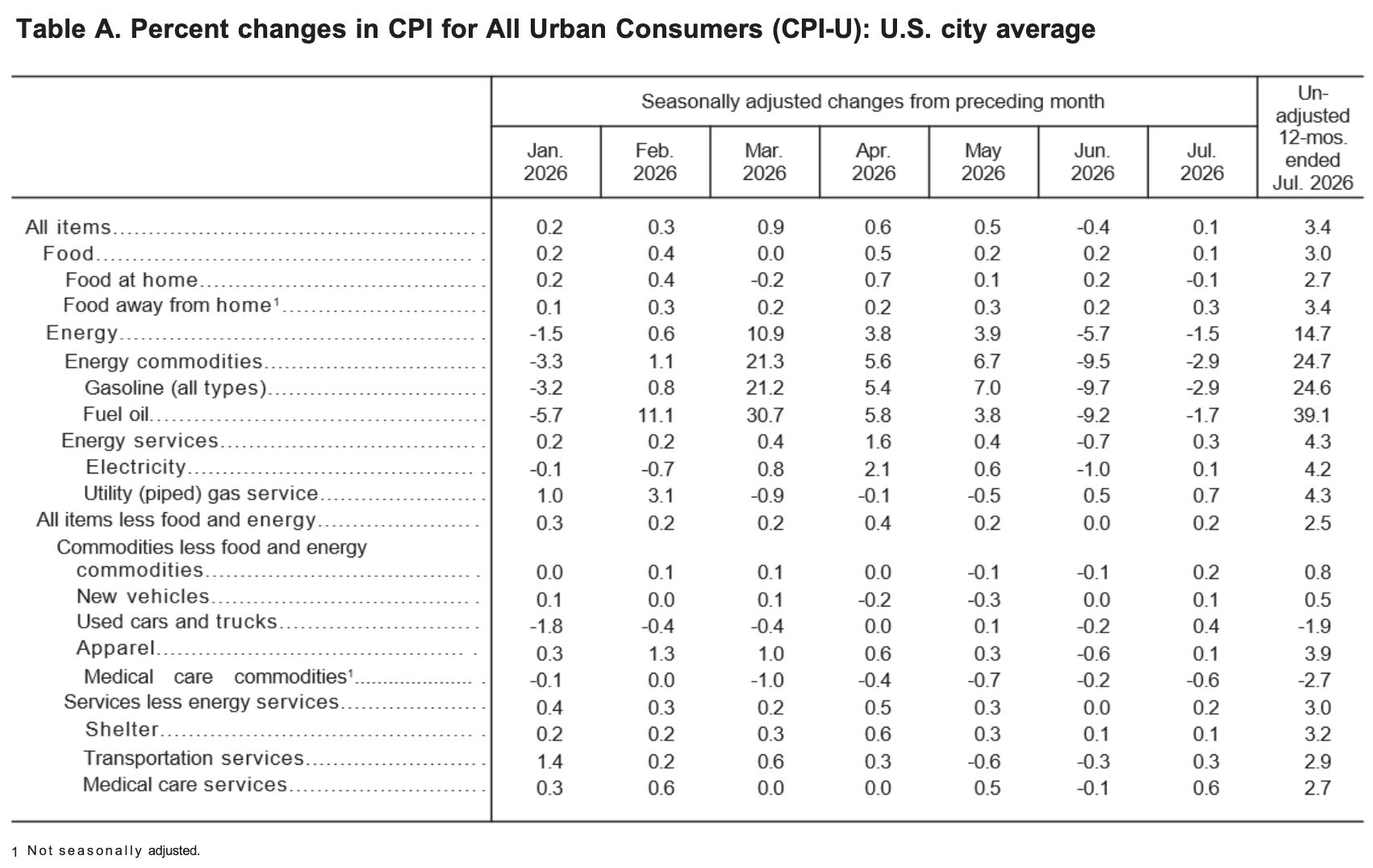
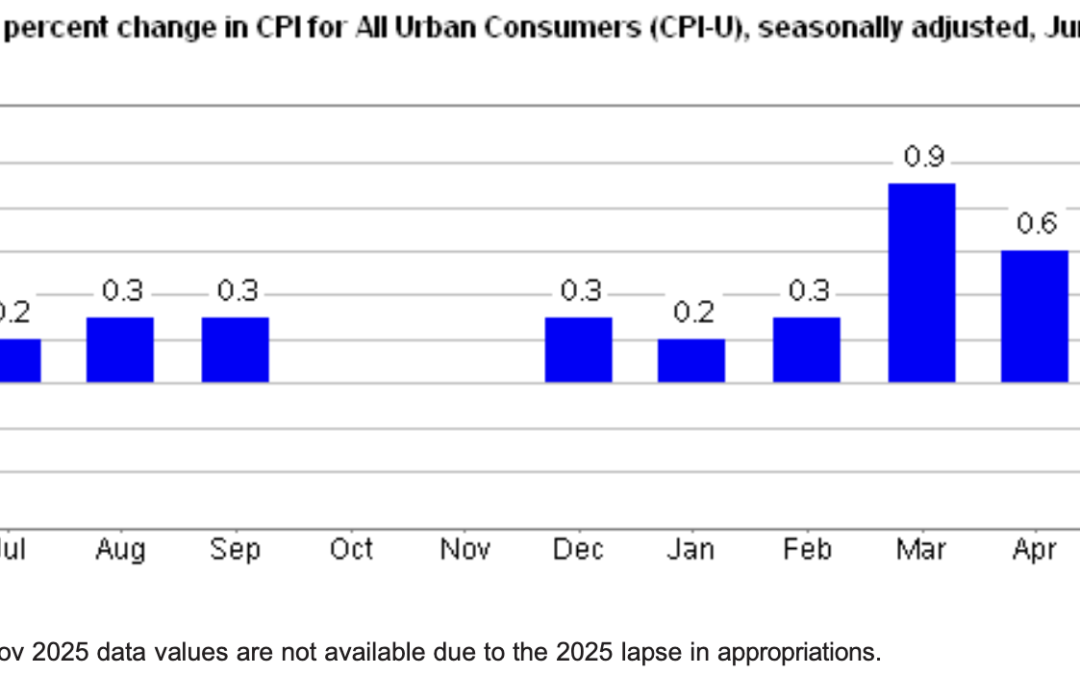
The July 2026 Consumer Price Index of All Urban Consumers (CPI-U) report indicates that inflation rose by 0.1% this month, up from a 0.4% decline in June. These data were released at 8:30 am EST on August 12, 2026, by the Bureau of Labor Statistics (BLS). Before seasonal adjustment, the year-over-year (Y-o-Y) inflation rate in the all-items index grew by 3.4%.
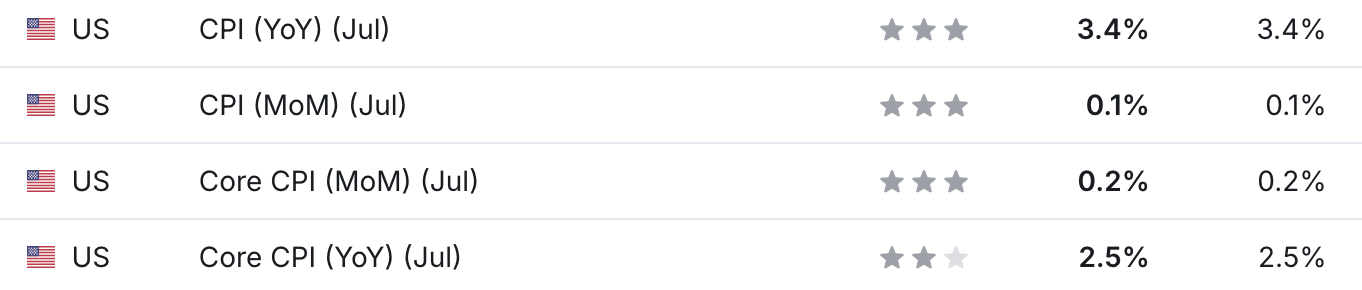
This month’s results matched economists’ consensus estimates. The table below is courtesy of Investing.com. The left column represents July’s figures, while the right column represents forecasters’ expectations. As you can see, there weren’t any surprises.
Yet, as inflation concerns fester among the investing public, Fed Chair Kevin Warsh said after the latest Monetary Policy Meeting on Jul. 29 that the bond market has already done much of the heavy lifting.
“Nominal and real yields are materially higher across the Treasury curve. In fact, some of the increases in market interest rates between FOMC meetings are among the most significant in the last two decades, ranking around the top decile or so,” he said.
“If I were to try to break down—just aggregate the Treasury market signals—I wouldn’t be able to do it perfectly. But the bond market’s saying many of those same things, and that’s why we’re seeing a tightening both in nominals and in reals, even while, at some level, we haven’t done much in 42 days. The markets have done quite a bit.”
Thus, while investors debate the merits of rate hikes, Warsh believes higher interest rates have already been priced into the U.S. economy.
Food Prices
The food index increased by 0.1% in July, decelerating from the 0.2% rise in June. Four of the major grocery indices increased this month, while two decreased.
- Cereals and bakery products (+0.2%)
- Meats, poultry, fish, and eggs (-0.7%)
- Dairy and related products (-0.1%)
- Fruits and vegetables (-0.1%)
- Nonalcoholic beverages (+0.9%)
- Other food at home (+0.0%)
In addition, the food away from home index increased by 0.3%, as restaurant inflation surpassed grocery inflation.
Energy Prices
The energy index fell by 1.5% MoM in July after dropping by 5.7% MoM in June — the largest monthly drop since April 2020. Gasoline prices fell by 2.9%, while electricity rose by 0.1%, and natural gas by 0.7%.
Core CPI
The July core CPI rose by 2.5% Y-o-Y, down from 2.6% in June. Below is an itemized breakdown of the various components:
- Shelter index: (+0.1%) [June: +0.1%]
- Rent index: (+0.3%) [June: +0.1%]
- Owners’ equivalent rent: (+0.3%) [June: +0.1%]
- Motor vehicle insurance: (-0.3%) [June: -2.0%]
- Medical care services: (+0.6%) [June: -0.1%]
- Physician services: (+0.2%) [June: -0.2%]
- Hospital services: (+0.5%) [June: +0.1%]
- Airline fares: (+2.2%) [June: +0.2%]
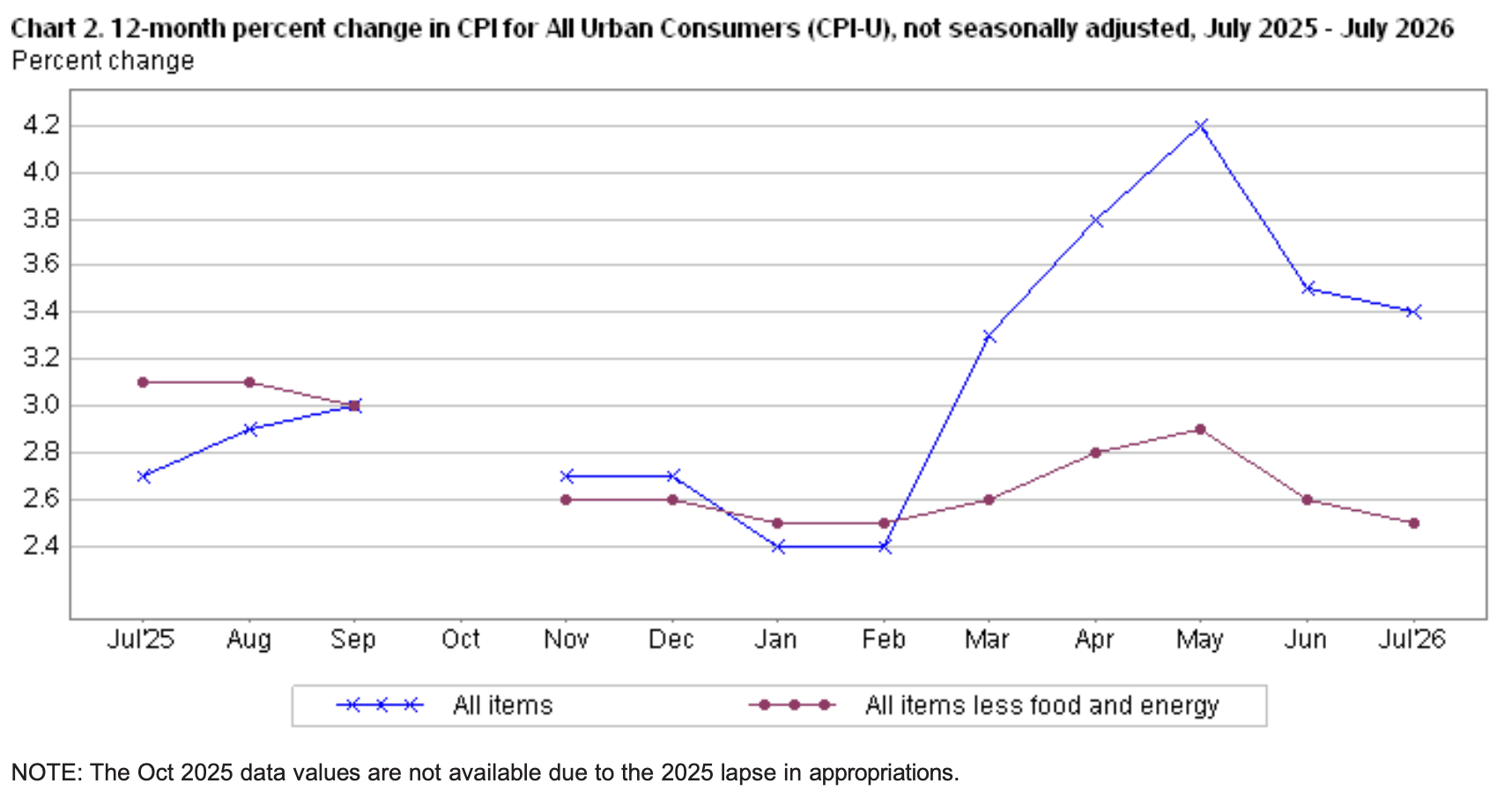
Seasonally Unadjusted CPI
Before seasonal adjustments, the CPI-U for July 2026 increased by 3.4% Y-o-Y to an index level of 333.918. Since these figures are unadjusted, they include regular seasonal price fluctuations that can create volatility in the results.
A Juggling Act
While interest rates have risen dramatically in recent months, investors seem keen on encouraging a rate hike from the Fed. However, recent data signals that tighter financial conditions may already be impacting the real economy.
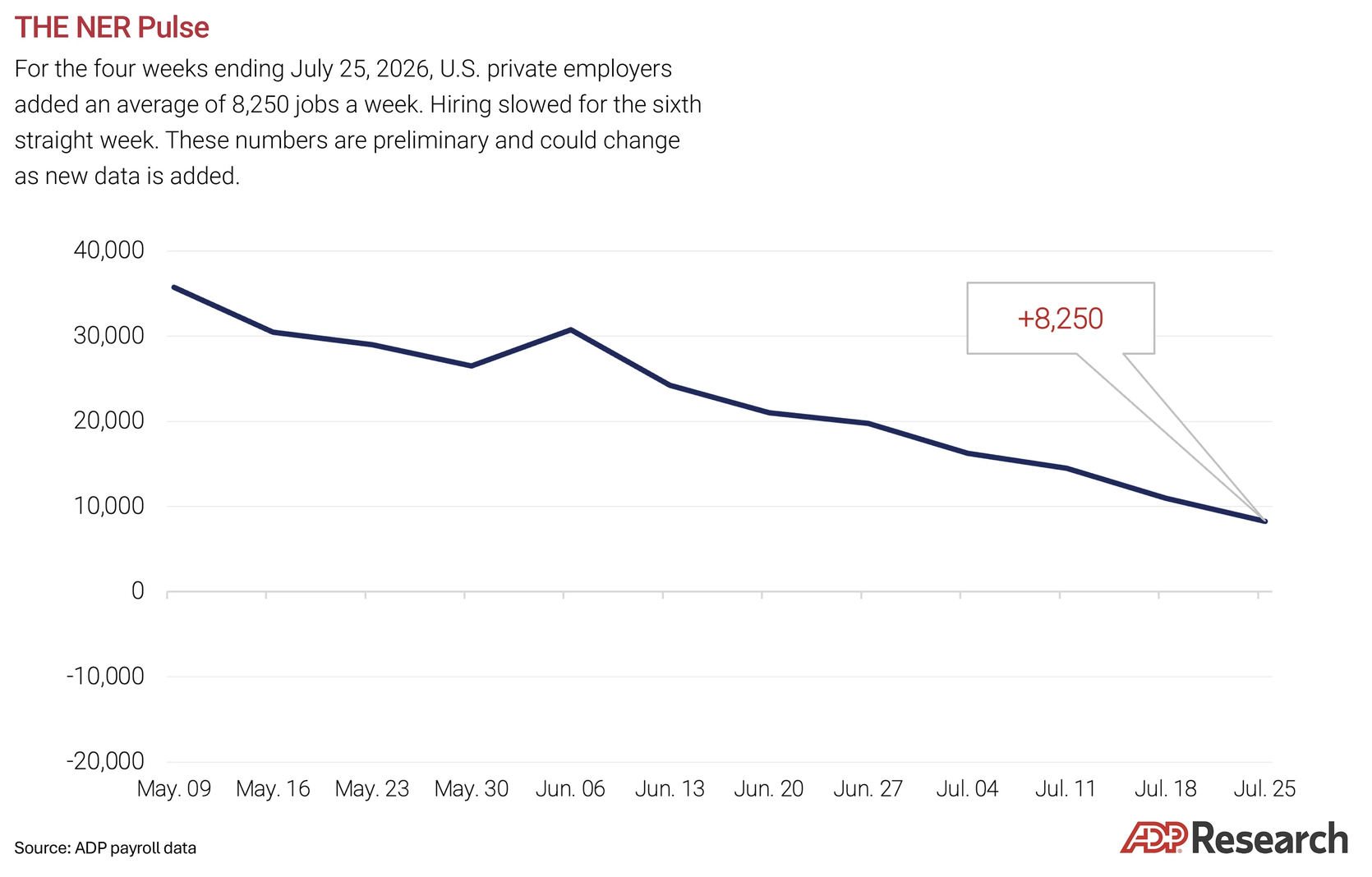
For example, ADP private payrolls underperformed expectations last week, and the firm noted on Aug. 11 that its Weekly NER Pulse has slowed for six straight weeks. Consequently, weakening labor market metrics have become increasingly common.
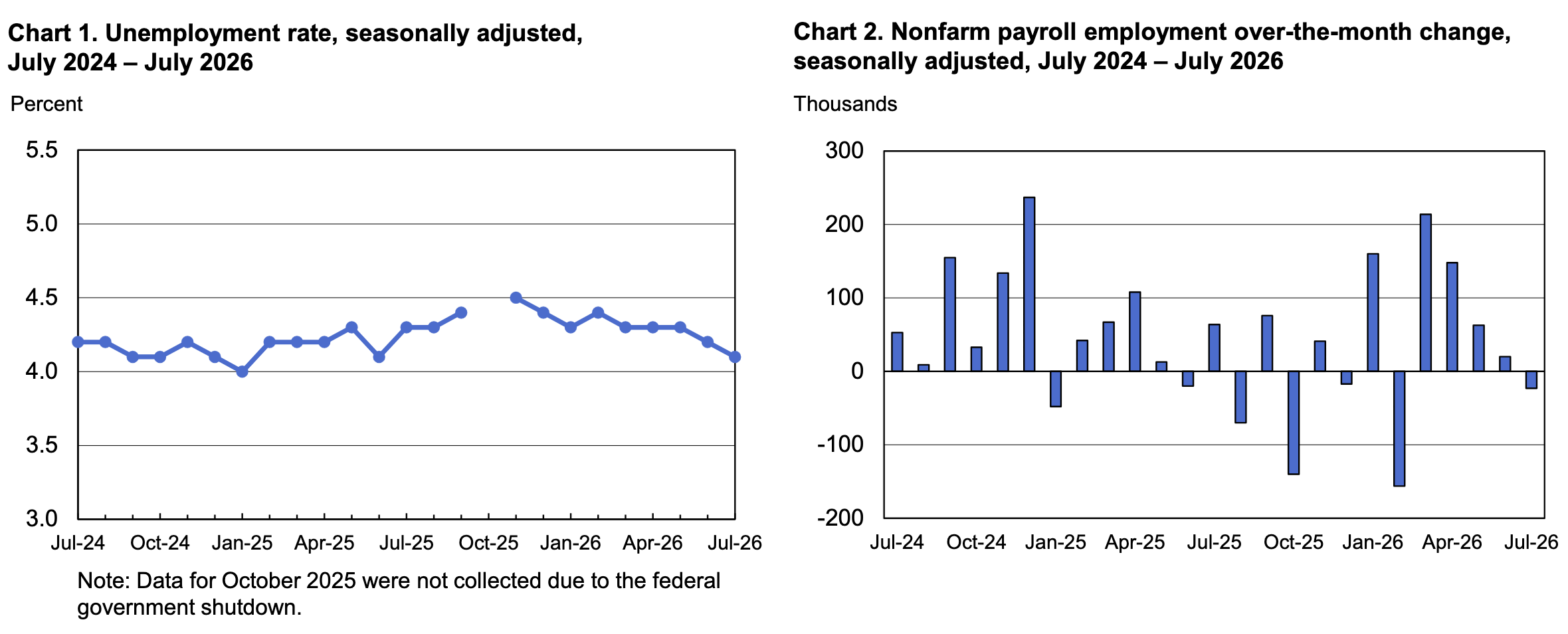
Speaking of which, the BLS reported on Aug. 7 that U.S. nonfarm payrolls fell by 23,000 in July. And if you analyze the trend on the right side of the chart below (the one on the right), you can see that monthly payroll growth had declined over the last few months before turning negative in July. As a result, the slowdown is similar to the results from ADP.
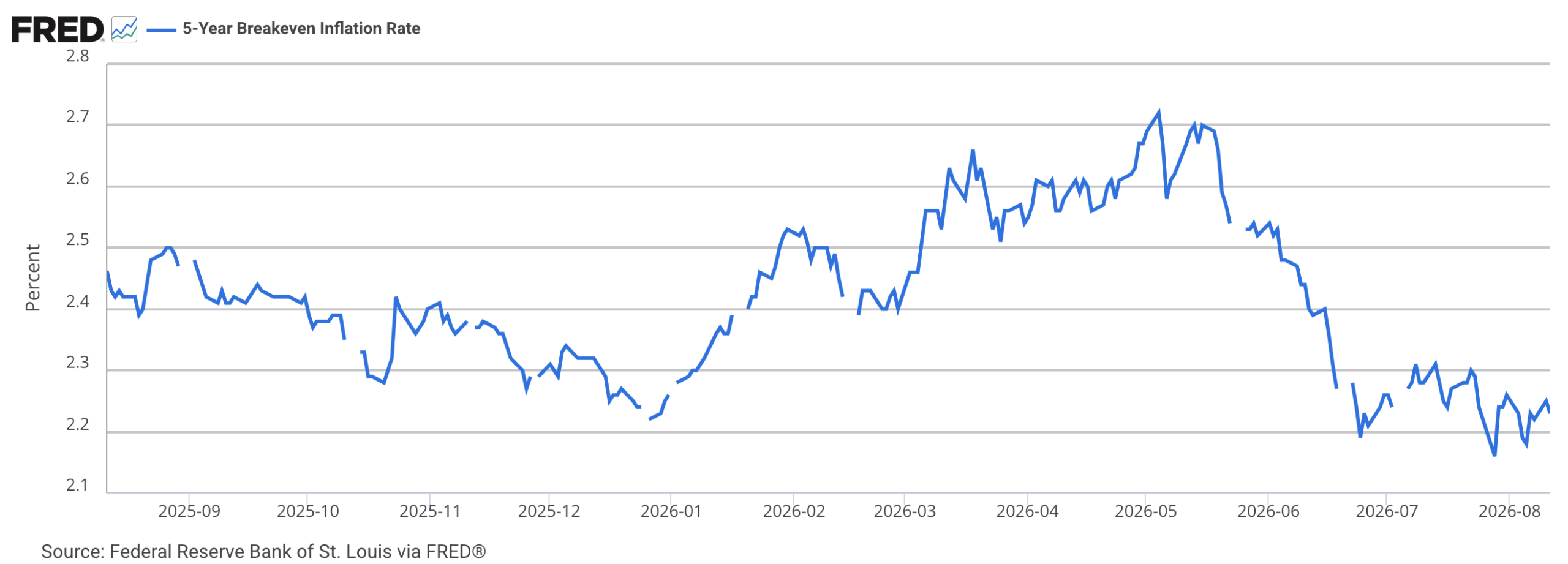
Finally, while inflation is top of mind among the investing public, institutions are less concerned about the pricing pressures. The blue line below tracks the U.S. 5-Year breakeven inflation rate — a gauge of institutions’ annual inflation expectations over the next five years. And with the metric standing at 2.23% as of Aug. 11, it shows much less apprehension than the narrative suggests.
Turning to the financial markets, gold has found its footing in recent days and could be poised for a substantial comeback into year-end.
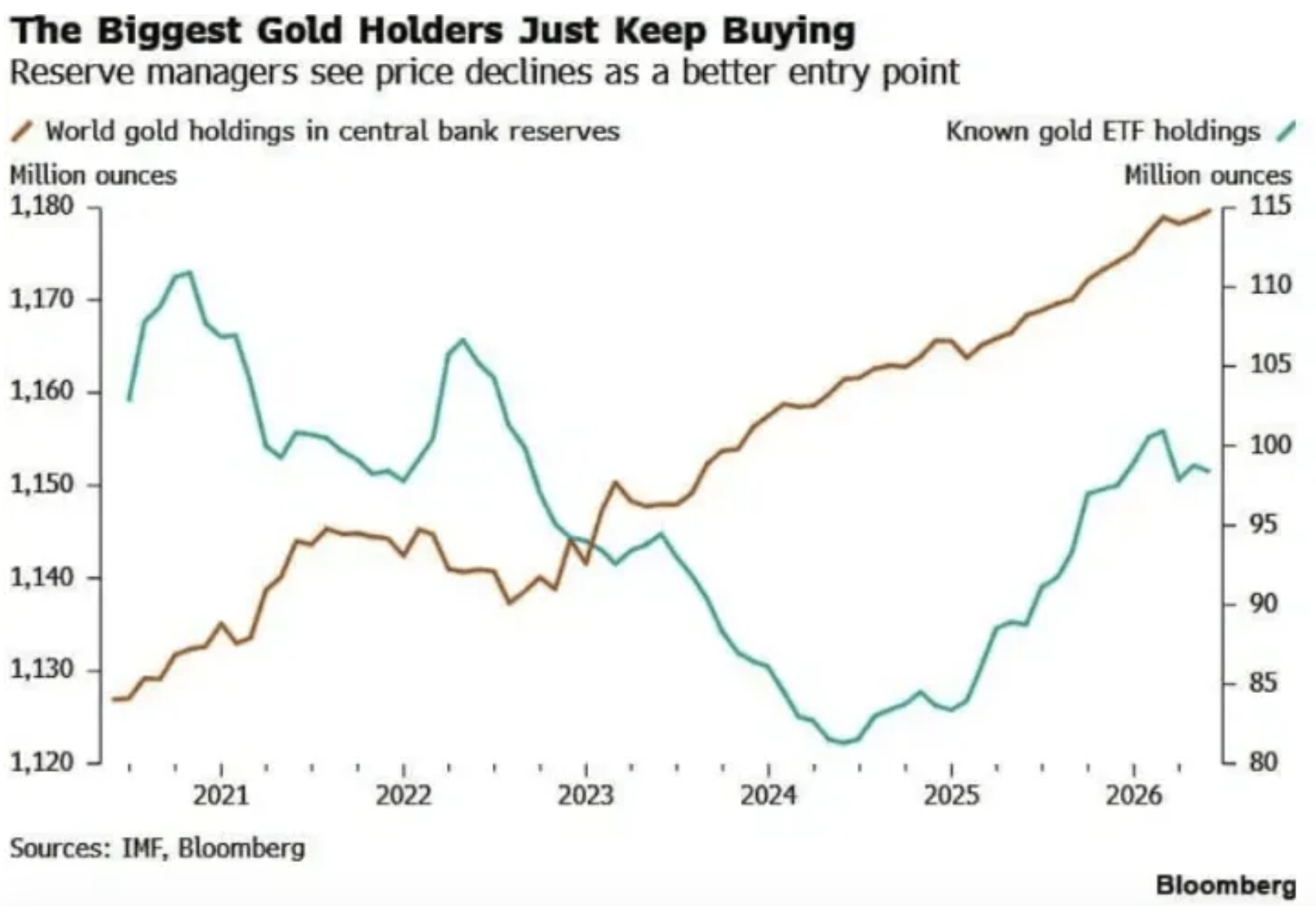
To explain, the green line above tracks known gold ETF holdings, while the brown line above tracks world gold holdings in central bank reserves. If you analyze the performance of the latter, you can see that the recent price slump didn’t deter the largest buyers in the market.
As such, the recent dip has only emboldened the bullion bulls, and when combined with oversold conditions and strong fundamentals, the activity could help propel gold higher over the next several months.
Are you thinking about diversifying into precious metals? Talk to your financial advisor about initiating a gold IRA account today, allowing you to invest in this red-hot asset on a tax-advantaged basis. Additionally, our complimentary CPI inflation calculator remains at your disposal, enabling you to assess inflation’s impact on your finances. Please seek the guidance of a financial advisor before making any investment decision.
As a worthwhile option, Augusta Precious Metals specializes in precious metal IRAs, helping to roll your existing retirement accounts, such as a 401 (k), into IRAs backed by physical gold or silver. You can also purchase bullion directly, and the company has an exceptional reputation, with either AAA or 4.5 to 5-star reviews across multiple ratings agencies.
For more alternatives, our guide on the Top 12 Best Gold Investment Firms covers the pros and cons of the top dealers available. You can compare items like product availability, investment minimums, and buyback policies to determine the right option for you.
Furthermore, if you need a financial reset but are unsure which company and path are right for you, several reputable options are available.
Up first, CuraDebt has been in business since 1996 and helps Americans struggling with unsecured claims like credit cards, personal loans, medical bills, and tax obligations. The company helps negotiate with creditors on your behalf and has roughly 300 positive reviews. The only downside is that service is not available in all states.
Second, Americor sets itself apart by providing counseling and consolidation services, but also offers in-house loans through its affiliate lender, Credit9. The firm has nearly 25,000 positive reviews, but may not be the best fit if you have a low credit score.
Similarly, we created an extensive guide covering the 23 Best Debt Relief Companies that deserve consideration. Comparing the various options helps identify their strengths and weaknesses, and often makes it easier to find the best option for your unique situation.
by Alex Demolitor | Jul 14, 2026 | Definitions
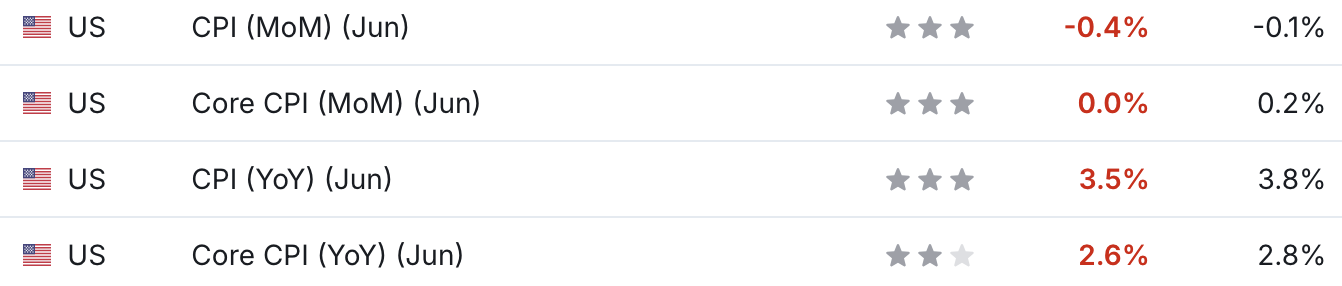
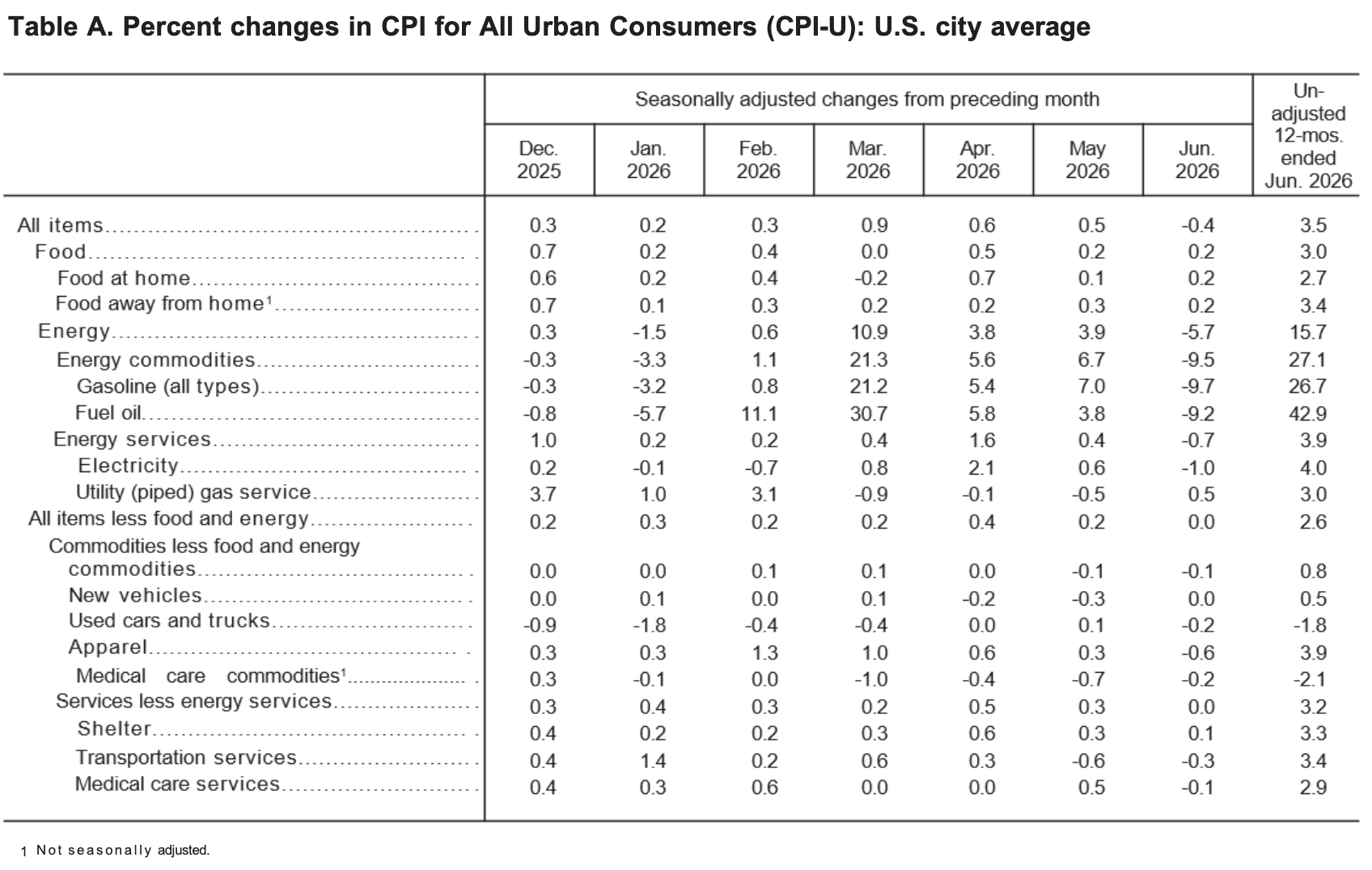
The June 2026 Consumer Price Index of All Urban Consumers (CPI-U) report indicates that inflation declined by 0.4% this month, down from a rise of 0.5% in May. These data were released at 8:30 am EST on July 14, 2026, by the Bureau of Labor Statistics (BLS). Before seasonal adjustment, the year-over-year (Y-o-Y) inflation rate in the all-items index grew by 3.5%.
This month’s results missed economists’ consensus estimates. The table below is courtesy of Investing.com. The left column represents June’s figures, while the right column represents forecasters’ expectations. As you can see, the red metrics highlight the monthly underperformance.
Yet, with the U.S.-Iran conflict heating up again, the inflationary impact has Fed officials hinting at rate hikes. Fed Governor Christopher Waller said on Jul. 13 that “We’re building off of basically almost, you know, five to six months of ‘higher, higher, higher, higher,’ on inflation readings. If I get another higher one, I’m going to treat that as signal, not noise….
“I am concerned about the equally plausible case that data in the coming weeks will show that inflation will remain at its elevated level or even trend higher, requiring tighter monetary policy in the near term.”
As such, the recent spike in oil prices should only embolden his view the longer it persists.
Food Prices
The food index increased by 0.2% in June, matching the rise from May. Four of the major grocery indices increased this month, while two decreased.
- Cereals and bakery products (+0.3%)
- Meats, poultry, fish, and eggs (+0.6%)
- Dairy and related products (+1.2%)
- Fruits and vegetables (-0.2%)
- Nonalcoholic beverages (-1.5%)
- Other food at home (+0.5%)
In addition, the food away from home index increased by 0.2%, as restaurant inflation aligned with grocery inflation.
Energy Prices
The energy index fell by 5.7% MoM in June, the largest monthly drop since April 2020. Gasoline prices fell by 9.7%, electricity by 1.0%, and natural gas rose by 0.5%.
Core CPI
The June core CPI rose by 2.6% Y-o-Y, a deceleration from the 2.9% recorded in May. Below is an itemized breakdown of the various components:
- Shelter index: (+0.1%) [May: +0.3%]
- Rent index: (+0.1%) [May: +0.4%]
- Owners’ equivalent rent: (+0.2%) [May: +0.3%]
- Motor vehicle insurance: (-2.0%) [May: -1.7%]
- Medical care services: (-0.1%) [May: +0.5%]
- Physician services: (-0.2%) [May: +0.0%]
- Hospital services: (+0.1%) [May: +0.7%]
- Airline fares: (+0.2%) [May: +2.7%]
Seasonally Unadjusted CPI
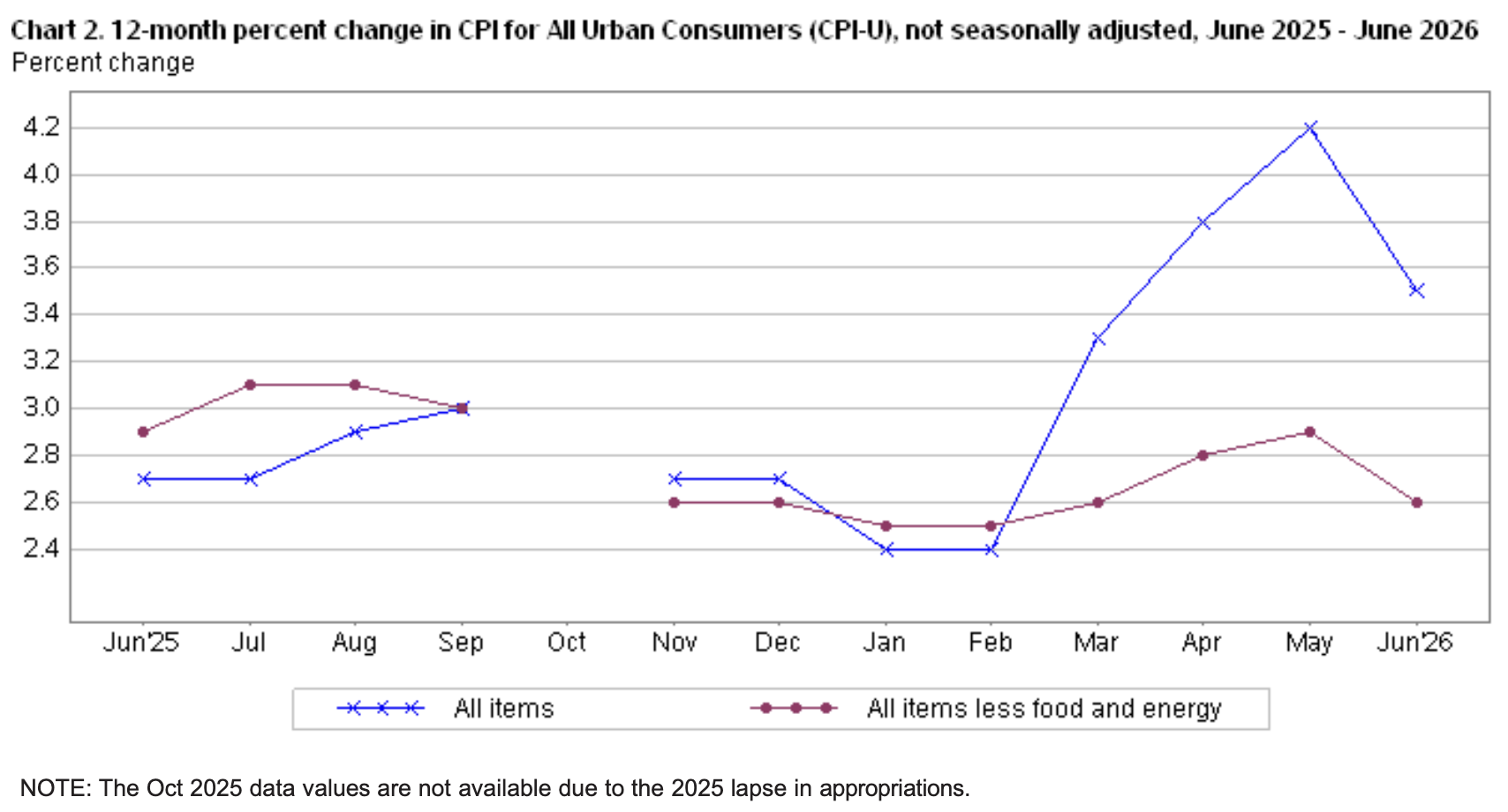
Before seasonal adjustments, the CPI-U for June 2026 increased by 3.5% Y-o-Y to an index level of 333.952. Since these figures are unadjusted, they include regular seasonal price fluctuations that can create volatility in the results.
The Chaos Continues
After another escalation in the U.S.-Iran conflict, higher oil prices and potentially higher inflation are back in the spotlight. Yet, this time the uncertainty and the bond market sell-off are occurring when U.S. economic growth is slipping.
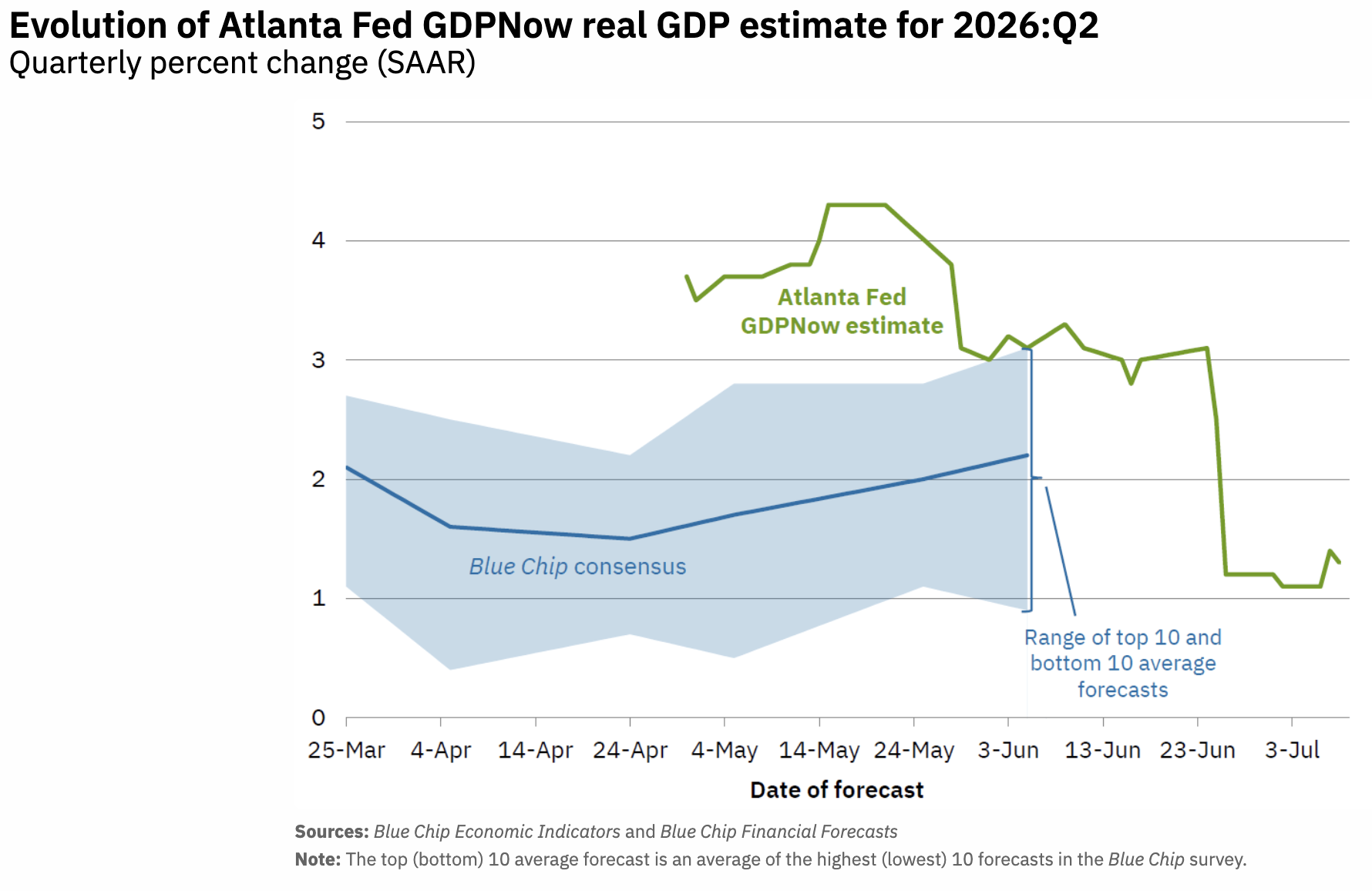
To explain, the green line above tracks the Atlanta Fed’s second-quarter 2026 GDP growth estimate. If you analyze the movement, you can see that higher interest rates and financial market volatility are starting to weigh on economic output. Moreover, with the metric sitting near 1.30%, the U.S. economy may continue to struggle until the geopolitical turmoil ends.
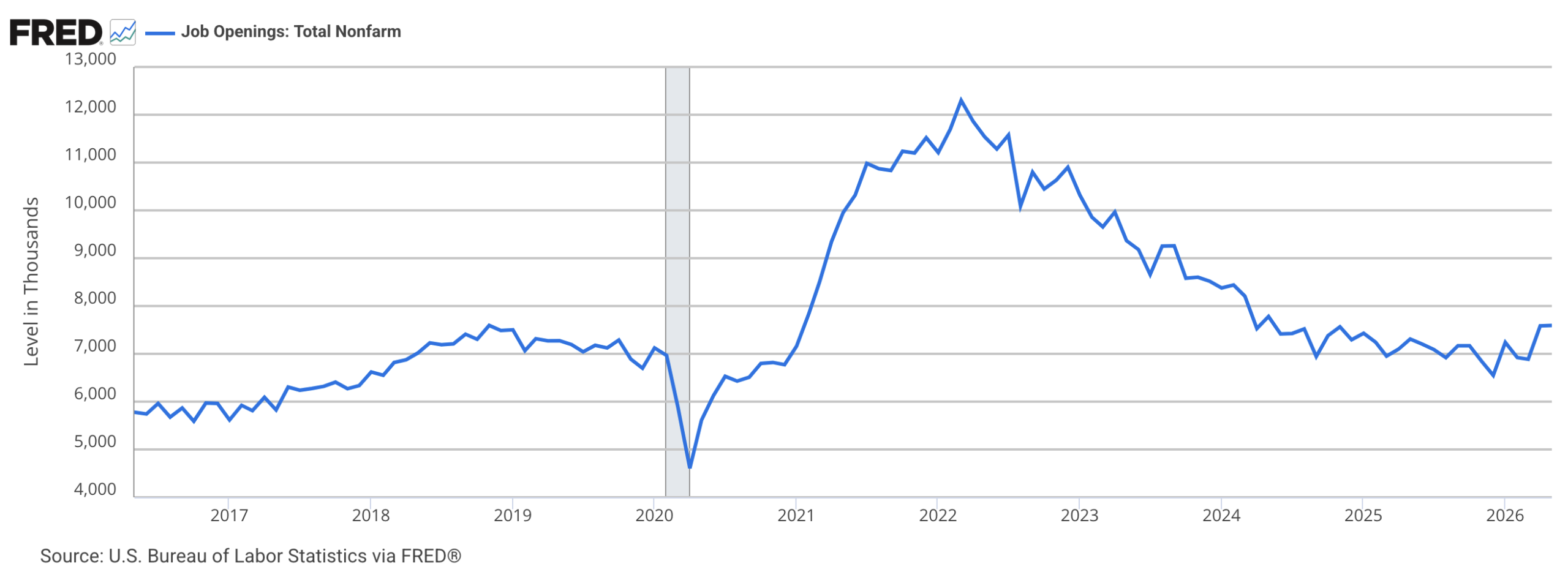
In contrast, U.S. job postings have increased recently. After bottoming near 6.6 million in December 2025, the metric has increased to almost 7.6 million as of the end of May. Consequently, divergent data make the outlook even more murky for policymakers.
Finally, Goldman Sachs told clients recently that the AI spending spree could uplift inflation. With soaring memory, software, and electricity prices poised to flow into the PCE and CPI baskets, they could create even more challenges for the Fed in the months ahead.

Turning to the financial markets, gold continues to suffer from the geopolitical volatility. But interestingly, the recent correction is similar to 2008, right before the multi-year surge.

To explain, the vertical red lines above highlight the similarity between the 2008 correction and the current one. And with the timeframes and magnitude quite consistent, it could be an interesting clue that gold is nearing an inflection point.
Are you thinking about diversifying into precious metals? Talk to your financial advisor about initiating a gold IRA account today, allowing you to invest in this red-hot asset on a tax-advantaged basis. Additionally, our complimentary CPI inflation calculator remains at your disposal, enabling you to assess inflation’s impact on your finances. Please seek the guidance of a financial advisor before making any investment decision.
As a worthwhile option, Augusta Precious Metals specializes in precious metal IRAs, helping to roll your existing retirement accounts, such as a 401 (k), into IRAs backed by physical gold or silver. You can also purchase bullion directly, and the company has an exceptional reputation, with either AAA or 4.5 to 5-star reviews across multiple ratings agencies.
Furthermore, if you need a financial reset but are unsure which company and path are right for you, several reputable options are available.
Up first, CuraDebt has been in business since 1996 and helps Americans struggling with unsecured claims like credit cards, personal loans, medical bills, and tax obligations. The company helps negotiate with creditors on your behalf and has roughly 300 positive reviews. The only downside is that service is not available in all states.
Second, Americor sets itself apart by providing counseling and consolidation services, but also offers in-house loans through its affiliate lender, Credit9. The firm has nearly 25,000 positive reviews, but may not be the best fit if you have a low credit score.
Last, we created an extensive guide covering the 23 Best Debt Relief Companies that deserve consideration. Comparing the various options helps identify their strengths and weaknesses, and often makes it easier to find the best option for your unique situation.