
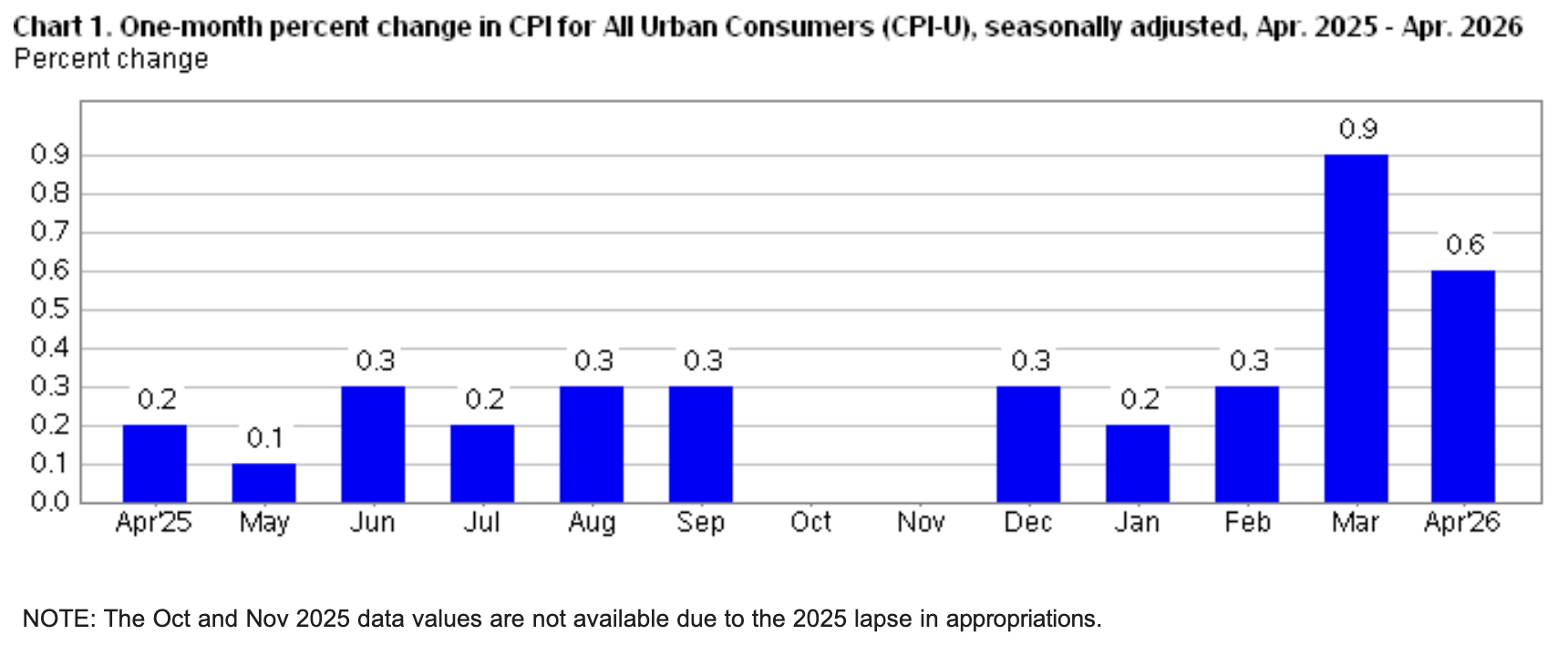
The April 2026 Consumer Price Index of All Urban Consumers (CPI-U) report indicates that inflation increased by 0.6% this month, down from 0.9% in March. These data were released at 8:30 am EST on May 12, 2026, by the Bureau of Labor Statistics (BLS). Before seasonal adjustment, the year-over-year (Y-o-Y) inflation rate in the all-items index grew by 3.8%, as higher energy prices accounted for over 40% of the monthly increase.
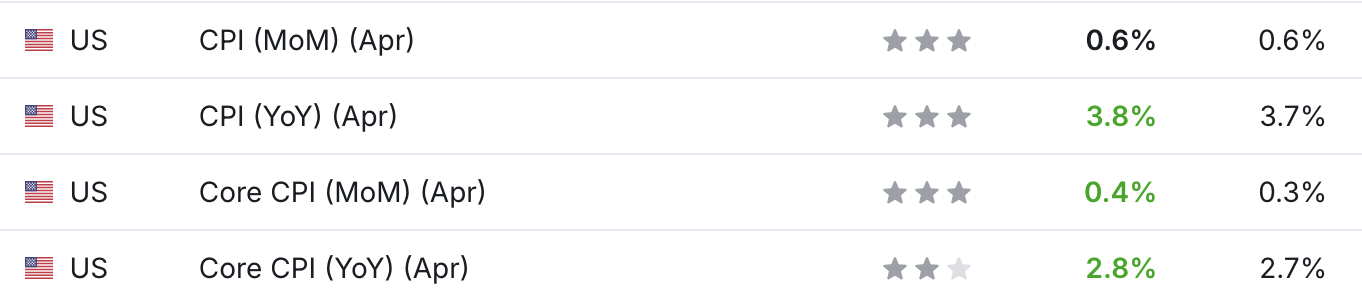
This month’s results also exceeded economists’ consensus estimates. The table below is courtesy of Investing.com. The left column represents April’s figures, while the right column represents forecasters’ expectations. As you can see, the data was slightly hotter than anticipated.
Yet, as the on-again, off-again, conflict between the U.S. and Iran persists, crude oil continues to hold policymakers hostage. The original assumption among market participants was that the duration of the oil surge would determine whether or not the FOMC needed to raise interest rates. And with little progress made toward lowering WTI prices and alleviating the inflation ramifications, more watching and waiting are likely for at least a couple of months.
Food Prices
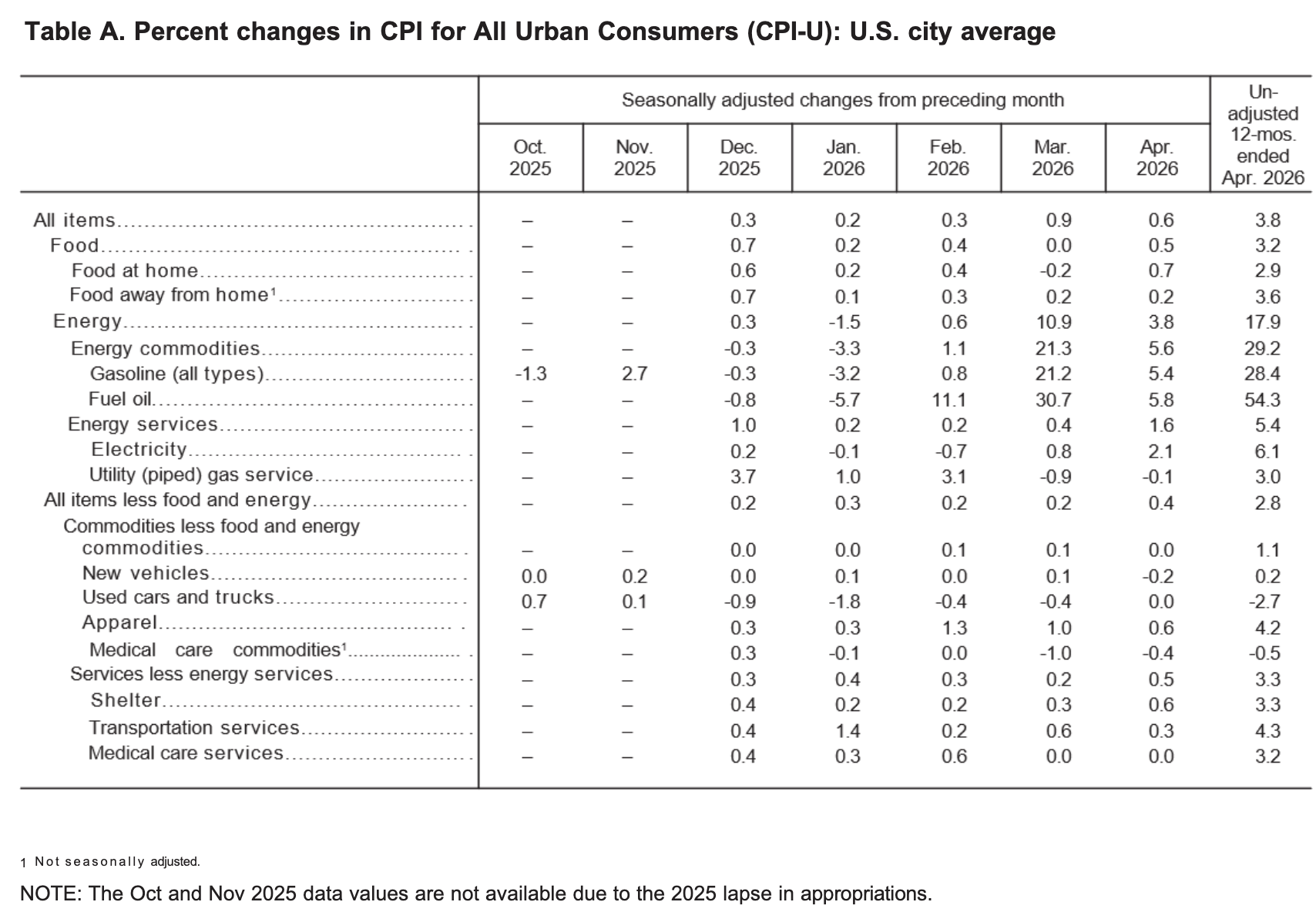
The food index rose by 0.5% in April after being flat in March. Five of the major grocery indices increased this month, while one decreased.
- Cereals and bakery products (+0.1%)
- Meats, poultry, fish, and eggs (+1.3%)
- Dairy and related products (+0.8%)
- Fruits and vegetables (+1.8%)
- Nonalcoholic beverages (+1.1%)
- Other food at home (-0.4%)
In addition, the food away from home index increased by 0.2%, as restaurant inflation underperformed grocery inflation in April.
Energy Prices
The energy index jumped by 3.8% MoM in April following a 10.9% increase in March. Gasoline prices rose by 5.4%, electricity by 2.1%, and natural gas fell by 0.1%.
Core CPI
The April core CPI rose by 2.8% Y-o-Y, above the 2.6% print from March. Below is an itemized breakdown of the various components:
- Shelter index: (+0.6%) [March: +0.3%]
- Rent index: (+0.5%) [March: +0.2%]
- Owners’ equivalent rent: (+0.5%) [March: +0.3%]
- Motor vehicle insurance: (+0.1%) [March: +0.0%]
- Medical care services: (+0.0%) [March: +0.0%]
- Physician services: (+0.6%) [March: +0.7%]
- Hospital services: (-0.3%) [March: +0.4%]
- Airline fares: (+2.8%) [March: +2.7%]
Seasonally Unadjusted CPI
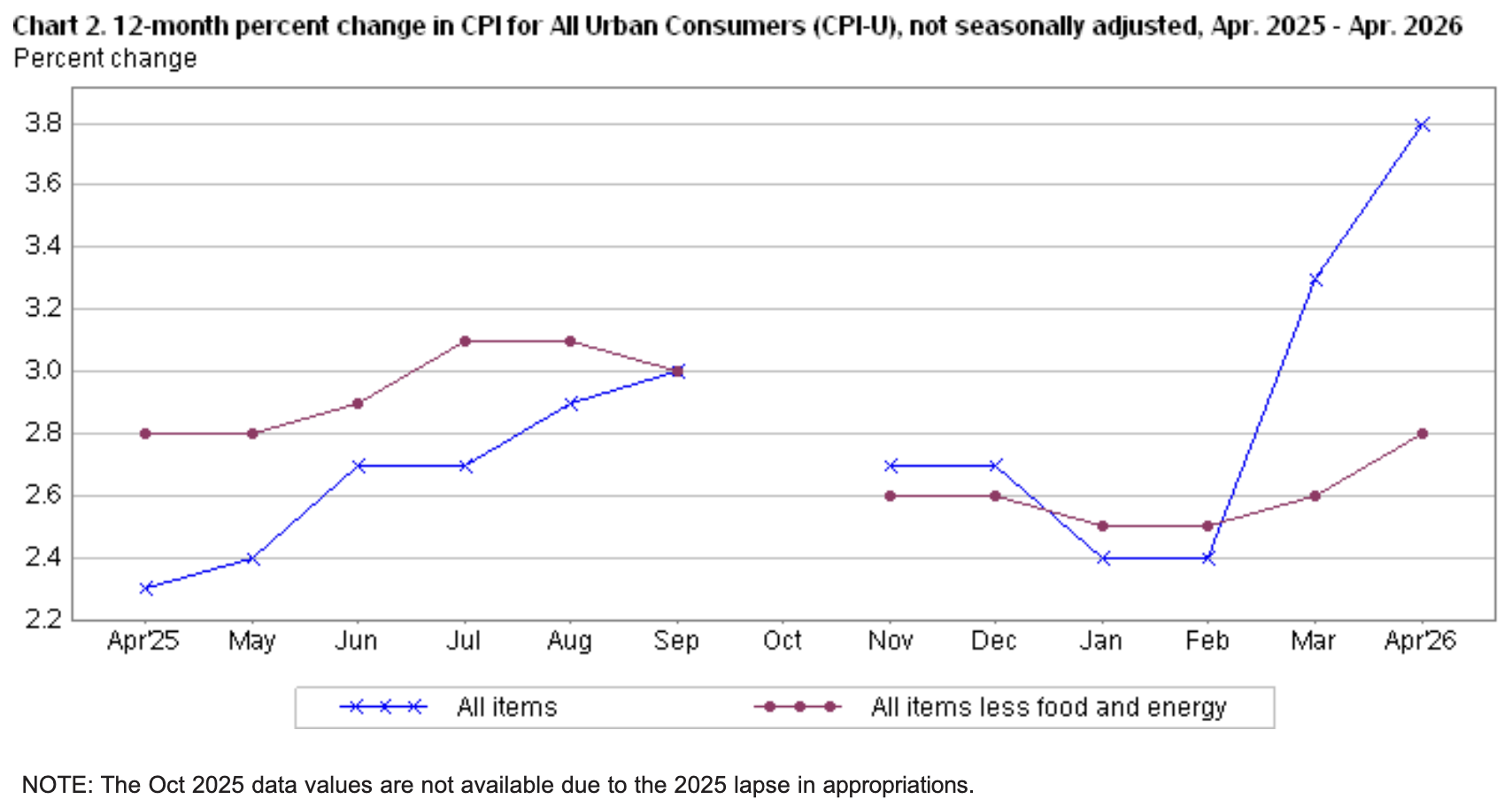
Before seasonal adjustments, the CPI-U for April 2025 increased by 3.8% Y-o-Y to an index level of 333.020. Since these figures are unadjusted, they include regular seasonal price fluctuations that can create volatility in the results.
Still Going Strong
While the geopolitical conflict has taken a toll on other regions, the U.S. has been a relative outperformer. For one, the U.S. is the largest oil producer in the world, so higher prices aren’t as problematic as they are for net-importing countries. Second, with the U.S. labor market still in solid shape, the FOMC doesn’t have to worry about the second half of its dual mandate.
The BLS reported on May 8 that “Total nonfarm payroll employment edged up by 115,000 in April, and the unemployment rate was unchanged at 4.3 percent.” More importantly, the result outperformed economists’ consensus estimate (115k vs. 65k), reinforcing the belief that the labor market is stronger than expected.

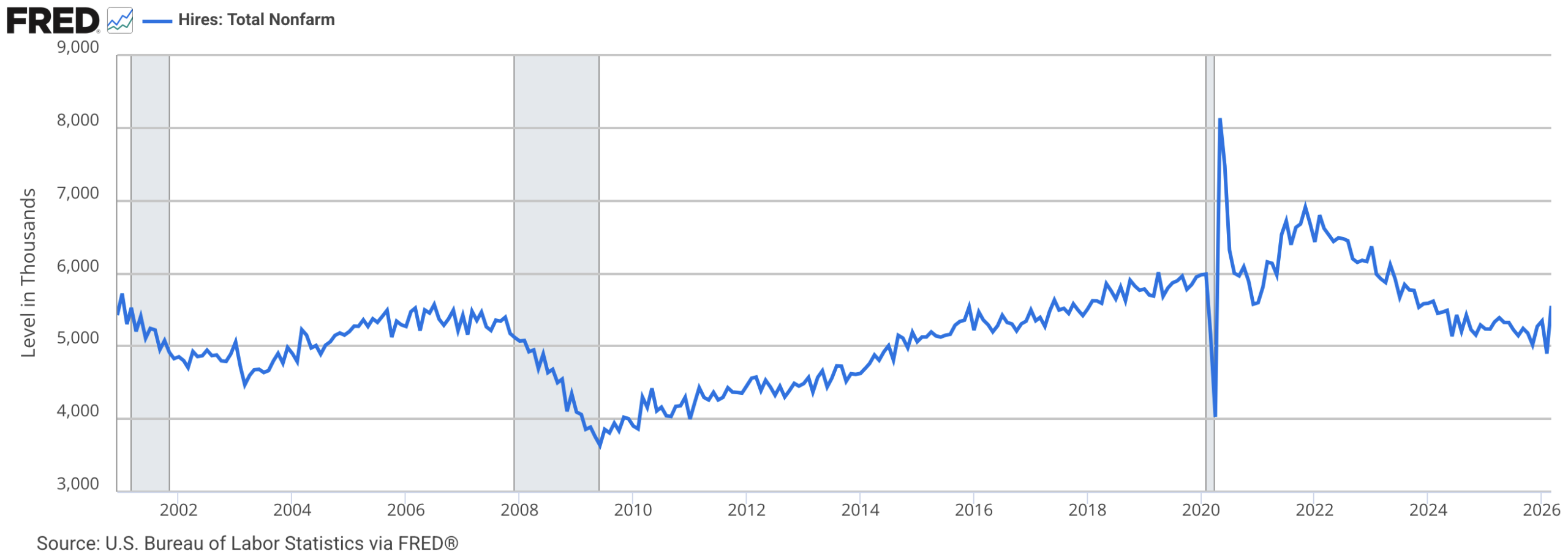
Similarly, JOLTS job openings came in at 6.866 million vs. 6.860 million on May 5, and the report noted how “The number of hires increased to 5.6 million (+655,000), and the rate increased to 3.5 percent in March, more than offsetting decreases in those measures the previous month.”
Thus, with the metric attempting to reverse its years-long downtrend, the bounce in March was welcome news for the FOMC.
Finally, a declining inventory-sales ratio could help support economic growth in the back half of the year.
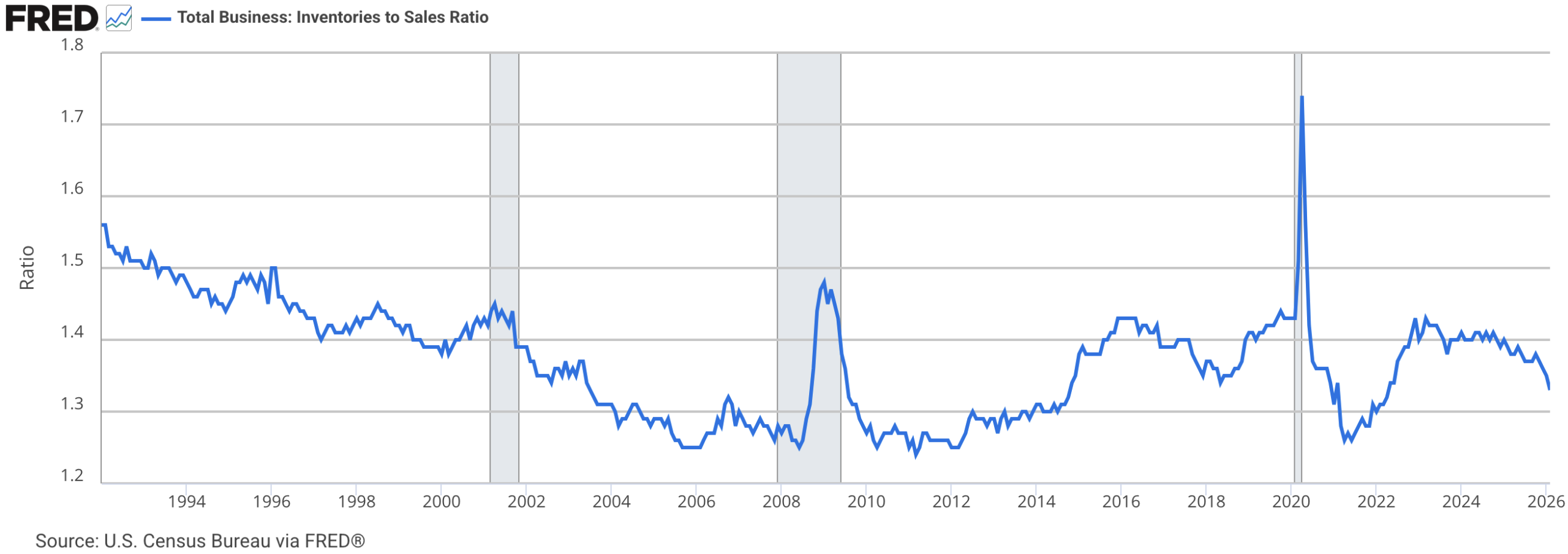
To explain, when the blue line above is falling, it means that U.S. business inventories are declining as a percentage of sales. Eventually, these firms will need to increase production to replenish their inventories, which typically supports GDP growth and employment. As a result, a potential restocking cycle could provide the FOMC with more leeway to focus on inflation rather than worry about growth and employment.
Turning to the financial markets, while volatility continues to whipsaw gold, Citigroup has mostly bullish scenarios unfolding in the months and years ahead.
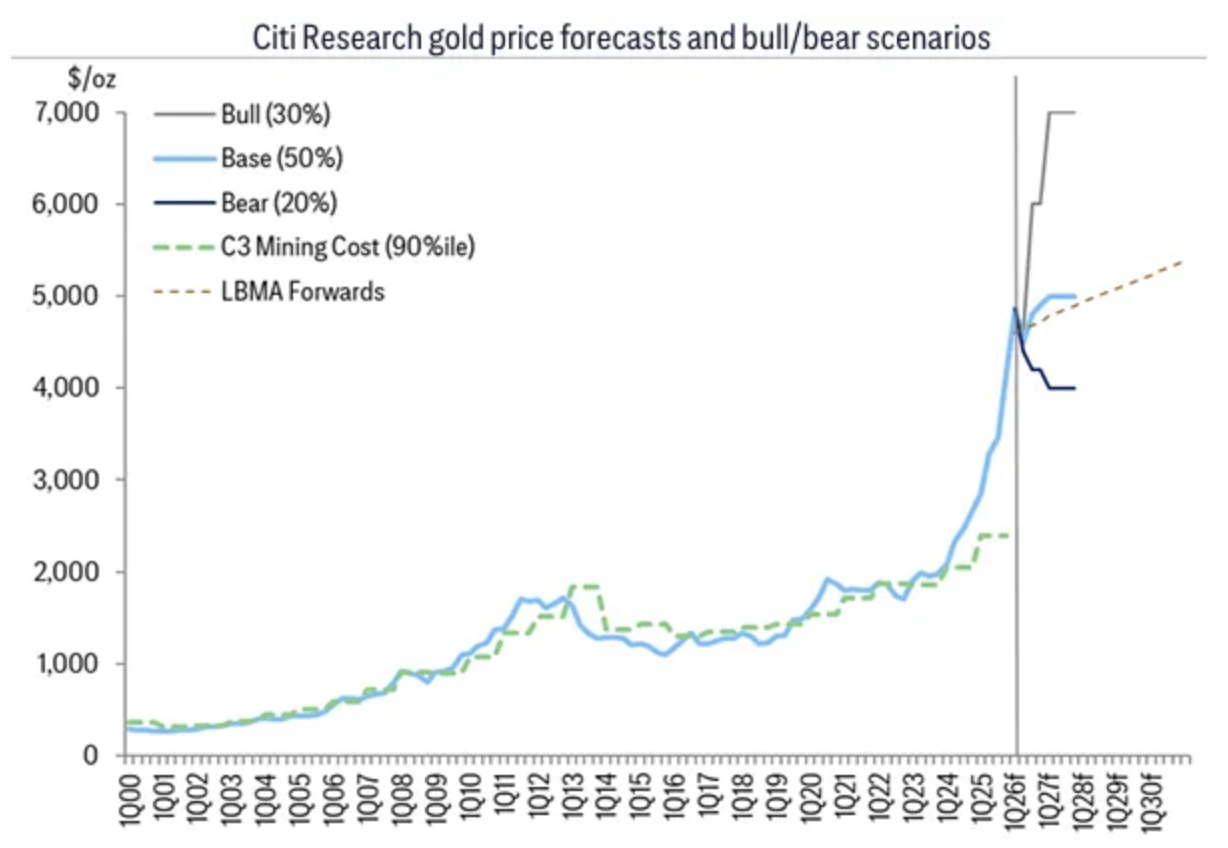
To explain, the base case (~50% probability) is a steady rise to $5,000; the bull case (~30%) is a sharp rally to $6,000 in 2026 and $7,000 in 2027 under stagflation and prolonged geopolitical stress; the bear case (~20%) is a drop to ~$4,000. Add it all up, and with the potential upside more than the potential downside, the investment bank remains constructive on gold’s future prospects.
Are you thinking about diversifying into precious metals? Talk to your financial advisor about initiating a gold IRA account today, allowing you to invest in this red-hot asset on a tax-advantaged basis. Additionally, our complimentary CPI inflation calculator remains at your disposal, enabling you to assess inflation’s impact on your finances. Please seek the guidance of a financial advisor before making any investment decision.
As a worthwhile option, Augusta Precious Metals specializes in precious metal IRAs, helping to roll your existing retirement accounts, such as a 401 (k), into IRAs backed by physical gold or silver. You can also purchase bullion directly, and the company has an exceptional reputation, with either AAA or 4.5 to 5-star reviews across multiple ratings agencies.
Furthermore, if you’re an Indiana entrepreneur looking to rebalance your investment portfolio, our guide on Selling a Business in Indiana arms you with valuation best practices, regulatory tips, and deep insights on how to think like a buyer and develop a successful sales plan.
For consumers struggling in the current K-shaped economy, credit card debt and recurring interest payments can feel like a never-ending cycle. Our guide outlines several paths to help solve the problem and rebuild your financial health, whether you have have $5,000, $10,000, or even $20,000 in debt.
Finally, if you’re unsure of the right strategy and need professional help, Beyond Finance is one of the largest debt settlement companies in the United States, specializing in unsecured claims like credit cards, personal loans, and medical bills. The firm is A+ rated by the Better Business Bureau (BBB) and is often used by Americans with at least $10,000 in unsecured debt.


Alex Demolitor is a financial writer and cross-asset analyst who completed the CFA Program, passing all three levels of the CFA exams. He has a Bachelors degree from King's College in Ontario and specializes in the fundamental analysis of stocks, bonds, commodities, and FX, with a focus on U.S. and Canadian economic indicators like CPI and inflation. His market analysis has appeared on major publications such as FXEmpire, Investing.com, and AdvisorPedia.