Amine Rahal
Amine is an entrepreneur, investor and financial writer that covers the US economy, inflation, alternative investments, cryptocurrencies and more. He has been involved in the space for over a decade.
![ClearOne Advantage – We Review This Debt Relief Company [2025]](https://cpiinflationcalculator.com/wp-content/uploads/2025/02/clearonehomepagescreen.jpg)
by Amine Rahal | May 2, 2025 | Debt Relief

Seeking debt relief and wondering whether ClearOne Advantage is a good choice? Look no further. In this article, we’ll review the company, its debt relief services, its reviews and ratings and we’ll break down their services and costs as well when it comes to debt settlement, debt consolidation, credit counselling and other similar services they may offer.
#1 Rated Debt Relief Company in 2025?
Are you looking for the #1 Rated Debt Relief & Settlement Company in 2025? See our New Era Debt review. New Era Debt has received the highest number of positive reviews amongst all the 20 companies we researched.
> Check if you qualify
> Visit Website
|
What is ClearOne Advantage?
ClearOne Advantage is an American debt relief company specializing in debt settlement services. Founded in 2008 and headquartered in Baltimore, Maryland, ClearOne Advantage has helped thousands of clients reduce their unsecured debts through negotiation with creditors. The company offers customized debt relief programs designed to help individuals regain financial stability without resorting to bankruptcy.
- Headquarters: Baltimore, Maryland
- States Covered: Available in most U.S. states (check their website for state-specific availability)
- Founded in: 2008
- Website: www.clearoneadvantage.com
- Phone: 1-888-340-4697
👍 Pros of ClearOne Advantage
- No upfront fees – you basically pay only when debts are settled
- Free consultation with customized relief plan
- Online portal to track progress 24/7
- Highly rated across BBB, Google, Trustpilot
- Member of AADR and IAPDA certified
- Dedicated customer support team
👎Cons of ClearOne Advantage
- Only available in select U.S. states
- May negatively impact your credit score short-term
- Does not assist with secured debt (e.g. mortgages, car loans) like many other debt settlement companies.
- No services for IRS/tax debt (CuraDebt may be better for tax debt.)
- Not all creditors may agree to settlements
ClearOne Advantage Application Process
- Free Consultation: Speak with a debt specialist to evaluate your situation
- Enrollment: If you qualify, you’ll be enrolled in a tailored debt settlement plan
- Build Savings: Start making monthly deposits into your settlement account
- Negotiation Phase: ClearOne negotiates with creditors to reduce total debt
- Debt Settlement: Pay reduced balances as settlements are reached
- Graduation: Once all debts are settled, you complete the program
This process typically spans 24 to 48 months, depending on your balance and savings rate.
Services Offered by ClearOne
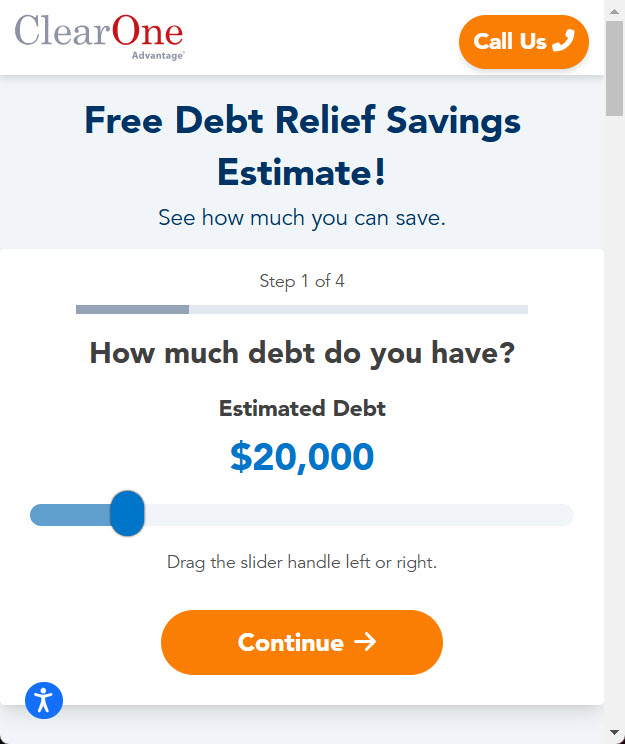
- Free Debt Analysis
- Debt Settlement & Negotiation
- Customized Debt Reduction Plans
- Financial Education & Budgeting Support
- Upfront Fees (Performance-Based Fees)
- Dedicated Client Portal for Account Management
Minimum Requirements:
- Minimum Debt: $10,000 in unsecured debt
- Income Minimum: No strict requirement, but must demonstrate the ability to make monthly program payments
Who Should Consider ClearOne Advantage?
ClearOne Advantage is best suited for:
- Individuals with $10,000 or more in unsecured debt such as credit cards and some loans.
- Those struggling to make minimum payments
- People seeking an alternative to bankruptcy
- Clients looking for hands-on guidance and a modern digital experience
- Consumers in qualifying U.S. states with moderate to strong income
ClearOne may not be ideal for:
- Consumers with secured debt like mortgages or auto loans
- Individuals needing tax debt or federal student loan help
- Those unwilling to take a short-term hit to their credit score
ClearOne Advantage Ratings & Reviews:
ClearOne Advantage has built a strong reputation for its transparency, customer service, and ability to help clients settle their debts. Here’s how they are rated across major platforms:
- BBB Rating: A+ (Accredited Business)
- BBB Reviews: 4.72/5 Stars (Over 1,500 Reviews)
- Trustpilot: 4.8/5 Stars (Over 3,000 Reviews)
- Google Reviews: 4.6/5 Stars
- Consumer Affairs: 4.7/5 Stars
- Investopedia Rating: 4.1/5 Stars
- Accreditations: Member of the American Association for Debt Resolution (AADR), Certified by the International Association of Professional Debt Arbitrators (IAPDA)
ClearOne Advantage VS Others
Here is a brief overview of how this company compares with other popular competitors in the debt settlement space…
| Company |
Avg. Rating |
Fees |
Min. Debt |
BBB Rating |
| ClearOne Advantage |
4.37 / 5 |
20% – 25% |
$10,000 |
A+ |
| New Era Debt Solutions |
4.9 / 5 |
14% – 23% |
$10,000 |
A+ |
| TurboDebt |
4.9 / 5 |
15% – 25% |
$10,000 |
A+ |
| Freedom Debt Relief |
4.59 / 5 |
15% – 25% |
$10,000 |
A+ |
| Pacific Debt Relief |
4.85 / 5 |
15% – 35% |
$10,000 |
A+ |
Key Features & Benefits:
1. Free Consultation & Customized Plan
ClearOne Advantage provides a free initial consultation to assess your financial situation and determine if you qualify for their debt relief program. Each plan is tailored to the client’s financial needs, ensuring a manageable path toward debt resolution.
2. No Upfront Fees
Unlike some competitors, ClearOne Advantage does not charge upfront fees. Instead, their fee structure is performance-based, meaning they only charge a percentage of the settled debt once a negotiation is successfully completed.
3. Debt Reduction Through Negotiation
The company negotiates with creditors to reduce the total amount owed. Many customers have reported savings of 40% to 60% on their original debt balances before fees.
4. Online Client Portal
ClearOne Advantage offers an online portal where clients can monitor their progress, track payments, and communicate with their dedicated support team.
5. Strong Customer Support
With a team of debt specialists available via phone, email, and chat, ClearOne Advantage ensures clients receive guidance throughout the entire settlement process.
Limitations & Considerations:
While ClearOne Advantage has many benefits, it’s essential to be aware of potential downsides:
- Debt settlement can negatively impact your credit score because creditors may report missed payments before settlements are reached.
- Not all creditors agree to settlements, which means some debts may still need to be repaid in full.
- State restrictions apply, and the service is not available in all U.S. states.
Customer Support Review:
ClearOne Advantage has received positive feedback for its customer service and transparency. Many clients praise the company for providing clear information about the settlement process and offering responsive support.
Here’s what a customer named Mark had to say about his experience:
“ClearOne Advantage helped me settle my credit card debts when I was drowning in payments. Their team was transparent, and I saved almost 50% on my total debt. The online portal made tracking everything easy. Highly recommend!”
Frequently Asked Questions (FAQ)
1. What types of debt does ClearOne Advantage handle? ClearOne Advantage specializes in unsecured debt, including credit card debt, personal loans, medical bills, and some private student loans. They do not handle secured debts like mortgages or auto loans. They don’t help with IRS or tax debt either.
2. How does ClearOne Advantage’s debt settlement process work? Clients enroll in a customized debt settlement program where they make monthly deposits into a special account. Once enough funds are accumulated, ClearOne negotiates with creditors to reduce the total debt amount. The process typically takes 24-48 months.
3. Are there any upfront fees? No. ClearOne Advantage follows a performance-based fee structure, meaning they only charge fees after successfully negotiating a debt settlement.
4. Will using ClearOne Advantage affect my credit score? Yes, debt settlement can impact your credit score. Since you stop making payments to creditors during negotiations, your credit score may drop. However, successfully settling debts can help you avoid more severe financial consequences like bankruptcy.
5. How long does the debt settlement process take? The process generally takes between 24 and 48 months, depending on the amount of debt and the client’s ability to make payments into the settlement account.
6. Is ClearOne Advantage available in all U.S. states? No, ClearOne Advantage is not available in all states. Check their website to see if they operate in your state.
7. Does ClearOne Advantage offer tax debt relief? No, ClearOne Advantage specializes in unsecured debt relief and does not offer services for IRS tax debt.
8. What qualifications do I need to enroll in ClearOne Advantage’s program? To qualify, clients generally need at least $10,000 in unsecured debt and must demonstrate a financial hardship that prevents them from repaying debts in full.
9. What should I expect during the free consultation? During the consultation, a debt specialist will review your financial situation and discuss potential savings, risks, fees, and timelines for debt relief.
10. How do I get started with ClearOne Advantage? Visit www.clearoneadvantage.com or call 1-888-340-4697 to schedule a free consultation.
Final Thoughts: Is ClearOne Advantage Right for You?
ClearOne Advantage is a legitimate and highly-rated debt settlement company that offers customized relief programs with no upfront fees. While debt settlement may impact your credit score, ClearOne Advantage has a strong track record of helping clients reduce their overall debt burden.
If you’re struggling with unsecured debt and considering settlement, ClearOne Advantage is worth exploring.
Check if you qualify Visit Website
by Amine Rahal | Feb 5, 2025 | Debt Relief
Credit: CuraDebt.com
CuraDebt (https://www.curadebt.com/) is a debt relief company that has been in business since 1996 (according to their website), making it one of the oldest in the industry. They offer debt settlement and relief services for various types of unsecured debt, including credit card debt, personal loans, medical bills, and tax debt. Based on our review, CuraDebt seems to have generated a lot of positive reviews for its debt relief services, particularly for its ability to help clients reduce their debt significantly through negotiations with creditors.
#1 Rated Debt Relief Company in 2025?
Are you looking for the #1 Rated Debt Relief & Settlement Company in 2025? See our New Era Debt review. New Era Debt has received the highest number of positive reviews amongst all the 20 companies we researched.
> Check if you qualify
> Visit Website
|
Who is CuraDebt?
As we said earlier, CuraDebt is a debt settlement company that specializes in negotiating with creditors on behalf of consumers to reduce their overall debt. They work with individuals who are struggling to manage their credit card debt, tax debt, medical bills, or other unsecured debts.
- Headquarters: Hollywood, Florida.
- States Covered: All states EXCEPT: Connecticut, Georgia, Kansas, New Hampshire, South Carolina, Vermont, and West Virginia
- Founded in: 1996 in Irvine.
- Website: https://www.curadebt.com/
- Phone: 1-877-850-3328 Ext. 400
- Services Offered:
- Free Debt Counselling
- Negotiation With Creditors
- Debt settlement
- Tax debt relief
- Debt consolidation (through partner lenders – watch out for the rates if you choose this path!)
- Minimum debt: $5,000
- Minimum Age: Must be at least 21+ years old.
- Income Minimum: No minimum but must have verifiable regular income
Company Legitimacy, Ratings & Reviews
As we covered earlier, this company is operating in the debt settlement space since 1996, which makes it one of the oldest in the industry. In our view, the company’s longevity speaks volumes about its professionalism and customer service.
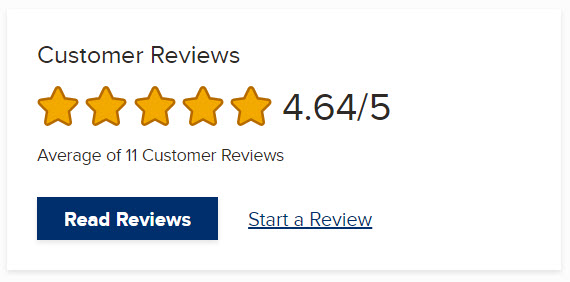
- BBB Rating: A+ (best)
- BBB Reviews: 4.74/5 Stars (27 Reviews)
- Google Reviews: 4.8/5 Stars (304 Reviews)
- Investopedia: 3.9/5 Stars
- Yelp: 4.6/5 Stars (12 Reviews)
- TrustPilot: 4.7/5 Stars (30 Reviews)
- BankRate: 4.6/5 Stars
- Accreditations:
- Member of the American Association for Debt Resolution (AADR)
- Certified by the International Association of Professional Debt Arbitrators (IAPDA)
CuraDebt BBB
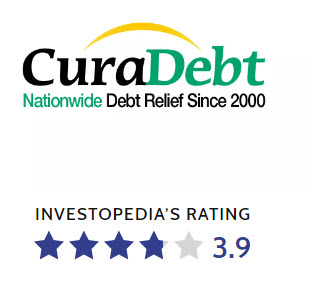
CuraDebt Investopedia Rating
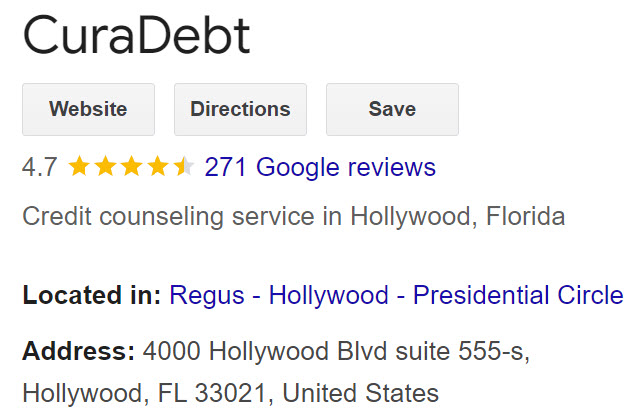
CuraDebt Google Rating
CuraDebt Key Services & Features
- Free Consultation: They provide a free initial consultation to discuss your debt situation and see whether you qualify for their services and what debt relief program is best for you.
- List of Services Offered:
- Debt Settlement
- Debt Relief (Personal and Business)
- Debt Negotiation
- Debt Consolidation Program
- Tax Debt Relief
- Fee structure: No upfront fees; charges a fee only after successful debt settlement. Typically 20% of the settled debt
- Strategy: Utilizes various strategies, such as creditor violations (e.g., FDCPA, TCPA) to negotiate better terms for clients
- Limitations: services are not available in all U.S. states. Fill out the form to see if you qualify.
One of the key advantages of CuraDebt is that it does not charge upfront fees, meaning you only pay once a debt settlement has been successfully negotiated. The company’s fee structure is typically around 20% of the settled debt, which is in line with industry standards. CuraDebt is also known for its ability to identify creditor violations, which can sometimes lead to additional savings or settlements for the client.
However, it’s important to note that debt settlement can negatively impact your credit score, as the process often involves stopping payments to creditors while negotiations are underway. Additionally, CuraDebt’s services are not available in all U.S. states, and there have been some mixed reviews about customer service and transparency.
Customer Support Review
They seem to have a responsive customer support through their live chat feature. In fact, we asked their support team to explain their services briefly, and here is what one of their support agents named Genesis had to say:
“I’m going to explain a bit about our company and how we will assist you with your debt. Since 2000, we have been working nationwide, directly with clients’ creditors, to negotiate savings of 40 to 60 percent. Instead of making individual monthly payments to creditors, we create a plan for you where a portion of your funds is deposited into an account. As this amount accumulates, we negotiate agreements with your creditors on your behalf to eliminate your debt more quickly.
Here’s how it works: We will negotiate with each of your creditors to reduce the total amount you owe. For example, if you owe Capital One $800, and we negotiate it down to $300, you would pay $300 instead of $800. This $300 will come from your monthly payments into the account. Whenever we receive an offer, we will contact you to present it. Once you accept the offer, the money will be sent to the creditor.”
CuraDebt FAQ
What types of debt does CuraDebt handle?
CuraDebt specializes in settling unsecured debts, including credit card debt, personal loans, medical bills, private student loans, and tax debts. The company does not typically handle secured debts like mortgages or auto loans, although you should probably ask them to find out.
2. How does the CuraDebt debt settlement process work?
The process begins with a free consultation to assess your debt situation and see if you qualify for their services. If you enroll, CuraDebt will negotiate with your creditors to reduce the amount you owe. You’ll make monthly deposits into a dedicated savings account, which will be used to settle the negotiated debts. The typical time frame for settlement is 24 to 48 months.
3. Are there any upfront fees?
No, CuraDebt does not charge any upfront fees. You only pay a fee (usually 20% of the settled debt) after a successful settlement is reached and accepted.
4. Will using CuraDebt affect my credit score?
Yes, participating in a debt settlement program can negatively impact your credit score. The process often involves stopping payments to creditors, which can lead to a drop in your credit score. However, the goal is to eventually settle the debts for less than what is owed, which may help improve your financial situation in the long run. Also, note that the impact on your credit score isn’t as bad as a consumer proposal or bankruptcy.
5. How long does the debt settlement process take?
The debt settlement process with CuraDebt typically takes between 24 and 48 months, depending on the amount of debt and how quickly you can accumulate funds in your savings account for settlement.
6. Is CuraDebt available in all U.S. states?
No, CuraDebt’s services are not available in all states. It operates in 26 states and the District of Columbia. If you live in a state where CuraDebt does not operate, you’ll need to look for alternative debt relief options.
7. Does CuraDebt offer tax debt relief?
Yes, CuraDebt offers services to help with tax debt relief. Their team includes tax professionals who can negotiate with the IRS on your behalf to resolve tax debts, penalties, and liens.
8. What are the qualifications to use CuraDebt’s services?
To qualify for CuraDebt’s services, you must have a minimum of $5,000 in unsecured debt, be at least 21 years old, and have verifiable income. There is no maximum debt limit for their services.
9. What should I expect during the free consultation?
During the free consultation, a CuraDebt counselor will review your financial situation and discuss your options for debt relief. They will explain the potential savings, timeline, risks, and fees involved in the process. This consultation helps you decide if debt settlement is the right choice for you.
10. How do I get started with CuraDebt?
To get started, you can visit CuraDebt’s website to request a free savings estimate or call their customer service line. If you decide to enroll, you’ll be assigned a debt counselor who will guide you through the entire settlement process.
![Take Charge America – We Review This Debt Settlement Firm [2025 Update]](https://cpiinflationcalculator.com/wp-content/uploads/2025/02/TakeChargeAmericaHomepage-1080x675.jpg)
by Amine Rahal | Jan 5, 2025 | Debt Relief
Wondering if Take Charge America is a good option for debt settlement or debt relief? In this review of the company, we’ll look at their reviews and ratings from across the web, and we’ll break down their services when it comes to managing and decreasing debt.
#1 Rated Debt Relief Company in 2025?
Are you looking for the #1 Rated Debt Relief & Settlement Company in 2025? See our New Era Debt review. New Era Debt has received the highest number of positive reviews amongst all the 20 companies we researched.
> Check if you qualify
> Visit Website
|
Who is Take Charge America?

Take Charge America (TCA) is a nonprofit credit counseling agency that provides debt management, financial education, and housing counseling services. Founded in 1987, TCA has helped thousands of individuals regain financial stability through structured debt relief programs and personalized financial counseling.
- Headquarters: Phoenix, Arizona
- States Covered: Nationwide (Available in most U.S. states)
- Founded in: 1987
- Website: www.takechargeamerica.org
- Phone: 1-866-750-9634
Services Offered:
- Free Credit Counseling
- Debt Management Plans (DMPs)
- Budget Planning & Financial Education
- Housing Counseling (HUD-approved)
- Student Loan Counseling
- Bankruptcy Counseling
February 2025 Update: As per a recent press release, Take Charge America has expanded its free housing counseling and mortgage assistance services to California, thanks to a $250,500 grant from the California Housing Finance Agency (CalHFA). This initiative allows the nonprofit agency to provide confidential support to homeowners and renters struggling with delinquency, foreclosure risk, or navigating the homebuying process. The services include rental and mortgage delinquency assistance, reverse mortgage counseling, pre-purchase and post-purchase guidance, and rental counseling for first-time or low-income renters. As a nonprofit, Take Charge America remains committed to offering free, unbiased advice tailored to each client’s financial situation. Residents can schedule a virtual appointment by visiting TakeChargeAmerica.org or calling (866) 987-2008.
Minimum Requirements to Qualify:
- Minimum Debt: No strict minimum, but best suited for those with $5,000+ in unsecured debt
- Income Minimum: Must have verifiable income to support a repayment plan
Take Charge America Ratings & Reviews:
Take Charge America is known for its commitment to consumer financial education, transparent practices, and effective debt relief solutions. Here’s how they are rated across major platforms:
- BBB Rating: A+ (Accredited Business)
- BBB Reviews: 4.7/5 Stars
- Trustpilot: 4.8/5 Stars
- Google Reviews: 4.6/5 Stars
- Consumer Affairs: 4.5/5 Stars
- Investopedia Rating: 4.3/5 Stars
- Accreditations: Member of the National Foundation for Credit Counseling (NFCC), HUD-approved housing counseling agency
Key Features & Benefits:
1. Free Credit Counseling
Take Charge America provides a free, confidential financial review to help clients explore available debt relief options and develop a customized financial plan.
2. Debt Management Plans (DMPs)
- TCA works with creditors to reduce interest rates and eliminate late fees.
- Clients make one consolidated monthly payment to TCA, which is then distributed to creditors.
- Most DMPs last 36 to 60 months, depending on the debt amount.
3. Nonprofit & Transparent Fee Structure
- As a nonprofit agency, TCA offers low-cost solutions with fees regulated by state laws.
- Fees typically range from $0 to $50 for enrollment and $25 to $75 monthly.
4. Housing & Bankruptcy Counseling
- Provides HUD-approved housing counseling for mortgage assistance and foreclosure prevention.
- Offers pre-bankruptcy counseling and debtor education, as required by federal law.
5. Financial Education & Resources
- Free online courses, budgeting guides, and financial tools.
- Personalized coaching to help clients develop better financial habits and avoid future debt.
Limitations & Considerations:
While Take Charge America has many benefits, here are some potential downsides:
- Debt management plans require consistent payments – If you miss a payment, you may lose program benefits.
- Not all debts qualify – Secured debts like mortgages and auto loans are not eligible.
- State restrictions apply – Some services may not be available in all states.
Customer Support Review:
Take Charge America receives high marks for customer service and program transparency. Many clients praise the easy enrollment process and supportive financial counselors.
Here’s what a customer named Jessica had to say:
“Take Charge America helped me lower my credit card interest rates and develop a realistic repayment plan. Their team was professional, patient, and always available to answer my questions. I highly recommend them!”
Frequently Asked Questions (FAQ)
1. What types of debt does Take Charge America handle? TCA specializes in unsecured debts, such as credit card debt, medical bills, personal loans, and collections. They do not handle secured debts like auto loans or mortgages.
2. How does Take Charge America’s debt management plan work? A DMP consolidates all your eligible debts into one monthly payment. TCA negotiates with creditors to lower interest rates and waive fees, helping you pay off debt faster.
3. Are there any upfront fees? TCA’s fees vary by state, but they do not charge high upfront fees like for-profit debt relief companies. Many clients qualify for low-cost or waived fees.
4. Will using a debt management plan affect my credit score? DMPs may initially impact your credit score, but as you make consistent payments and reduce your debt, your score is likely to improve over time.
5. How long does a debt management plan take? Most DMPs take 3 to 5 years to complete, depending on the amount of debt enrolled.
6. Is Take Charge America available in all U.S. states? TCA operates in most states, but some services may not be available in all locations. Check their website or call for details.
7. Does Take Charge America offer student loan assistance? Yes, TCA provides guidance on student loan repayment options but does not offer direct consolidation services.
8. What qualifications do I need to enroll in a debt management plan? You must have verifiable income to ensure you can make consistent monthly payments.
9. What should I expect during the free consultation? During the consultation, a financial counselor will review your debt situation, discuss repayment strategies, and outline your best options.
10. How do I get started with Take Charge America? Visit www.takechargeamerica.org or call 1-866-750-9634 for a free consultation.
Final Thoughts: Is Take Charge America Right for You?
Take Charge America is a trusted nonprofit credit counseling agency that provides debt management plans, financial education, and personalized counseling. Their low fees, nonprofit status, and strong industry reputation make them an excellent choice for individuals struggling with credit card debt and looking for a structured path to financial stability.
If you’re seeking a reputable debt management program, Take Charge America is a solid option.
Check if you qualify
Visit Website
by Amine Rahal | Aug 30, 2024 | Debt Relief
In the U.S., interest rate caps—especially when it comes to protecting consumers from predatory lending—are largely regulated at the state level. This means that the maximum interest rates lenders can charge vary depending on which state you live in and the type of loan we’re taking out. Let’s break down how this works across different states.
What Qualifies as a “Predatory Loan”?
First, let’s compare a traditional loan you would get from a bank versus a “predatory loan” you would get from an alternative lender:
| Feature |
Traditional Bank Loan |
Predatory Loan |
| Interest Rate |
Low to moderate (typically 3% to 12% APR) |
Very high (can exceed 50% APR, sometimes 300%+) |
| Loan Terms |
Fixed terms (usually 1 to 30 years) |
Short terms (often 2 weeks to a few months) |
| Repayment Structure |
Monthly payments, often with amortization |
Lump-sum payment or frequent, high payments |
| Fees and Charges |
Transparent, disclosed upfront |
Hidden fees, high fees, or penalties |
| Borrower Qualification |
Strict requirements (credit score, income, etc.) |
Minimal qualification (often no credit check at all) |
| Regulatory Oversight |
Highly regulated by federal and state laws |
Often operates in regulatory gray areas |
| Purpose of Loan |
Typically for major purchases (homes, cars, education) |
Often for emergency or short-term needs |
| Impact on Credit Score |
Positive impact if paid on time, reported to credit bureaus |
Negative impact, often not reported positively to credit bureaus |
| Borrower Rights |
Strong consumer protections, recourse available |
Limited recourse, predatory practices common |
| Rollover/Renewal |
Generally not allowed or unnecessary |
Frequent rollovers, trapping borrowers in cycles |
| Lender’s Intent |
Long-term relationship, repayment is expected |
Profit from borrower’s inability to repay on time |
Essentially, a predatory loan is a type of loan that takes advantage of borrowers in vulnerable and dire financial situations. These loans often come with excessively high interest rates, hidden fees, or deceptive terms that make it difficult for borrowers to repay the loan.
Federal Protections
Before diving into state specifics, it’s worth noting that there is a federal cap in place for certain groups. The Military Lending Act (MLA) caps interest rates at 36% APR for active-duty service members and their dependents on most consumer loans. This law provides a strong layer of protection, but it only applies to military members. You can learn more about the MLA on the Consumer Financial Protection Bureau (CFPB) website.
State-Level Interest Rate Caps
Interest rate caps for everyone else are set by state laws, and these can vary widely:
- California
- Payday Loans: In California, payday lenders can charge up to $15 per $100 borrowed, which can equate to an APR of over 400% depending on the term of the loan.
- Installment Loans: For loans over $2,500, there’s no cap on interest rates.
- More Info: Check out California’s Department of Financial Protection and Innovation for detailed regulations.
- Colorado
- New York
- All Loans: New York has a strict usury law that caps interest rates at 16% for most types of consumer loans. Charging above 25% is considered criminal usury.
- More Info: For more on New York’s laws, the New York State Department of Financial Services is a good resource.
- South Dakota
- Payday Loans: Like Colorado, South Dakota caps payday loan rates at 36% APR. This cap was set after a successful 2016 ballot initiative aimed at protecting consumers from predatory lending practices.
- More Info: Learn more on the South Dakota Division of Banking website.
- Texas
- Payday Loans: Texas doesn’t cap interest rates directly for payday loans, but it does regulate fees. This can still lead to APRs that exceed 400%, depending on the loan’s terms, which is extremely high.
- More Info: The Texas Office of Consumer Credit Commissioner provides more information on lending laws in the state.
- Illinois
- Florida
- Utah
- All Loans: Utah has no cap on interest rates, making it one of the most lender-friendly states in the U.S. This means payday lenders and other high-interest lenders can charge extremely high rates. Beware of Utah-based lenders.
- More Info: For more, see the Utah Department of Financial Institutions.
Know Your Rights & Do Your Due Diligence
These state-specific laws are crucial because they determine how much protection you have against predatory lending practices. In states with strict caps like New York or Colorado, consumers are generally safer from exorbitant interest rates. But in states like Utah or Texas, the lack of caps means consumers need to be extra cautious when taking out loans.
Predatory loans have put many American consumers in dire financial situations, exacerbating their debt and pushing them into bankruptcies. If you are dealing with high debt and are struggling to pay your bills, consider debt settlement instead of requesting another loan which will most likely put you deeper into debt.
Finding Out More
If you’re considering taking out a loan, it’s a good idea to first check what the interest rate caps are in your state. You can usually find this information through your state’s Department of Financial Services or a similar regulatory body. Additionally, the Consumer Financial Protection Bureau (CFPB) offers a wealth of resources on consumer rights and protections.
By understanding these caps, you can better protect yourself from predatory lending practices and make more informed financial decisions.

by Amine Rahal | Jun 30, 2023 | Definitions, Inflation
In the realm of economics, three terms often crop up in discussions about the health of an economy: inflation, recession, and depression. While they are interconnected in various ways, each term represents a distinct economic phenomenon with different implications for the economy and, by extension, for investors, businesses, and consumers. This article will delve into the definitions of inflation, recession, and depression and explore how they are linked. Let’s start by looking at a comparison table:
|
Inflation |
Recession |
Depression |
| Definition |
General increase in prices. |
Significant decline in economic activity, typically for two quarters or more. |
Severe and prolonged downturn in economic activity. |
| Impact on Economy |
Decreases purchasing power. Can stimulate economic activity when moderate, but leads to instability when too high. |
Results in higher unemployment, decreased consumer spending, and economic slowdown. |
Severe declines in employment and production, often causing significant economic hardship. |
| Common Causes |
Excessive growth in the money supply, demand-pull, or cost-push factors. |
Various, including financial crises, economic bubbles, or external shocks. |
Often a severe or prolonged recession, but can also be caused by a financial crisis or large-scale economic dislocation. |
| Central Bank Response |
May raise interest rates to slow economic activity and curb inflation. |
May lower interest rates and increase government spending to stimulate economic activity. |
Similar to recession, but response typically needs to be larger and more sustained. May involve significant fiscal policy responses as well. |
| Link to Other Two Terms |
High inflation can lead to a recession. Recession can lead to low inflation or deflation. |
Can turn into depression if severe and prolonged. Lower demand during a recession can lead to lower inflation. |
Could lead to deflation due to lower demand. However, policy responses could potentially lead to inflation. |
Inflation
Inflation is the rate at which the general level of prices for goods and services is rising, eroding purchasing power. In other words, as inflation increases, each unit of currency buys fewer goods and services. Inflation is updated monthly.
Moderate inflation is typical in a growing economy and can even stimulate economic activity. However, if it gets out of hand, it can lead to economic instability. The BLS uses the CPI to measure inflation.
The Federal Reserve, like most central banks, aims to control inflation by adjusting interest rates. Lower interest rates encourage spending and investment, which can boost economic activity and, potentially, inflation. Higher interest rates can slow economic activity and curb inflation.
Recession
A recession is typically defined as a significant decline in economic activity spread across the economy, lasting more than a few months. This is often seen in real GDP, real income, employment, industrial production, and wholesale-retail sales. Economists generally agree that two consecutive quarters of negative GDP growth indicate a recession.
Recessions can be caused by various factors, including financial crises, external shocks, and the bursting of economic bubbles. Policymakers often respond to recessions by lowering interest rates and increasing government spending, aiming to stimulate economic activity.
Depression
A depression represents a severe and prolonged downturn in economic activity. It’s more extended and more profound than a recession, characterized by significant declines in output, employment, and trade, often lasting several years. The most notable example is the Great Depression of the 1930s.
Depressions are rare, and economists don’t have a standardized definition like they do for a recession. However, they generally agree that depressions involve a substantial contraction in economic activity that lasts several years.
How Are They Linked?
Inflation, recession, and depression are intertwined in many ways:
- Inflation and Recession: Too much inflation can lead to a recession. When prices rise too quickly (hyperinflation), consumers can struggle to afford goods and services, and businesses can find it challenging to plan for the future. If the central bank tries to combat high inflation by raising interest rates too quickly, it can cool the economy too much and lead to a recession.
- Recession and Inflation: On the flip side, recessions can lead to lower inflation or even deflation (a general decrease in prices). In a recession, demand for goods and services falls, which can lead to lower prices.
- Recession and Depression: If a recession is particularly severe and prolonged, it can turn into a depression. While there’s no strict dividing line, depressions involve higher unemployment, lower output, and more significant declines in standards of living than recessions.
- Inflation and Depression: Inflation rates during a depression can vary. Sometimes, depressions can involve deflation, as demand for goods and services falls and businesses lower prices to try to entice customers. However, economic policy responses to a depression could lead to inflation. For example, if the government responds by increasing the money supply or government spending dramatically, it could eventually lead to increased inflation.
In summary, inflation, recession, and depression are all interconnected elements of economic cycles. By understanding these terms and their relationships, we can better grasp the complexities of economic health and make
FAQ
Q1: What causes inflation? A1: Inflation can be caused by various factors, including excessive growth in the money supply, demand-pull inflation where demand for goods and services outpaces supply, or cost-push inflation where the cost of raw materials or wages increase.
Q2: How can inflation be controlled? A2: Central banks often aim to control inflation by adjusting interest rates. By raising interest rates, central banks can decrease borrowing and spending, thus reducing inflation. Conversely, lowering interest rates can stimulate borrowing and spending, potentially leading to increased inflation.
Q3: What are the signs of a coming recession? A3: Common signs of a coming recession include a decline in the GDP, higher unemployment rates, lower consumer spending, decrease in business profits, and a volatile stock market.
Q4: How can a recession affect the average person? A4: During a recession, people might face job loss or reduced working hours. They may also see the value of their investments decrease, and it could become harder to get credit.
Q5: What’s the difference between a recession and a depression? A5: The main difference between a recession and a depression is the duration and severity of the economic downturn. A recession is a temporary decline in economic activity, typically lasting six months to a year. A depression, on the other hand, is a severe and prolonged economic downturn, often lasting several years.
Q6: How do governments respond to a depression? A6: In a depression, governments may enact expansive fiscal policies, such as increasing government spending, cutting taxes, or both, to stimulate the economy. Central banks may also adopt expansionary monetary policies, such as lowering interest rates or implementing quantitative easing.
Q7: Can a depression lead to inflation? A7: A depression could potentially lead to deflation due to lower demand. However, the economic policy responses to a depression, such as increasing the money supply or government spending, could eventually lead to increased inflation.
Q8: How does a recession affect inflation? A8: A recession typically leads to lower inflation or even deflation. This is because, in a recession, the demand for goods and services falls, which can lead to lower prices. However, the specific impact on inflation can vary depending on the nature and severity of the recession, and the policy responses to it.
Q9: What role do central banks play in managing the economy through these cycles? A9: Central banks play a crucial role in managing the economy through inflation, recession, and depression. They often use tools like interest rates and open market operations to influence the money supply, aiming to stabilize prices and maintain low unemployment rates.