Amine Rahal
Amine is an entrepreneur, investor and financial writer that covers the US economy, inflation, alternative investments, cryptocurrencies and more. He has been involved in the space for over a decade.
by Amine Rahal | Apr 10, 2026 | Debt Relief
If you’re searching for answers about debt and Chapter 7 bankruptcy, one of the biggest questions on your mind is probably this: how much do you have to be in debt to file Chapter 7? The short answer is simpler than most people expect: there is no official minimum debt amount required to file Chapter 7 bankruptcy. I’ve been writing about debt relief, bankruptcy, consolidation, and settlement for a long time, and this is one of the most common misconceptions I see. A lot of people assume you need to be buried in six figures of debt before Chapter 7 is even on the table. That is not how it works.
Not sure whether Chapter 7 is actually your best move?
Before you assume bankruptcy is the answer, take our quick debt quiz. It can help you compare settlement, consolidation, counseling, and bankruptcy side by side.
Take the Debt Relief Quiz
What really matters is not hitting some magic debt number. What matters is whether you qualify, whether Chapter 7 would actually help, and whether it makes financial sense compared with other options. Over the years, I’ve noticed that people often ask the wrong first question. They ask, “Do I have enough debt?” when the better question is usually, “Is my debt bad enough, and is my income low enough, that Chapter 7 makes sense?”
Do you need a minimum amount of debt to file Chapter 7?
No. There is no fixed minimum debt amount written into the law for Chapter 7. In other words, you do not need to owe $20,000, $50,000, or $100,000 before you are allowed to file. The U.S. Courts explains that, subject to the means test, relief under Chapter 7 is available regardless of the amount of the debtor’s debts. If you want to read the official overview, the U.S. Courts’ Chapter 7 basics page is one of the best starting points.
That said, just because there is no official minimum does not mean filing over a small amount of debt is always a smart move. In real life, most people only consider Chapter 7 when the debt is large enough that repayment feels unrealistic or when collections, lawsuits, garnishment risk, or constant financial stress are making life unmanageable.
So what actually matters more than the debt amount?
In my view, these are the questions that matter more than the raw number:
- Is most of your debt unsecured debt, like credit cards, personal loans, or medical bills?
- Is your income low enough to qualify under the means test?
- Do you own assets that could be at risk in a Chapter 7 case?
- Are you behind on payments with no realistic way to catch up?
- Would another path like settlement, consolidation, or counseling be less damaging?
That is why I rarely like answering this topic with a single number. It is not really a number problem. It is more of a qualification and strategy problem. If you want a broader overview before zeroing in on bankruptcy, our main debt relief guide is a good place to start.
What kinds of debt can Chapter 7 erase?
Chapter 7 is usually best known for wiping out many types of unsecured debt. That can include:
- Credit card debt
- Personal loans
- Medical bills
- Old utility bills
- Certain collection accounts
- Some judgments tied to unsecured debt
That is one reason Chapter 7 comes up so often in conversations about debt settlement and debt relief. A lot of people comparing bankruptcy with negotiated settlement end up looking at pages like our ranking of the best debt settlement companies, our review of National Debt Relief, our review of Accredited Debt Relief, or our review of Beyond Finance because they are trying to figure out whether a negotiated approach is more realistic than a court-based one.
However, Chapter 7 does not erase everything. Some debts are harder or impossible to discharge, such as many student loans, child support, alimony, and some tax debts. The discharge rules themselves are laid out in 11 U.S. Code § 523 and 11 U.S. Code § 727. If taxes are a big part of your problem, you should also read our article on whether bankruptcy clears tax debt.
How much debt is “worth it” for Chapter 7?
This is where personal judgment comes in. Even though there is no minimum debt requirement, filing Chapter 7 over a relatively small debt load may not always be the best move because bankruptcy has consequences. It can affect your credit, stay on your credit report for years, and may not be the right fit if your issue is temporary.
| Debt Level |
Chapter 7 worth considering? |
My general view |
| Under $10,000 |
Sometimes, but less often |
Usually only if income is very low and collections are severe |
| $10,000 to $25,000 |
Possibly |
Can make sense if repayment is unrealistic and other options have failed |
| $25,000 to $50,000 |
Often |
This is where Chapter 7 becomes much more common in my experience |
| $50,000+ |
Very often |
Especially if most of it is unsecured debt and income is limited |
This table is not a legal rule. It is just a practical way to think about when bankruptcy starts to become more understandable as a serious option.
The means test matters more than the debt total
In the U.S., Chapter 7 eligibility often turns on the means test. In plain English, the means test looks at your income and certain allowed expenses to determine whether you qualify for Chapter 7 or whether the filing may be presumed abusive. That is why someone with $20,000 in debt and very low income may be a better Chapter 7 candidate than someone with $60,000 in debt but much higher disposable income.
If your income is above your state’s median for a household of your size, the means test becomes especially important. This is one of the biggest reasons I tell readers not to focus only on debt size. You could owe a lot and still have qualification issues. Or you could owe less than you think is “bankruptcy-worthy” and still be a perfectly reasonable candidate because your cash flow has completely collapsed.
If you are trying to compare bankruptcy with other debt paths, I would also look at our guide to debt consolidation lawyers and attorneys, since some readers are really deciding between a legal route and a negotiated or structured payoff route.
When Chapter 7 tends to make more sense
In my opinion, Chapter 7 becomes much more worth discussing when several of these are true:
- You have mostly unsecured debt
- You are behind and cannot realistically catch up
- Your income is low enough to qualify
- You are facing collection pressure, lawsuits, or garnishment risk
- You do not have many non-exempt assets to protect
- You need a clean reset more than a long repayment plan
That last point is important. Some people need a reset. Others just need structure. Those are not the same thing. If tax liabilities are part of the mix, pages like our guide to tax debt lawyers and attorneys, our review of Tax Relief Advocates, and our review of Five Star Tax Resolution can also help you understand how tax-specific help compares with bankruptcy.
When Chapter 7 may not be the best fit
I do not think Chapter 7 should automatically be treated as the first answer for every debt problem. It may not be the best fit if:
- Your debt load is manageable with a lower-interest payoff strategy
- Your income is too high for Chapter 7 qualification
- Most of your debt is non-dischargeable
- You are trying to protect assets that may be exposed
- A settlement or consolidation path would solve the issue with less long-term fallout
That is why I usually suggest people compare it against other options before making a final decision. For example, someone exploring negotiated settlement might also want to read our reviews of TurboDebt and Debt Clear USA, especially if they are still trying to figure out whether bankruptcy is too aggressive for their situation.
Bankruptcy is not the only option
If you’re unsure whether your debt level really points to Chapter 7, use our quiz before making assumptions. Sometimes the better answer is settlement, consolidation, or counseling instead.
See Your Best Debt Relief Path
What if your debt is small but you still can’t pay it?
This is an important point that people sometimes feel embarrassed about. A debt problem does not have to look huge on paper to feel crushing in real life. A person with $12,000 of debt and almost no disposable income may be in a worse position than someone with $40,000 of debt and a strong salary.
I’ve always thought this is where internet advice can be misleading. People throw around numbers without context. But context is everything. The right question is not whether your debt sounds “big enough” to impress someone online. The right question is whether it is unpayable for you.
If your debt is more state-specific and you want to compare local options, your site also has location-based guides like North Carolina debt relief and Florida debt relief programs, which can help readers think through alternatives in a more localized way.
My bottom line
So, how much do you have to be in debt to file Chapter 7?
There is no minimum debt amount required. You do not need to hit a certain number first. What matters more is whether your debt is truly unmanageable, whether most of it is the kind Chapter 7 can erase, whether your income allows you to qualify, and whether Chapter 7 is smarter than the alternatives.
If you are buried in unsecured debt and cannot see a realistic payoff path, Chapter 7 may absolutely be worth exploring. But I would not choose it based on debt amount alone. I would compare it against every realistic option first, especially if your case is not straightforward.
Still unsure whether your debt level justifies Chapter 7?
Take our quick quiz and get pointed toward the debt relief path that may fit your situation best.
Start the Debt Quiz
Frequently Asked Questions
What is the minimum debt to file Chapter 7?
There is no official minimum debt amount required to file Chapter 7 bankruptcy. The bigger issues are eligibility, the type of debt you have, and whether Chapter 7 makes practical sense for your situation.
Can I file Chapter 7 with only $10,000 in debt?
Possibly, yes. There is no rule stopping you based on that number alone. But whether it is worth filing depends on your income, other options, legal costs, and whether the debt is truly unmanageable.
Do I need six figures of debt to qualify for Chapter 7?
No. You do not need to be in massive debt to qualify. There is no six-figure requirement. What matters more is your ability to repay and whether you pass the means test.
Is income more important than debt amount for Chapter 7?
In many cases, yes. Income is a major factor because Chapter 7 often depends on passing the means test. A lower-income filer with moderate debt may be a stronger candidate than a higher-income filer with more debt.
What debt does Chapter 7 usually wipe out?
Chapter 7 commonly wipes out unsecured debts such as credit card debt, personal loans, medical bills, and collection accounts. Some debts, such as many student loans, child support, and certain taxes, are much harder to discharge.
Is Chapter 7 better than debt settlement?
It depends on the case. Chapter 7 can be more final and powerful for someone who truly cannot repay, while debt settlement may make more sense for someone who wants to avoid bankruptcy and has enough income to fund negotiated settlements.
Can Chapter 7 stop debt collectors and lawsuits?
Filing Chapter 7 usually triggers an automatic stay, which can pause many collection actions. That can be one of the biggest immediate benefits for people facing intense creditor pressure.
by Amine Rahal | Mar 23, 2026 | Debt Relief
 TurboDebt (sometimes written as Turbo Debt) is a U.S. debt relief brand that helps consumers explore options for tackling unsecured debt (like credit cards, personal loans, medical bills, and collections). The key thing to understand up front is that TurboDebt often acts as a connector that matches you with a debt relief program that fits your situation, rather than always being the company that negotiates directly with your creditors.
PS: Want a fast, personalized starting point before you call anyone? Take our quick quiz here: Debt Relief Quiz (settlement vs consolidation vs bankruptcy).
Are you sure TurboDebt is right for you?
Debt settlement has its downsides! Don’t jump in without comparing different options. Take our quick Debt Relief Quiz to get a better sense of whether debt settlement, consolidation, counselling or bankruptcy may be the smarter direction for your situation.
Why start with the quiz
- Helps narrow down your best-fit option
- Useful if you are torn between multiple debt solutions
- Fast, simple, and more personalized than guessing
Quick reminder
- Every debt situation is different
- The right option depends on your budget, goals, and urgency
- Use the quiz as a smart starting point before committing
TurboDebt company snapshot (updated for 2026)
- Company: TurboDebt, LLC
- Website: TurboDebt.com
- Headquarters (published on TurboDebt site): 1643 NW 136th Ave, Building H, Sunrise, FL 33323
- Email (published on TurboDebt site): contact@turbodebt.com
- Availability: TurboDebt states it does not offer services in CT, MN, OR, VT, WV, and WI. Always confirm availability from their “Areas We Serve” page before you spend time on an application.
Legitimacy, ratings & reviews (2026 update)
Below is a current snapshot of third-party ratings. These numbers can change over time, so consider them a “temperature check,” not a guarantee of your experience.
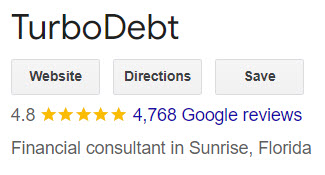
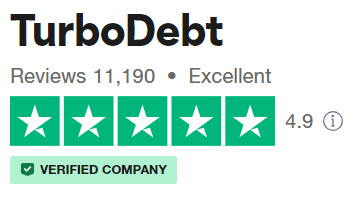
TurboDebt
- BBB: A+ rating; customer reviews about ★ 4.87/5 (1,300+ reviews)
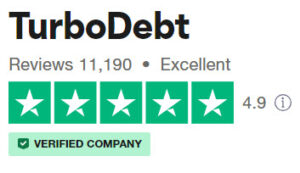
- Trustpilot: ★ 4.9/5 (14,000+ reviews)

What TurboDebt actually does (and the question you should ask)
TurboDebt describes itself as a service that connects clients to debt relief programs. In practice, that can mean your case may be handled by a partner program (example partners listed publicly include National Debt Relief and others). That isn’t automatically “bad,” but it changes what you should ask on your first call:
- Who will be the actual program provider negotiating with my creditors?
- What is the total cost (program fees + any dedicated account fees), and when do those costs get charged?
- Will I be asked to stop paying creditors during the program, and what happens if a creditor sues?
- How will you communicate settlement offers, and do I have to approve each settlement?
How debt settlement usually works (plain English)
- Free consultation: you share your debts, budget, and hardship.
- Program fit: if settlement is recommended, you’ll typically open a dedicated account to build funds for offers.
- Negotiations: once enough funds accumulate, settlements are negotiated one debt at a time.
- Fees: reputable providers generally cannot charge “advance fees” before results (make sure you understand fee timing).
- Finish line: the goal is to resolve each enrolled debt and close the program.
If you’re new to this, two excellent government resources to read first are the FTC’s overview of getting out of debt and the CFPB’s explanation of debt relief programs. Also be aware that canceled debt can sometimes trigger tax forms (like a 1099-C), depending on your situation.
TurboDebt Pros 👍
- Massive review footprint: TurboDebt has a very large volume of consumer reviews across major platforms, which is useful for due diligence.
- Clear “shopping” entry point: If you’re not sure which option fits (settlement vs counseling vs consolidation), TurboDebt can be a starting conversation.
- Availability in most states: While not nationwide, it is available in many U.S. states (confirm via their service area page).
TurboDebt Cons 👎
- Potential “middle layer”: Because TurboDebt can act as a connector, you must confirm who the actual program provider is and what their policies are.
- Costs can be significant: Debt settlement fees are often a percentage of enrolled debt, and you may also pay account fees depending on the setup.
- Credit impact risk: Many settlement programs involve missed payments, which can hurt credit and increase collection pressure before resolution.
Not sure whether settlement, consolidation, or bankruptcy makes more sense?
Before you commit to any company or program, take our quick quiz. It can help you figure out which debt relief path may fit your situation best.
Take the debt relief quiz
What types of debt can these programs usually help with?
Most debt settlement programs focus on unsecured debts, for example:
- Credit card balances
- Personal loans
- Medical bills
- Collections
- Some private unsecured lines of credit
They typically do not “settle” secured debts in the usual way (like mortgages or auto loans) because those are tied to collateral. Student loans and tax debts have their own rules and may require different specialists.
Who TurboDebt might be best for (and who should look elsewhere)
- Better fit: You want to explore options, you have meaningful unsecured debt, and you can commit to a structured payoff plan.
- Probably not a fit: Your debt is mostly secured (mortgage/auto), you’re current on everything and just want a lower interest rate, or you need legal protection quickly (in that case, speaking with a bankruptcy attorney may be smarter).
Other reputable options to compare
Even if you like what you hear from TurboDebt, I would still compare a few other providers before making any decision. Debt relief is not one-size-fits-all. Some companies are better for straightforward unsecured debt, some are stronger for tax debt, and some may be a better fit if you want a more legal-heavy approach.
Here are several alternatives you can review on our site:
- CuraDebt review – a well-known name that can be worth a look if you want to compare a more established debt relief brand.
- Oak View Law Group review – a useful option to compare if you prefer a law-firm-style approach or want help with more complex debt situations.
- JG Wentworth Debt Relief review – worth reviewing if you want to compare another major brand with broad consumer awareness.
- National Debt Relief review – one of the biggest names in the space, and a smart benchmark when comparing fees, process, and reputation.
- Freedom Debt Relief review – another large provider that is useful to compare if you want to see how a major national company stacks up.
- Pacific Debt Relief review – a good one to look at if your focus is mainly unsecured debt like credit cards, loans, collections, or medical bills.
- Accredited Debt Relief review – worth comparing if you want to look at a provider that may offer both settlement and consolidation-style options through partners.
- CreditAssociates review – another option to compare if you want a broader sense of how different programs structure their process and fees.
If you want a broader shortlist instead of reviewing companies one by one, here is our full rankings page: Best debt settlement companies ranked by ratings & reviews.
And if you are still not sure whether debt settlement is even the right route for you, I would take our Debt Relief Quiz before speaking with any company. It can help you think through whether settlement, consolidation, or even bankruptcy may be the better fit for your situation.
Bottom line (Our conclusion for 2026)
TurboDebt appears legitimate and has strong public ratings. The main “watch-out” is clarity: confirm who will actually manage your program, get the total fee schedule in writing, and make sure you’re comfortable with the timeline and credit impact.
Ready to see which debt relief option may fit you best?
Take our quick debt relief quiz to compare paths like settlement, consolidation, and bankruptcy before you decide what to do next.
Frequently asked questions
Will debt settlement hurt my credit?
It can. Many settlement programs involve missed payments before debts are resolved, which can damage credit scores and increase collection activity. If protecting credit is your top priority, ask about alternatives like a nonprofit debt management plan (DMP) or consolidation.
Can creditors sue me while I’m in a program?
Yes, it’s possible. Not every creditor agrees to settle, and some may pursue collections or lawsuits depending on the balance, timeline, and creditor policies. Ask how your provider handles lawsuits and whether they offer any support or referrals.
How long does debt settlement usually take?
It depends on how much you owe and how much you can set aside each month. Many programs are marketed in multi-year timeframes. The realistic way to judge it is simple: how fast you can build funds for settlement offers.
Are there tax consequences if a debt is forgiven?
Sometimes. If a creditor forgives part of your debt, you may receive a tax form and the forgiven amount may be treated as income, depending on your situation. If you’re close to enrolling, consider checking with a tax pro so you’re not surprised later.
What fees should I expect?
Ask for a complete fee schedule in writing. The big variables are (1) the program fee (often a percentage of enrolled debt), (2) whether the fee is based on enrolled debt or settled debt, and (3) whether there are monthly dedicated-account fees.
What questions should I ask on the first call?
Ask who the actual program provider is, whether you’ll be advised to stop paying creditors, the total cost including any account fees, whether you approve each settlement, and what happens if a creditor refuses to negotiate.
Is a nonprofit debt management plan (DMP) safer?
A DMP can be a good option if your main issue is high interest rates and you can afford to repay the principal over time. It’s not debt settlement, but it may reduce interest and create one structured payment. It’s worth comparing before you commit to settlement.
What if I’m considering bankruptcy?
Bankruptcy can offer stronger legal protections and may be the right move in some situations. If you’re behind, facing lawsuits, or simply can’t make progress, it can be worth speaking with a bankruptcy attorney for an initial consult.

by Amine Rahal | Mar 3, 2026 | Debt Relief
Overwhelmed with debt? If you’re trying to figure out whether you need a debt consolidation lawyer, a debt settlement company, a credit counselor, or bankruptcy support, this guide will help you make the call without wasting weeks (or money) going down the wrong path.
Quick reality check: “debt consolidation lawyer” is a popular search term, but most attorneys don’t literally “consolidate” debt the way a bank loan does. What they can do is help you negotiate legally, respond to lawsuits, stop garnishments, and choose the right legal strategy when the stakes are high.
Not being sued? Start here first (often cheaper than hiring a lawyer)
If your situation is mainly unsecured debt (credit cards, personal loans, medical bills) and you’re not dealing with a court case, many people get results faster by starting with a settlement-only provider. Our top pick is New Era Debt Solutions because they’re straightforward about the process and fees.
Disclosure: If you click and enroll, we may earn compensation at no extra cost to you.
💼 What is a debt consolidation lawyer?
A debt consolidation lawyer (also called a debt relief attorney or debt defense attorney) is a licensed attorney who can help you:
- Negotiate settlements with creditors (sometimes with stronger leverage when legal issues are involved)
- Respond to lawsuits and file legal defenses (critical if you’ve been served)
- Stop or reduce aggressive collection actions (depending on your situation and state laws)
- Evaluate bankruptcy (Chapter 7 or Chapter 13) and handle filings when appropriate
- Protect assets and reduce risk when you have judgments, liens, garnishments, or business exposure
Important: This page is educational and not legal advice. Always confirm licensing, fees, and state availability directly with any attorney or firm.
🧠 When a lawyer makes sense (and when it doesn’t)
👍 Hire a lawyer if:
- You’ve been sued or think a lawsuit is likely
- Your wages/bank account are at risk (garnishment or levy threats)
- You have judgments, liens, or complicated legal exposure
- You’re weighing bankruptcy and need proper legal guidance
- You want attorney-client privilege for sensitive details (business, divorce, inheritance, etc.)
👎 Skip the lawyer if:
- You’re not being sued and your debt is mostly standard unsecured accounts
- You mainly need a structured payoff plan and interest-rate relief (credit counseling may fit)
- You’re looking for the lowest-cost option and your situation is straightforward
💰 Fees & costs (the numbers people actually care about)
Costs vary by state and by how complex your case is, but here are realistic ranges so you can sanity-check what you’re being quoted.
| Option |
Typical cost structure |
Common ranges |
Best for |
| Debt settlement company |
Success-based fee after a settlement is reached and approved |
~15%–25% of enrolled debt (varies by state/company) |
Unsecured debt, not being sued, want a structured settlement plan |
| Debt consolidation loan |
Interest + possible origination fees (depends on lender/credit) |
APR varies widely; origination fees can be 0%–10% in some cases |
Good credit / stable income, want one monthly payment |
| Credit counseling (DMP) |
Monthly admin fee (often modest) + negotiated interest concessions |
Commonly $0–$75/month (varies by agency/state) |
You can repay in full but need lower rates and structure |
| Debt relief attorney |
Hourly, flat fee, or staged fees depending on service |
Hourly often $200–$500+; flat fees vary widely; bankruptcy cases often have separate filing/court costs |
Lawsuits, garnishment risk, complex cases, bankruptcy evaluation |
Two authority resources worth reading before you sign anything: the FTC’s guidance on debt relief and fees (FTC overview) and the CFPB’s consumer education on negotiating and debt relief options (CFPB debt collection tools).
Want settlement without paying “lawyer money” unless you truly need it?
If you’re not in a lawsuit right now, start by comparing settlement providers and fees. We keep New Era at the top of our list for a settlement-only approach. If your situation turns legal, you can still escalate to an attorney.
Disclosure: We may earn a commission if you enroll through our partner link.
🔍 How to vet any debt attorney or “law firm” program (avoid getting burned)
- Confirm licensing: Make sure you’re dealing with a real licensed attorney (or a firm supervised by one) in a state where they can legally serve you. If they won’t provide bar details, that’s a red flag.
- Get the fee structure in writing: Hourly vs. flat fees, what’s included, and what triggers extra charges (court filings, adversary proceedings, negotiation rounds, etc.).
- Ask what happens if you’re sued: Some “attorney-backed” programs still won’t represent you in court without extra fees.
- Understand credit impact: Any strategy that involves missed payments can damage credit temporarily. Make sure you’re choosing it intentionally.
- Ask for a realistic timeline: Anyone guaranteeing a specific outcome or promising “debt gone in 30 days” is not being straight with you.
Top debt consolidation law firms & attorney-led programs (nationwide options)
Below are well-known firms/programs people commonly compare. Availability and services vary by state, so verify directly.
1) Oak View Law Group (OVLG)
- Website: ovlg.com
- Phone: (800) 530-6854
- Best for: Broad consumer-debt help, including harder categories (like payday-related issues) and multi-step cases
- Tip: If OVLG is on your shortlist, you can also read our breakdown here: OVLG review
2) McCarthy Law PLC
- Website: mccarthylawyer.com
- Phone: (855) 875-9920
- Best for: Debt defense situations (especially if legal pressure is escalating)
3) National Legal Center
- Website: nationallegal.com
- Phone: (800) 728-5285
- Best for: People who want guided help and a structured process (verify state coverage)
4) Price Law Group (Resolve Law brand)
- Website: pricelawgroup.com
- Phone: (866) 210-1722
- Best for: Comparing settlement vs. bankruptcy when your debt load is heavy
5) Watton Law Group
- Website: wattongroup.com
- Phone: (414) 409-5422
- Best for: Foreclosure pressure, secured-debt stress, and bankruptcy-centered strategies
6) Recovery Law Group
- Website: recoverylawgroup.com
- Phone: (310) 997-0479
- Best for: People who want a more tech-enabled process plus legal escalation options
7) Kaplan Law Firm (student-loan focused)
- Website: kaplanlawatx.com
- Phone: (312) 294-8989
- Best for: Borrowers who want help navigating student-loan strategy and relief pathways
8) Five Lakes Law Group
- Website: fivelakeslawgroup.com
- Phone: (855) 441-6129
- Best for: People comparing attorney-led negotiation with a more structured monthly plan (verify state coverage)
9) Turnbull Law Group
- Website: turnbulllawgroup.com
- Best for: Large-scale cases where you want settlement plus legal backup options (confirm fees + representation scope)
- Note: Review profiles can differ by entity/location; always verify you’re looking at the exact firm you’ll be contracting with.
10) Your state bar referral directory (best way to find a true local specialist)
- Best for: Finding a lawyer who can appear in your local courts if needed
- Start here: The American Bar Association has a directory of state and local bar associations: ABA lawyer finder resources
🧾 What these attorneys can help with
| Legal service |
What it means in real life |
| Negotiate with creditors |
Reduce balances, settle accounts, and structure agreements (sometimes with better leverage when legal issues exist). |
| Legal protection |
Respond to lawsuits, defend claims, and reduce the odds of default judgments. |
| Stop garnishments |
Depending on your situation, they can file motions, negotiate resolutions, or recommend bankruptcy protection when appropriate. |
| Bankruptcy strategy |
Assess Chapter 7 vs Chapter 13, exemptions, and the realistic trade-offs. (Bankruptcy info hub: U.S. Courts overview) |
| Complex cases |
Judgments, liens, business exposure, secured-debt stress, and situations where a generic “settlement program” can backfire. |
🆚 Lawyer vs. settlement company vs. credit counseling (quick comparison)
| Feature |
Settlement company |
Credit counseling (DMP) |
Debt relief attorney |
| Reduces principal (balance owed) |
✅ Often |
❌ Usually not |
✅ Sometimes |
| Can defend you if sued |
❌ No |
❌ No |
✅ Yes |
| Best for credit-score preservation |
⚠️ Mixed |
✅ Often |
⚠️ Depends |
| Typical cost |
~15%–25% of enrolled debt |
Often $0–$75/month |
Hourly or flat legal fees |
| Good starting point if not sure |
✅ Yes |
✅ Yes |
⚠️ If legal pressure exists |
If you want a simple “start here” plan
- If you’re unsure what path fits, start with our quiz: Debt Relief Quiz.
- If you’re not being sued and have mostly unsecured debt, compare settlement providers and fees. Start with New Era Debt Solutions.
- If you’ve been sued, face garnishment, or need bankruptcy guidance, consult a licensed attorney in your state (use the ABA/state bar directory above).
Disclosure: We may earn compensation if you enroll through our partner link.
Frequently Asked Questions About Debt Consolidation Lawyers
I’ve been writing about debt relief, debt settlement, consolidation, and bankruptcy-related options for years now, and one thing I can tell you with confidence is this: there is no one-size-fits-all answer here. I’ve seen people save a lot of stress by choosing the right path early, and I’ve also seen people waste months, or even years, forcing the wrong solution. If you want a faster starting point before reading through everything, I’d suggest taking our debt relief quiz. It was built to help you think through whether settlement, consolidation, counseling, or bankruptcy may make the most sense for your situation.
Do I really need a debt consolidation lawyer?
In my experience, you usually need a debt consolidation lawyer when your debt situation has crossed over into legal territory. If you’ve been sued, threatened with garnishment, hit with a judgment, or you’re seriously weighing bankruptcy, that’s when I think legal help becomes much more valuable.
But if you’re dealing mostly with unsecured debts like credit cards, personal loans, or medical bills, and nobody has taken you to court, I usually would not tell you to run to a lawyer first. In a lot of those cases, a settlement-focused company, a debt management plan, or even a careful self-directed strategy may make more sense financially. I’d start by comparing paths, not assuming the legal route is automatically the best one.
What is the difference between a debt consolidation lawyer and a debt settlement company?
This is one of the biggest points of confusion I see. A debt settlement company is generally there to negotiate unsecured debts down, usually for less than the full balance. A debt lawyer, on the other hand, can actually give legal advice, respond to lawsuits, represent you in court, and help you think through legal exposure.
I look at it this way: if the issue is mainly financial, a settlement company or counseling route may be enough. If the issue is legal, that’s where a lawyer earns their keep. If you want to compare non-legal options first, I’d look at our guide to the best debt settlement companies and see how those models stack up.
Can a debt lawyer stop a lawsuit or wage garnishment?
Sometimes, yes, and this is one of the clearest reasons to bring in a lawyer. Depending on the case and your state, an attorney may be able to file a response, challenge part of the claim, negotiate a settlement before things worsen, or advise you on legal protections that a normal debt relief company simply cannot offer.
I would not drag my feet on this. Once a default judgment is entered, your options can narrow quickly. If you’ve already gotten court papers or a garnishment notice, I think that moves you out of the “maybe I’ll just compare companies online” stage and into “I should get legal guidance now” territory.
Can a debt consolidation lawyer lower the amount I owe?
Yes, in some cases. I’ve seen attorneys help negotiate reduced payoffs, especially when creditors know the alternative could be litigation, bankruptcy, or a harder fight than they want. But I would never tell someone to assume a lawyer automatically gets a better deal just because they’re a lawyer. That’s not always how it plays out.
If your goal is mainly to reduce unsecured balances and you are not being sued, a settlement provider may actually be the more direct and cost-effective starting point. That’s why I usually tell readers to explore more than one path. For example, you may want to compare attorney-led help with a company like New Era Debt Solutions or look at another option like CuraDebt.
Will hiring a debt lawyer hurt my credit?
No, hiring the lawyer itself does not hurt your credit. What affects your credit is the underlying strategy. Settlements, missed payments, charge-offs, and bankruptcy can all have credit consequences, whether a lawyer is involved or not.
What I usually tell people is to stop thinking only in terms of credit score if the bigger issue is financial survival. I’ve reviewed plenty of cases where the person was so focused on protecting their score that they ignored a much bigger legal or cash-flow problem. Sometimes the right move is the one that stabilizes your situation first, then lets you rebuild later.
Is a debt consolidation lawyer better than bankruptcy?
Not necessarily. In fact, one of the most honest things a good debt lawyer can do is tell you when bankruptcy may be the cleaner answer. I’ve seen people spend too long trying to force settlements or payment plans when the numbers simply did not work. In those situations, bankruptcy was often faster, more realistic, and less damaging in the long run than dragging things out.
On the other hand, if your debt load is still manageable, you have income coming in, and the situation has not fully blown up yet, then bankruptcy may be premature. This is where nuance matters. I’d strongly suggest taking our debt relief quiz if you’re on the fence, because many people are not actually choosing between “good” and “bad” options. They’re choosing between the least painful realistic option for their case.
Can a debt consolidation lawyer help with credit card debt?
Yes, absolutely, especially when the balances are large, the accounts are already in collections, or a creditor is becoming aggressive. I’ve seen lawyers step in and help when a normal settlement program would not have been enough because the risk of legal action was already too high.
That said, credit card debt is also one of the areas where people often have the most options. Depending on your income, credit, hardship level, and how far behind you are, the right solution might be settlement, a debt management plan, consolidation, or bankruptcy. That’s why I usually tell readers not to latch onto one label too quickly. Start broad, then narrow down.
Can a debt lawyer help if I already have a court summons?
Yes, and if you already have a summons in hand, I think that is one of the strongest signs that you should stop browsing casually and get serious help. A lawyer may be able to help you respond on time, avoid a default judgment, negotiate a resolution, or advise whether bankruptcy should be considered before things spiral further.
I’ve seen too many people ignore summons paperwork because they felt overwhelmed or hoped it would somehow go away. It usually does not. If you’ve reached that point, move quickly.
How much debt should you have before hiring a debt lawyer?
I don’t think there’s a magic dollar amount. I’ve reviewed cases where one aggressive creditor created more urgency than a larger overall debt balance would have. What matters more is whether the situation is legally risky, financially unsustainable, or both.
In general, the more complicated the case, the more likely legal advice is worth paying for. A person with moderate debt and a lawsuit may need a lawyer faster than someone with higher debt but no legal exposure yet.
Are debt consolidation lawyers legit?
Some are, yes. Some are excellent. But I’ve also seen plenty of “attorney-backed” marketing that sounds more impressive than the actual service being offered. That’s why I always tell people to slow down and verify exactly who is handling your case, whether they are licensed in your state, what they will actually do for you, and whether court representation is really included.
I also think it helps to compare legal options with mainstream debt relief companies so you can better understand the trade-offs. For example, you may want to compare legal help with reviews of companies like TurboDebt or Freedom Debt Relief. The goal is not to assume one category is always better. It’s to see which model fits your actual problem.
Can I use a debt settlement program first and switch to bankruptcy later?
Yes, that happens all the time. I’ve seen readers try settlement first, only to realize later that their income was too tight, creditors were too aggressive, or the whole thing was just taking too long. At that point, they pivot to bankruptcy. There is nothing unusual about that.
Still, I think it is better to make that decision as early and honestly as possible. If the numbers already suggest that repayment is unrealistic, you may be better off learning that now instead of after two stressful years. That’s one reason I keep pointing people toward our debt relief quiz. It’s not perfect, but it does help frame the right questions before you commit to a path.
What types of debt can a debt consolidation lawyer help with?
Most commonly, I see debt lawyers involved with credit cards, personal loans, collection accounts, medical debt, lawsuits, judgments, and more complex consumer-debt issues. Some also handle tax debt, foreclosure-related problems, or certain business-related liabilities, but that really depends on the attorney’s practice.
This is why I’d never assume that one lawyer or one company is automatically right for everyone. You want someone who actually deals with your kind of problem, not just someone with good marketing.
What questions should I ask before hiring a debt relief attorney?
If I were evaluating a debt attorney for my own case, I’d want to know whether they are licensed in my state, whether they personally or directly supervise the work, whether they will represent me in court if things escalate, how the fees work, and what exactly is included. I’d also ask what they honestly think my best option is, even if that option does not benefit them.
That last part matters. The best professionals I’ve come across in this space are usually the ones willing to say, “You know what, I’m not sure my service is the right fit for you.”
What is usually the best first step if I’m overwhelmed and not sure where to begin?
Honestly, the best first step is to stop looking for a universal answer and start looking for the right category of help. If you’re not being sued and your debt is mostly unsecured, compare settlement, counseling, and consolidation. If you are being sued, facing garnishment, or think bankruptcy may be close, talk to a lawyer sooner rather than later.
If you feel too overwhelmed to sort that out on your own, I’d begin with our 2-minute debt relief quiz, then read through our main debt relief guide and our roundup of the best debt settlement companies. I’d also keep an open mind. Not all paths are equal, and the “best” solution really depends on your debt type, legal risk, income, assets, stress level, and how realistic repayment actually is for you.

by Amine Rahal | Jan 30, 2026 | Selling a Business
If you’re Googling “how much can I sell my business for” you’re usually close to a decision. The fastest way to get a confident answer is to stop thinking in “what I want” terms and start thinking in “what a buyer can verify” terms: clean cash flow + reduced risk + repeatable operations.

Want a realistic estimate of what your business could sell for? Get a valuation range plus the key drivers buyers and brokers will scrutinize.
Get My Business Valuation Range
Disclosure: We may earn a commission if you use our partner link.
Quick answer: Most sale prices come from a simple structure:
- Cash flow (SDE or EBITDA)
- × a multiple (based on risk and growth)
- ± working capital and asset adjustments (varies by deal)
If those acronyms are new, bookmark our glossary of business terms so your whole team is speaking the same language.
The Two Numbers That Drive Your Company’s Sale Price
1) Your real cash flow (SDE or EBITDA)
SDE (Seller’s Discretionary Earnings) is common for owner-operated businesses. It typically starts with profit, then adds back the owner’s salary, owner benefits, and certain one-time or non-operating expenses.
EBITDA is common as businesses get bigger, have deeper management, or attract more sophisticated buyers. It is a cleaner “operating earnings” number (before interest, taxes, depreciation, and amortization).
2) Your multiple (what buyers pay for that cash flow)
The multiple is basically a “confidence score.” Buyers pay higher multiples when your business is easier to operate, easier to verify, and less dependent on any one person (including you).
Simple valuation example
- Verified SDE: $400,000
- Market multiple range: 2.5x to 3.5x (depends on risk and growth)
- Estimated value range: $1,000,000 to $1,400,000 (before deal-structure adjustments)
What Raises Your Multiple (and What Tanks It)
👍 Value boosters (higher multiples)
- Recurring revenue (subscriptions, memberships, service contracts, retainers)
- Low customer concentration (no single customer “controls” your revenue)
- Documented SOPs (how you sell, deliver, bill, and handle issues)
- Management depth (someone besides you can run the day-to-day)
- Clean books (accurate P&L, balance sheet, and consistent reporting)
- Stable margins (buyers love predictability more than hype)
- Multiple lead sources (one channel = one point of failure)
👎 Deal killers (lower multiples)
- Owner dependency (you are the closer, operator, manager, and firefighter)
- Messy receivables (old invoices, weak collections, disputed balances)
- Financial “fog” (unclear add-backs, personal expenses mixed in, inconsistent numbers)
- Key-person risk (one employee holds the whole business together)
- Unresolved compliance or licensing issues (state, local, industry-specific)
If collections are a weak spot, fix it before you go to market. Here’s a helpful primer on business debt collection basics.
A 30-Minute DIY: Estimate What Your Business Is Worth
- Pick your “earnings” metric: use SDE if you are owner-operated; use EBITDA if you have management depth and cleaner ops.
- Calculate a conservative “verified earnings” number: remove anything a buyer will not accept (one-time personal expenses, non-business items, inflated add-backs).
- Pressure test your risk: customer concentration, seasonality, margins, churn, team stability, and owner dependency.
- Choose a realistic multiple range: the more “turnkey” and documented your business is, the higher the range you can justify.
- Add deal adjustments: working capital expectations, inventory, AR quality, equipment, and any unusual liabilities.
Tip: Buyers often sanity-check your numbers against what it costs to run your business today. If you want a simple way to show how costs and prices changed over time, the CPI inflation calculator can help explain price increases without a debate.
Valuation Methods Buyers Use (and When Each One Matters)
| Method |
Best for |
What it focuses on |
Watch-outs |
| Earnings multiple (SDE/EBITDA) |
Most small and mid-sized businesses |
Verified cash flow + risk |
Add-backs that do not survive diligence |
| Asset-based |
Asset-heavy operations |
Equipment, inventory, tangible value |
Can under-value strong cash-flow businesses |
| Comparable sales |
When good comps exist |
What similar businesses sold for |
Comps are often imperfect or outdated |
| DCF (discounted cash flow) |
Larger deals, finance-heavy buyers |
Future cash flow projections |
Assumptions can be argued endlessly |
How to Get a Higher Sale Price Without “Hoping”
- Build recurring revenue: contracts, retainers, memberships, subscription plans.
- Reduce owner dependency: appoint an ops lead, document SOPs, standardize quoting and delivery.
- Clean up your financial story: separate personal items, tighten add-backs, reconcile accounts monthly.
- Fix AR and collections: get old receivables resolved before diligence starts.
- Diversify acquisition channels: referrals, organic, paid, partnerships, outbound.
Not sure what your “multiple” should be? A valuation range plus a simple “value driver” breakdown helps you see what to fix to push your number up.
See My Estimated Sale Price Range
Disclosure: We may earn a commission if you use our partner link.
What You Should Prepare Before You Talk to Buyers
- 3 years financials + current YTD (monthly breakdown is ideal)
- AR/AP aging (buyers want to see if cash collection is healthy)
- Customer list and concentration (top customers and contract terms)
- Org chart + key employee roles (and retention plan)
- Process docs (sales scripts, SOPs, checklists, QA steps)
- Asset list (equipment, inventory, software subscriptions, leases)
If you also have meaningful digital assets (ranked website, email list, lead magnets, strong inbound), they can increase value. For context on how marketplaces think about digital assets, see our Flippa marketplace review.
Related Guides You Might Want Next
These state-level sell guides help you see how “local reality” affects deal terms and buyer behavior: Selling a business in California, Selling a business in Florida, and Selling a business in South Dakota.
Authority Resources (Worth Reviewing Before You Sell)
If you want to sell in the next 6–18 months, the best move is to get a valuation range and a prioritized “fix list” before buyers set the narrative for you.
Start With a Valuation + Fix List
Disclosure: We may earn a commission if you use our partner link.
FAQ: Business Valuation and Sale Price
How much should I sell my business for?
A good “should” price is a price you can defend with verified earnings, reasonable add-backs, and a multiple that matches your risk profile. If your number depends on hope or “future potential,” it usually gets discounted. If your number is backed by clean reporting and repeatable operations, it becomes easier to negotiate.
What is the difference between SDE and EBITDA?
SDE is common for owner-operated businesses and includes owner compensation plus certain add-backs. EBITDA is a more standardized operating earnings metric used more often as businesses scale. Buyers may start with SDE and convert to an EBITDA view to compare opportunities.
What add-backs do buyers usually accept?
Buyers tend to accept add-backs that are clearly documented, truly one-time, or genuinely non-operating. They push back hard on “creative” add-backs, personal expenses that look recurring, or anything that cannot be proven in your books.
Will a buyer pay for “potential”?
Sometimes, but potential is usually paid through deal structure (earnouts, performance-based payments) instead of a higher upfront price. The most reliable way to get a bigger check at close is to turn “potential” into “proof” before you go to market.
How long does it take to sell a business after valuation?
If your business is already clean (books, operations, team, compliance), a sale can move quickly. If you need to clean up financials, reduce owner dependency, and fix AR or documentation gaps, the preparation phase may take longer than the sale itself.
Note: This content is for educational purposes and does not constitute legal, tax, or financial advice. For help with a specific situation, consult a qualified professional.
This guide is part of our how the business-for-sale marketplaces compare, covering all 50 states.

by Amine Rahal | Jan 30, 2026 | Selling a Business
If you’re thinking, “I want to sell my HVAC business,” and you’re aiming for a big valuation, you’ll get a better outcome by treating this like a process, not an event. Across the U.S., buyers care most about compliance, repeatable operations, and whether your revenue can hold up beyond your region’s peak seasons (heat waves, cold snaps, and everything in between). This guide walks you through the steps that typically separate an average deal from a top-dollar exit.
Want a realistic estimate of what your HVAC business could sell for? Get a valuation range and the key drivers buyers will scrutinize.
Get My HVAC Business Valuation
Disclosure: We may earn a commission if you use our partner link.
Quick reality check (U.S. HVAC owners):
- Best exits happen when revenue is diversified (service + maintenance + replacement + light commercial).
- Biggest value boosters are membership plans, strong gross margins, documented SOPs, and tech retention.
- Biggest deal-killers are messy books, dependency on you, inconsistent dispatch, and unresolved licensing/permit or refrigerant-compliance issues.
What Makes an HVAC Business Valuable (and What Drags the Price Down)
At $1M+ valuations, buyers are usually paying for predictability. They want confidence that the phone will keep ringing, jobs will be fulfilled consistently, and the team won’t disappear the week after closing.
What buyers love in HVAC
- Maintenance agreements / memberships that renew and reduce seasonality.
- Healthy mix of service and replacement with clear pricing and close rates.
- Dispatch and scheduling that runs without you (and is tracked in a real system).
- Documented SOPs for call handling, estimating, installs, QA, and warranty callbacks.
- Depth in the bench: lead installer, service manager, dispatcher, and at least one “future leader.”
- Commercial accounts or multi-site clients (even a small slice) that stabilize revenue.
- Clean compliance with your state/local licensing, permits, and refrigerant requirements (buyers hate surprises here).
What reduces value fast
- Owner dependency (you sell, you estimate, you solve callbacks, you manage the techs).
- Weak gross margins or inconsistent pricing discipline.
- Aged receivables and sloppy collections (see: business debt collection basics).
- Unclear add-backs, mixed personal expenses, and financials that don’t match reality.
- Bad online lead flow or over-reliance on one channel (one lead source = one point of failure).
Step 1: Get Your Financials “Buyer-Ready” (Not Just Tax-Ready)
The #1 reason HVAC deals disappoint owners is that the business looks strong operationally, but the financial presentation is messy. For $1M+ exits, you want a clean story: revenue quality, margins, and believable profitability. If you’re using terms like EBITDA, working capital, or add-backs, our glossary of terms can help your team stay aligned.
- Separate “true expenses” from “owner choices” (vehicle, travel, family payroll, one-time items).
- Normalize seasonality (regional weather spikes can inflate a quarter and spook buyers if it’s not explained).
- Track membership revenue clearly (new adds, churn, renewals, average ticket uplift).
- Show labor efficiency: billable hours, callback rate, install labor hours, overtime patterns.
- Reduce AR surprises by cleaning up older invoices before diligence starts.
| HVAC Sale-Readiness Checklist |
What a Buyer Wants to See |
| 3 years of financials + current YTD |
Consistent reporting, clear margins, believable profitability |
| Membership plan report |
Churn, renewal rate, average revenue per member, attach rate |
| Customer concentration |
No single customer dominating revenue (especially commercial) |
| Fleet and equipment list |
Condition, ownership vs leases, replacement plan |
| Pricing + close rate snapshot |
Consistency and discipline (buyers hate “gut-feel” quoting) |
| Warranty + callback data |
Quality control, fewer surprises post-close |
Step 2: Fix Owner-Dependency (The Silent Value Killer)
If the business only runs because you’re the closer, the dispatcher, the estimator, and the firefighter, most serious buyers will either (a) lower the price, (b) demand heavier earnouts, or (c) walk. A sellable HVAC company has a repeatable machine.
- Document SOPs for inbound calls, membership upsells, estimating, installs, QA, and invoice follow-up.
- Create role clarity (service manager vs install manager vs CSR/dispatcher).
- Standardize quoting (good-better-best, consistent options, same financing flow).
- Lock in key people with retention bonuses that trigger at close + 6–12 months.
Not sure if you’re “sell-ready” or “stress-ready”? A quick valuation + readiness review helps you identify what to fix before buyers see it.
See My Readiness and Valuation Range
Disclosure: We may earn a commission if you use our partner link.
Step 3: Know Who Buys HVAC Companies in the U.S. (and What They Want)
Different buyer types care about different things. The smart move is positioning your HVAC business for the buyer category most likely to pay top dollar for your specific strengths.
Common HVAC buyer types
- Strategic buyers (other HVAC firms expanding territory, adding service lines, acquiring tech teams).
- Private equity-backed platforms looking for well-run operators with growth potential.
- Independent financial buyers who want stable cashflow and a strong management layer.
- Internal transition (key employee / manager buyout, sometimes combined with financing).
👍 Pros (what can improve your deal)
- Strategics may value your tech team, brand, and routes.
- Platforms may pay more for strong systems and membership growth.
- Internal transitions can preserve culture and reduce customer churn risk.
👎 Cons (what can complicate the deal)
- Strategics might change comp plans or processes, impacting retention if not handled carefully.
- Platforms can be strict on diligence and documentation (SOPs + KPI proof really matter).
- Internal deals often require seller financing or longer transitions.
Step 4: Understand Valuation for $1M+ HVAC Exits (Without Guessing)
Owners often ask, “What multiple will I get?” The honest answer is: it depends on your risk profile and your growth story. Buyers typically focus on:
- Quality of earnings (clean books, defendable add-backs, consistent margins).
- Recurring revenue (membership base, service agreements, commercial maintenance).
- Operational maturity (SOPs, KPIs, management layer, dispatch reliability).
- People stability (technician retention, bench depth, training pipeline).
- Market tailwinds (housing activity, commercial demand, and pricing power).
Inflation and interest rates can affect buyer appetite and financing terms. If you want to explain price increases to buyers with simple math, the CPI inflation calculator is useful for showing how costs and pricing have shifted over time.
Step 5: Deal Terms HVAC Owners Should Negotiate Carefully
A “good price” can turn into a bad deal if the terms are sloppy. In HVAC, these are common friction points:
- Working capital (how AR, AP, inventory, and prepaid memberships are handled at close).
- Customer retention expectations (avoid vague clauses tied to weather swings or “market conditions”).
- Employee retention (bonuses and clear communication plan for techs and CSRs).
- Warranty/claims responsibility (define what stays with you vs moves to the buyer).
- Transition role (how long you stay, what you do, what “success” looks like).
U.S.-Wide: Licensing, Compliance, Taxes, and Filings to Plan Around
HVAC is one of those industries where diligence gets very “real” very fast. The goal is simple: make it easy for a buyer (and their lender) to verify that you operate cleanly in every market you serve.
- Refrigerant compliance (federal): If you handle refrigerants, make sure your technician certification and practices are clean under the EPA’s refrigerant management rules: EPA Section 608 (Refrigerant Management Program)
- Safety documentation: Buyers don’t want OSHA surprises. Keep safety training, incident logs, and basic policies organized: OSHA small business resources
- Business licensing and permits: Licensing is state and often local. Confirm your contractor licensing, permits, and any qualifier/responsible-person requirements are transferable (or have a documented plan).
- Tax IDs and basic setup: Make sure your federal tax ID situation is clean: IRS: Apply for an EIN
- Where to start for official guidance: The SBA’s business guide is a good “one place” reference for compliance and operational basics: SBA Business Guide
Major U.S. Cities to Mention (So Your Listing Feels Local)
If you serve multiple metros, call that out clearly. Buyers like dense service areas because routes are efficient and marketing is easier to scale. Here are major U.S. markets owners commonly reference in listings and CIMs:
- New York City (high density, strong service demand, union and building rules can matter)
- Los Angeles (huge market, routing efficiency matters, consistent customer experience wins)
- Chicago (heating + cooling seasonality, strong maintenance positioning helps)
- Houston (replacement demand can be strong, buyers love membership penetration)
- Dallas–Fort Worth (competitive market, dispatch discipline and close rate are key)
- Atlanta (growth market, hiring pipeline and training systems stand out)
- Phoenix (peak-season volume can be huge, buyers want proof you can staff responsibly)
- Philadelphia (mix of residential/commercial opportunity, process consistency matters)
- Miami (year-round demand pockets, warranty/QA systems get extra attention)
- Washington, DC (commercial mix can stabilize revenue if documented well)
- Boston (tight customer expectations, professionalism and retention matter)
- Seattle (service quality and technician retention can be the differentiator)
- Denver (rapid growth pockets, operational maturity matters)
- Minneapolis–St. Paul (heating strength, maintenance plans reduce seasonal swings)
- Tampa–St. Petersburg (steady demand, buyers want repeatable scheduling + QA)
A Simple 90-Day Plan to Sell an HVAC Business (Without Chaos)
- Days 1–15: Clean financials, clarify add-backs, list memberships and commercial contracts.
- Days 16–30: Document SOPs, confirm licensing/permits across service areas, stabilize staffing plan.
- Days 31–45: Build the buyer package (CIM, KPI snapshots, fleet list, team org chart).
- Days 46–70: Go to market, manage calls, qualify buyers, collect LOIs.
- Days 71–90: Diligence, finalize terms, plan transition, communicate to team.
If your HVAC business also has meaningful digital lead flow (ranked website, call tracking, strong inbound), treat those assets as part of the value story. If you’re curious how marketplaces price digital assets, see our Flippa buying/selling review for context.
Common Mistakes That Cost HVAC Owners Real Money
- Going to market too early (before finances and operations are defensible).
- Letting one person carry the business (one superstar tech or one “closer” = concentrated risk).
- Hiding problems (buyers will find them; it just damages trust and price).
- Accepting vague terms (especially around working capital, earnouts, and warranty exposure).
- Ignoring compliance until diligence (state licensing, permits, and refrigerant rules matter nationwide).
For broader sale strategy across different markets, you may also want to compare how other states think about selling a business: California selling guide and Florida selling guide.
If you want to sell your HVAC business in the next 6–18 months, a valuation plus a prioritized “fix list” is usually the fastest way to protect your price.
Start Here: Valuation + Next Steps
Disclosure: We may earn a commission if you use our partner link.
FAQ: Selling an HVAC Business in the United States
How long does it take to sell an HVAC business?
Many $1M+ HVAC exits take a few months from preparation to close, but the smooth deals are the ones where financials and operations are already clean. If you start from scratch (messy books, no SOPs, staffing risk), the prep can take longer than the sale.
What do buyers look at first in an HVAC acquisition?
They typically start with profitability (and how real it is), recurring revenue (memberships/contracts), technician stability, and the systems you use to run dispatch, pricing, and quality control. Compliance and transferability (licenses, permits, and refrigerant rules) also come up early in most U.S. deals.
How do I reduce seasonality risk before selling?
Grow maintenance memberships, tighten recall campaigns in shoulder seasons, build commercial maintenance where possible, and report results clearly. Buyers don’t hate seasonality. They hate not understanding it.
Should I sell the real estate with the HVAC business?
It depends on your goals. Some buyers prefer leasing the building (lower upfront capital), while others like owning the facility. If you keep the real estate, consider a long-term lease that’s fair, transferable, and lender-friendly.
What documents should I have ready for diligence?
Expect requests for financials, tax filings, AR/AP aging, membership plan reports, customer concentration, payroll and benefits summaries, insurance policies, fleet list, equipment list, leases, key vendor agreements, licensing/permit documentation, and KPI dashboards (close rate, callback rate, average ticket, labor efficiency).
What deal terms should I be most careful with?
Working capital definitions, any earnout language tied to revenue or retention, warranty/callback responsibility, and your transition role. HVAC is operationally intense. Ambiguity becomes expensive.
Can I sell if I’m still the license holder or qualifier?
Possibly, but you should plan early. Buyers will want clarity on licensing continuity and who will serve as the responsible party post-close. If you operate in multiple states or cities, build a practical, documented transition plan market-by-market.
If I operate in multiple states, should I create separate buyer packages?
Often yes. Buyers prefer clarity: revenue and profit by location, key staff by market, and compliance considerations by state. Even if you sell as one company, breaking out the story by market reduces diligence friction.
Who should be on my advisory team?
Most owners use a blend of M&A guidance, a tax pro/CPA, and an attorney familiar with acquisitions in the states where the business operates. The right team prevents avoidable errors in structure, taxes, and contract terms.
Note: This content is for educational purposes and does not constitute legal, tax, or financial advice. For help with a specific situation, consult a qualified professional.
Need help deciding the next best move for your situation? You can reach our team here: Contact us.
This guide is part of our where to list a business for sale, covering all 50 states.