by Amine Rahal | Jun 1, 2026 | Debt Relief
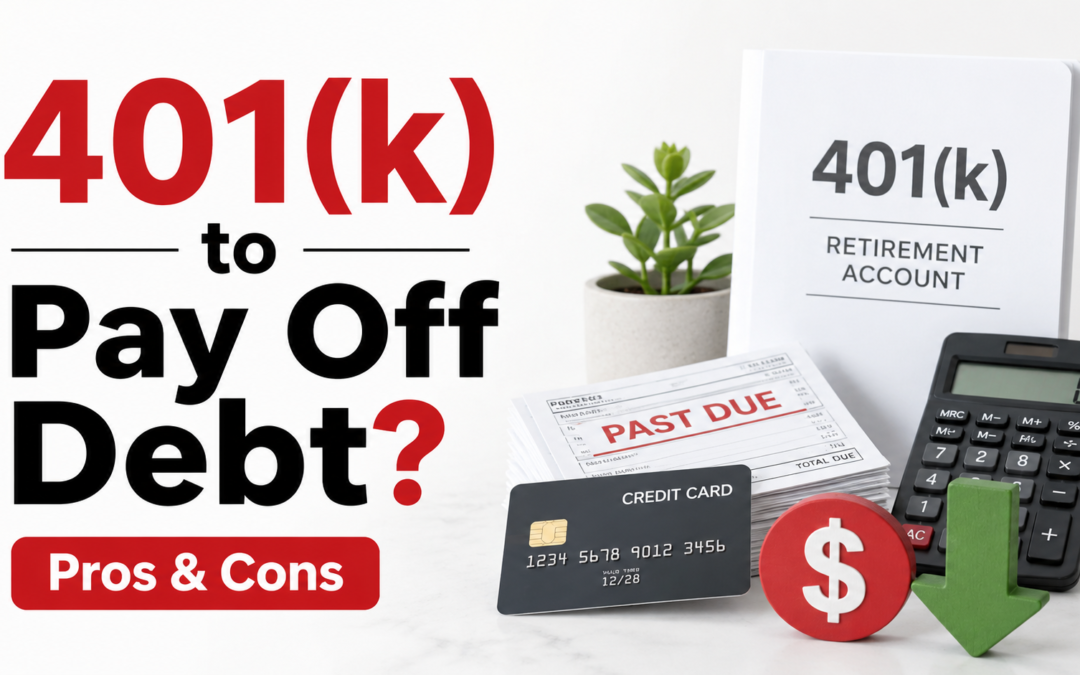
Using a 401(k) to pay off debt can sound like an easy fix. You have money sitting in a retirement account, your credit cards are charging high interest, and the idea of wiping everything clean feels tempting.
I get it. After more than two decades writing about business, personal finance, inflation, debt relief, and consumer financial products, I’ve seen plenty of people consider this move when they feel cornered.
But your 401(k) is not just “extra money.” It is future income. In some cases, a 401(k) loan can make sense. In many other cases, using retirement money to pay unsecured debt can be a costly mistake.
Before touching your 401(k), compare your debt relief options first.
Our free debt relief quiz can help you think through whether consolidation, credit counseling, settlement, bankruptcy, or another path may fit your situation better.
Take the Free Debt Relief Quiz
Can You Use a 401(k) to Pay Off Debt?
Yes, but there are a few different ways to do it:
- 401(k) loan: You borrow from your plan and repay it through payroll deductions.
- Hardship withdrawal: You permanently withdraw money if you qualify under your plan’s rules.
- Early withdrawal: You cash out money before retirement age, usually with taxes and possible penalties.
- Old 401(k) cash-out: You cash out a plan from a previous employer.
The big difference is this: a loan can be repaid. A withdrawal permanently removes money from your retirement account.
My quick take: A 401(k) loan may be worth comparing in limited situations. A 401(k) withdrawal should usually be a last resort.
Quick Comparison: What Are Your Options?
| Option |
Best For |
Biggest Risk |
| 401(k) loan |
Stable job, temporary debt problem |
Trouble if you leave your job or cannot repay |
| 401(k) withdrawal |
Last-resort hardship situations |
Taxes, penalties, lost retirement growth |
| Debt consolidation |
Good credit, enough income |
Running up credit cards again |
| Credit counseling |
People who can repay but need structure |
May require closing cards |
| Debt settlement |
Unsecured debt you cannot keep up with |
Credit damage, fees, collection risk |
| Bankruptcy |
Overwhelming debt with no realistic payoff path |
Credit impact and legal process |
Option 1: Taking a 401(k) Loan
A 401(k) loan lets you borrow from your retirement account if your employer’s plan allows it. According to the IRS, plan loans are not required, so your first step is checking your plan rules.
This option can look attractive because there is usually no traditional credit check, and the interest you pay goes back into your own account.
👍 Potential benefits
- No credit check in many cases
- Lower cost than some credit cards
- Interest goes back to your account
- Can simplify a short-term problem
👎 Potential downsides
- Less money invested for retirement
- Paycheck gets smaller during repayment
- Job loss can create repayment problems
- Default may create taxes and penalties
A 401(k) loan may make sense if your debt problem is temporary and you are confident you can repay the loan. It is much riskier if you are already living on credit cards every month.
Option 2: Taking a 401(k) Withdrawal
A withdrawal is more serious. Unlike a loan, you are not paying the money back into your account. You are permanently removing retirement savings.
If you are under age 59½, a 401(k) withdrawal may trigger income tax and a 10% additional tax unless an exception applies. That means withdrawing $20,000 does not necessarily give you $20,000 to use.
Why this matters
If you use retirement money to pay credit cards, then fall back into debt six months later, you may end up with both a smaller 401(k) and new credit card balances.
That is why I see a withdrawal as a last-resort move, not a starting point.
When Using a 401(k) Might Make Sense
Using a 401(k) loan may be worth considering if most of these are true:
- You have a stable job.
- You are borrowing, not withdrawing.
- Your debt has a very high interest rate.
- You have stopped adding new debt.
- You can afford the payroll deductions.
- You are not draining your retirement account.
Example: someone with $10,000 in credit card debt at 28% interest, stable income, and a clear budget may compare a 401(k) loan against a consolidation loan or debt management plan.
But even then, I would compare all options first.
Not sure which option fits your debt?
The debt relief quiz can help you compare settlement, consolidation, credit counseling, and bankruptcy before you use retirement money.
Compare My Debt Relief Options
When Using a 401(k) Is Usually a Bad Idea
I would be very cautious about using 401(k) money if:
- You cannot afford basic monthly expenses.
- You are already behind on multiple debts.
- You may lose or leave your job soon.
- You are using the money for old collection accounts.
- You have not compared settlement, counseling, or bankruptcy.
- You are cashing out an old 401(k) because collectors are pressuring you.
The key question is simple: after the debt is paid, will your monthly budget actually work?
If the answer is no, your 401(k) is not solving the root problem.
Better Options to Compare First
1. Creditor hardship programs
If you are still current, call your creditors. Some may offer temporary hardship plans, reduced rates, waived fees, or smaller payments.
2. Credit counseling
A nonprofit credit counseling agency may help you set up a debt management plan. This can be useful if you can repay your debt but need lower rates and one organized payment.
3. Debt consolidation
A consolidation loan can make sense if the interest rate is lower and you stop using the old cards. You can also compare our guide to debt consolidation lawyers and attorneys if your situation is more complex.
4. Debt settlement
Debt settlement may be an option if you have unsecured debt you cannot keep up with. It can reduce what you owe, but it may hurt your credit and create tax issues. You can compare companies in our guide to the best debt settlement companies.
5. Bankruptcy
Bankruptcy sounds scary, but using retirement money before speaking with a bankruptcy attorney can be a mistake. Retirement accounts may have important protections. If you are overwhelmed, read our guide on debt and Chapter 7 bankruptcy.
Which Debts Should You Be Extra Careful Paying With a 401(k)?
| Debt Type |
Why Be Careful? |
| Old collection accounts |
They may be negotiable or disputed. |
| Credit cards in default |
Settlement or bankruptcy may be worth comparing first. |
| Medical bills |
Financial assistance or payment plans may exist. |
| Tax debt |
A 401(k) withdrawal can create more taxable income. |
If tax debt is part of your situation, review our guide on how to choose a tax debt lawyer and our article on whether bankruptcy clears tax debt.
A Simple Rule of Thumb
Before using a 401(k), ask yourself three questions:
1. Is the debt problem temporary?
If not, a 401(k) may only delay the issue.
2. Can I repay the loan comfortably?
Payroll deductions can squeeze your monthly budget.
3. Have I compared other options?
Do this before touching retirement savings.
You can also review our broader debt relief guide, our top debt relief companies, and our state-specific resources like Florida debt relief programs or California debt relief options.
Bottom Line: Do Not Use Your 401(k) First
Using a 401(k) to pay off debt can make sense in a narrow set of situations, especially if you are taking a loan, your job is stable, and the debt problem is temporary.
But I would think twice before taking a withdrawal or cashing out an old 401(k). Taxes, penalties, and lost retirement growth can make this far more expensive than it looks.
My recommendation is simple: compare your options first. If consolidation, credit counseling, settlement, or bankruptcy would protect your long-term finances better, your 401(k) may be better left alone.
Find your best debt relief starting point
Before borrowing from your 401(k), take the free debt relief quiz and compare your options side by side.
Take the Free Debt Relief Quiz
FAQ: Using a 401(k) to Pay Off Debt
Is it smart to use a 401(k) to pay off debt?
Sometimes, but it should not be your first move. A 401(k) loan may make sense for a temporary problem, but a withdrawal can trigger taxes, possible penalties, and lost retirement growth.
Is a 401(k) loan better than a withdrawal?
Usually, yes. A loan is repaid into your account. A withdrawal permanently removes money from your retirement savings and may create taxes and penalties.
Will a 401(k) loan hurt my credit score?
A 401(k) loan usually does not appear on your credit report. However, it can still hurt your finances if the repayment makes your monthly budget too tight.
What happens if I leave my job with a 401(k) loan?
Your plan may require faster repayment. If you do not repay according to the rules, the unpaid balance may become taxable, and a penalty may apply if you are under 59½.
Should I use my 401(k) before filing bankruptcy?
Not without legal advice. Retirement accounts may have protections in bankruptcy, so draining a 401(k) to pay unsecured debt can be a serious mistake.
What should I do before using my 401(k) for debt?
List your debts, check your monthly budget, compare other debt relief options, review your plan rules, and speak with a tax or financial professional if the numbers are large.
by Amine Rahal | May 20, 2026 | Debt Relief
Paying off your mortgage in 5 years sounds almost impossible at first, but it can be done! With a clear plan, aggressive extra payments, and a willingness to make some short-term tradeoffs. I have been writing about personal finance, inflation, debt, and investing for more than two decades, and the one thing I always tell readers is this: paying off a mortgage early is not just a math decision. It is also a lifestyle, discipline, and cash-flow decision.
Quick Answer: How Do You Pay Off a Mortgage in 5 Years?
To pay off your mortgage in 5 years, you generally need to:
- Find your exact mortgage balance, interest rate, and payoff date.
- Calculate the monthly payment needed to clear the loan in 60 months.
- Send extra payments directly toward principal.
- Cut major expenses OR increase income to free up cash.
- Avoid taking on new high-interest debt while doing it.
- Keep enough emergency savings so the plan does not backfire.
The biggest question is not whether it is possible. The real question is whether it is the best use of your money compared with investing, keeping liquidity, paying off higher-interest debt, or building retirement savings.
Is It Realistic to Pay Off a Mortgage in 5 Years?
It depends on three things:
- your remaining mortgage balance
- your interest rate
- and how much extra money you can put toward principal every month.
If you have a $90,000 mortgage balance, a 5-year payoff plan may be aggressive but realistic for a high-income household. If you have a $450,000 mortgage balance, paying it off in 5 years may require a very large monthly payment, a major income jump, downsizing, or using a lump sum.
The Consumer Financial Protection Bureau says extra mortgage payments can help you repay your loan more quickly and with less interest, but you should confirm that extra payments are applied to principal and check whether your loan has a prepayment penalty. The CFPB explains this here.
The 5-Year Mortgage Payoff Test
Before you commit, ask yourself:
- Can I make the new payment every month without relying on credit cards?
- Do I still have 3 to 6 months of emergency savings?
- Have I already paid off high-interest debt?
- Am I still saving enough for retirement?
- Will I stay in the home long enough for this to matter?
If the answer is “no” to several of these, a slower payoff plan may be safer.
Step 1: Get Your Exact Mortgage Numbers
Before you start throwing extra money at the mortgage, get the actual numbers from your mortgage servicer. Do not guess based on your original loan amount or your monthly statement summary.
You need:
- Your current principal balance
- Your interest rate
- Your remaining loan term
- Your required monthly payment, excluding taxes and insurance
- Whether your loan has a prepayment penalty
- Whether extra payments are automatically applied to principal
This matters because the fastest way to pay off a mortgage is to reduce principal. If extra money is held in suspense, applied incorrectly, or treated as a future payment instead of a principal reduction, your payoff plan may not work the way you expect.
You can also use an inflation tool like our CPI inflation calculator to think through the broader value of money over time. A dollar today is not the same as a dollar 20 years from now, especially when inflation is part of the picture.
Step 2: Calculate the Payment Needed to Pay Off the Mortgage in 5 Years
Here is the uncomfortable part: paying off a mortgage in 5 years usually requires a much higher monthly payment than people expect.
| Mortgage Balance |
Approx. Interest Rate |
Approx. Monthly Payment to Finish in 5 Years |
Who This May Fit |
| $100,000 |
6% |
About $1,933/month |
Strong but realistic for many households |
| $200,000 |
6% |
About $3,867/month |
Requires high income or major budget cuts |
| $300,000 |
6% |
About $5,800/month |
Usually requires dual income, windfalls, or aggressive lifestyle changes |
| $500,000 |
6% |
About $9,666/month |
Only realistic for very high-income households or large lump sums |
These are rough examples, not personalized mortgage quotes. Your actual number will depend on your interest rate, exact balance, escrow, loan type, and payment timing.
Step 3: Make Extra Principal Payments Every Month
The simplest way to pay off a mortgage faster is to add extra money to your regular payment and clearly mark it as a principal payment.
For example, if your regular mortgage payment is $2,200 and your 5-year payoff target is $4,000, you would need to send an extra $1,800 per month toward principal.
Principal Payment Rule
When making extra payments, write or select “apply to principal” whenever your mortgage servicer gives you that option. If you are not sure, call the servicer and confirm how extra payments are handled.
This is where I see people make mistakes. They get excited, send extra payments, but do not confirm how the servicer applies the money. If you want to pay off your mortgage in 5 years, every extra dollar should be working against principal as efficiently as possible.
Step 4: Use Lump Sums Strategically
A 5-year payoff plan becomes much easier if you can apply occasional lump sums. This could include:
- Annual bonuses
- Tax refunds
- Business income distributions
- Side hustle income
- Proceeds from selling a car, collectibles, or unused assets
- Inheritance money
- Stock option or RSU proceeds, if applicable
One thing I have noticed after years of reviewing financial plans is that many people focus only on monthly budgeting. But lump sums can be the real accelerator. A single $10,000 principal payment early in the plan can reduce future interest and make the remaining target easier.
Step 5: Avoid the “Mortgage Rich, Cash Poor” Trap
I like the idea of owning a home free and clear. There is a psychological benefit to it that spreadsheets do not fully capture. But there is also a danger: you can become mortgage-free while having too little cash, too little retirement savings, and too much stress.
Before going all-in on a 5-year payoff plan, make sure you are not ignoring more urgent priorities:
| Financial Priority |
Why It May Come Before Extra Mortgage Payments |
| Emergency fund |
A paid-down mortgage does not help much if you need cash for a job loss, medical bill, or major repair. |
| Credit card debt |
High-interest debt usually costs more than a mortgage and should often be attacked first. |
| Retirement savings |
Skipping retirement contributions for years can have a long-term opportunity cost. |
| Insurance and repairs |
Homes are expensive to maintain, and major repairs can derail an aggressive payoff plan. |
If debt is already a serious problem, it may also be worth reviewing broader debt relief options before committing extra cash to your mortgage. In some cases, people are better off stabilizing their unsecured debts first.
Step 6: Consider Biweekly Payments, But Do Not Overrate Them
Biweekly mortgage payments can help, but they are not magic. The basic idea is that you pay half your monthly mortgage every two weeks. Since there are 26 two-week periods in a year, you effectively make 13 monthly payments instead of 12.
The CFPB notes that biweekly payment plans can result in one extra monthly payment per year, but you should review your loan terms first and check for prepayment penalties. The CFPB’s mortgage terms guide explains this here.
For a 5-year payoff target, biweekly payments alone probably will not be enough. They can help, but you will usually need larger extra principal payments as well.
Step 7: Increase Income Instead of Only Cutting Expenses
Most articles about paying off a mortgage early focus on cutting coffee, restaurants, and subscriptions. Those can help, but they usually are not enough to pay off a mortgage in 5 years.
In my opinion, the bigger lever is income.
Ways to increase payoff power may include:
- Negotiating a raise
- Taking on consulting or freelance work
- Renting out part of the home, where legal and practical
- Starting a weekend business
- Selling unused assets
- Using bonuses or commissions for principal payments
- Temporarily directing one spouse’s income toward the mortgage
A 5-year payoff plan is often less about clipping coupons and more about redirecting large chunks of cash toward one goal.
Step 8: Decide Whether Investing Could Be Better
This is where the decision gets personal. Paying off a mortgage early gives you a guaranteed return equal to your mortgage interest rate, before considering taxes and other factors. If your mortgage rate is 6%, avoiding that interest can feel like earning a guaranteed 6% return.
But if your mortgage rate is very low, such as 2.75% or 3.25%, the decision becomes less obvious. You may decide that investing, retirement savings, or maintaining flexibility is more valuable than rushing to pay off cheap fixed-rate debt.
Inflation also matters. If you want a broader view of how inflation affects money, savings, and purchasing power, our guide to the effects of inflation on personal finances is worth reading. You can also review our article on investing during inflation and deflation if you are weighing mortgage payoff against investing.
My Simple Rule
The higher your mortgage rate, the more attractive early payoff becomes. The lower your rate, the more carefully I would compare early payoff against investing, emergency savings, retirement accounts, and other financial goals.
Step 9: Watch Out for Prepayment Penalties
Most modern mortgages do not have harsh prepayment penalties, but some loans still may. The CFPB defines a prepayment penalty as a fee some lenders charge if you pay off all or part of your mortgage early, and says you would have agreed to it when closing on the home. You can read the CFPB’s explanation here.
Before making large extra payments, check your loan documents or call your servicer. Ask:
- Is there a prepayment penalty?
- Does the penalty apply to partial prepayments or only full payoff?
- How long does the penalty period last?
- How do I make sure extra payments go to principal?
Step 10: Build a 5-Year Mortgage Payoff Plan
Here is a simple structure you can use.
| Year |
Main Goal |
Action Steps |
| Year 1 |
Set the foundation |
Confirm loan terms, build emergency savings, eliminate high-interest debt, start extra principal payments. |
| Year 2 |
Increase cash flow |
Add side income, cut major expenses, send bonuses or tax refunds to principal. |
| Year 3 |
Review progress |
Check payoff timeline, adjust monthly target, avoid lifestyle creep. |
| Year 4 |
Accelerate |
Push larger principal payments if income allows, but keep cash reserves intact. |
| Year 5 |
Finish safely |
Request an official payoff quote, confirm final payment instructions, keep records. |
Should You Refinance to a 5-Year Mortgage?
Some homeowners think the easiest way to pay off a mortgage in 5 years is to refinance into a shorter loan. That can work, but I would be careful.
A refinance may make sense if:
- You can get a lower interest rate.
- Closing costs are reasonable.
- You are confident you can handle the higher payment.
- You plan to stay in the home long enough to benefit.
But refinancing can also reduce flexibility. If you simply make extra principal payments on your current mortgage, you may be able to slow down during emergencies. If you refinance into a much shorter loan, the higher payment becomes mandatory.
For many people, I prefer the flexibility of keeping the existing mortgage and voluntarily paying extra, assuming the rate is reasonable and there is no prepayment penalty.
When Paying Off Your Mortgage in 5 Years May Be a Bad Idea
Paying off your mortgage early can be a great goal, but not at any cost.
I would be cautious if:
- You have high-interest credit card debt.
- You have little or no emergency fund.
- You are behind on taxes or other essential bills.
- You are not contributing enough to retirement.
- You would need to drain all your savings to make it happen.
- Your mortgage rate is very low and your cash could be used more productively elsewhere.
If high-interest debt is blocking your plan, our debt relief quiz may help you think through options like credit counseling, consolidation, settlement, or bankruptcy. You can also review state-specific resources such as California debt relief options, Florida debt relief options, or Texas debt relief options if unsecured debt is the bigger issue.
What About Inflation?
Mortgage payoff decisions are also affected by inflation. If inflation stays elevated, a fixed-rate mortgage can become easier to repay in future dollars, especially if your income rises over time. On the other hand, high inflation can also make food, insurance, repairs, taxes, and everyday expenses more expensive.
The New York Fed reported that total household debt reached $18.8 trillion in the first quarter of 2026, with mortgage balances at $13.19 trillion. You can review its Household Debt and Credit background data here. That is a reminder that mortgage debt is a massive part of American household finance.
If you want to understand inflation trends more deeply, you can review our 2026 U.S. inflation rate and CPI page or our CPI release schedule.
My Honest Take
Paying off your mortgage in 5 years can be a powerful goal if you have the income, discipline, and cash reserves to do it safely. The emotional payoff is real. Owning your home outright can reduce stress and give you more freedom later in life.
But I would not sacrifice everything for it. I would rather see someone pay off a mortgage in 7 or 10 years while still maintaining an emergency fund, investing for retirement, and avoiding new debt than force a 5-year payoff plan that leaves them financially fragile.
The best plan is the one you can actually stick with.
5-Year Mortgage Payoff Checklist
- Confirm your current mortgage balance and rate.
- Ask your servicer about prepayment penalties.
- Calculate the monthly amount needed to pay off the loan in 60 months.
- Make sure extra payments go to principal.
- Keep an emergency fund.
- Pay off high-interest debt first.
- Use bonuses and lump sums to accelerate the plan.
- Review progress every 6 months.
- Do not ignore retirement savings.
- Request an official payoff quote before making the final payment.
FAQ: How to Pay Off a Mortgage in 5 Years
Can you really pay off a mortgage in 5 years?
Yes, but it usually requires a high savings rate, large extra principal payments, lump sums, or a relatively low remaining mortgage balance. The larger your balance, the more difficult a 5-year payoff becomes.
What is the fastest way to pay off a mortgage?
The fastest practical method is to make extra payments directly toward principal while avoiding new debt. Lump-sum payments from bonuses, tax refunds, or side income can also speed up the payoff timeline.
Is it better to pay extra monthly or make one lump-sum mortgage payment?
Both can help. Monthly extra payments build consistency and reduce principal gradually. A lump-sum payment can make a bigger immediate dent. The best approach is often a combination of both.
Should I pay off my mortgage or invest?
It depends on your mortgage rate, risk tolerance, age, retirement savings, and cash reserves. Paying off a mortgage gives you a more predictable return equal to the interest you avoid. Investing may produce higher returns over time, but it comes with risk.
Should I pay off credit cards before paying extra on my mortgage?
In most cases, yes. Credit card interest rates are usually much higher than mortgage rates. Paying off high-interest debt first can free up cash and reduce financial stress before you attack the mortgage.
Do extra mortgage payments automatically go to principal?
Not always. Some servicers give you an option to apply extra money to principal. Others may treat extra money differently unless you give clear instructions. Always confirm with your mortgage servicer.
Can paying off my mortgage early hurt my credit score?
Paying off a mortgage may slightly change your credit mix or account history, but for most people, the bigger issue is cash flow. Do not drain all your savings just to remove the mortgage from your credit report.
What should I do after paying off my mortgage?
After your mortgage is paid off, confirm the lien release, update your insurance and property tax payment process if they were escrowed, keep your payoff documents, and redirect the former mortgage payment toward savings, investing, or other goals.
Disclaimer: This article is for general informational purposes only and should not be taken as financial, tax, legal, or mortgage advice. Always review your loan documents and consider speaking with a qualified financial professional before making major mortgage payoff decisions.
by Amine Rahal | May 17, 2026 | Debt Relief
Learning how to stop spending money is not really about becoming cheap, miserable, or obsessed with every dollar. It is about getting back in control. If your money keeps disappearing before the end of the month, or you keep promising yourself you will “start saving next month,” the problem is usually not a lack of intelligence. It is a lack of structure.
Struggling With Debt Because of Overspending?
If overspending has already turned into credit card debt, personal loans, or missed payments, it may help to compare your options before things get worse. Our debt relief quiz can help you think through settlement, consolidation, credit counseling, bankruptcy, and other possible next steps.
Take the Debt Relief Quiz
I have been writing about personal finance, inflation, debt, and consumer products for more than two decades, and I have noticed something important: most people do not overspend because they are careless. They overspend because modern life makes spending incredibly easy. One-click checkout, food delivery apps, subscriptions, credit cards, social media ads, inflation, and “limited-time” deals all work together to make your money leave faster than you realize.
The good news is that you can fix this without turning your life into a punishment. Below, I’ll walk through a practical, realistic system for spending less, saving more, and feeling less stressed about money.
How to Stop Spending Money: Start With the Real Problem
Before you cut anything, you need to understand where your money is actually going. Many people build budgets based on what they think they spend. That rarely works. The Consumer Financial Protection Bureau recommends checking your bank statements carefully to see whether your budget reflects reality, not what you wish your spending looked like.
That is the right place to start. Pull your last 30 to 90 days of transactions and sort your spending into categories. You do not need fancy software. A spreadsheet, budgeting app, notebook, or printed bank statements can all work.
| Spending Category |
Examples |
Question to Ask |
| Needs |
Rent, mortgage, utilities, groceries, insurance, basic transportation |
Is this necessary, and can I reduce the cost? |
| Wants |
Restaurants, shopping, entertainment, travel, upgrades |
Does this still feel worth it after the moment passes? |
| Leaks |
Unused subscriptions, impulse orders, delivery fees, bank fees |
Would I miss this if it disappeared tomorrow? |
| Debt |
Credit cards, personal loans, buy-now-pay-later payments |
Is past spending now limiting my present choices? |
Do this before making big emotional decisions. You may discover that the problem is not your occasional coffee. It may be food delivery, car payments, insurance, subscriptions, Amazon orders, credit card interest, or lifestyle creep.
1. Create a “No-Judgment” Spending Audit
The first step is not to shame yourself. It is to collect the facts. A spending audit should feel like looking at a map, not standing in front of a judge.
Go through your last three months of spending and highlight anything that surprises you. I like this exercise because it separates real problems from imagined ones. I have seen people feel guilty over small purchases while ignoring hundreds of dollars in recurring charges they barely use.
Simple exercise: Circle every transaction you would not choose again today. That is your first list of spending cuts. You are not cutting joy. You are cutting regret.
Look especially for:
- Subscriptions you forgot about
- Food delivery and convenience fees
- Impulse shopping from social media ads
- Multiple small purchases that add up
- Bank fees, overdraft fees, and late fees
- Credit card interest from balances you carry
- Duplicate services, apps, insurance, or memberships
If inflation is making your budget tighter, you may also want to use our CPI inflation calculator to see how much purchasing power has changed over time. Rising costs can make an old spending pattern much harder to maintain.
2. Separate “I Want This” From “I Want Relief”
A lot of spending is emotional. That does not make it bad. It just means you need to understand what the purchase is really doing for you.
Sometimes you buy something because you genuinely want it. Other times, you buy because you are tired, stressed, bored, lonely, underpaid, overworked, or looking for a quick reward. The purchase becomes a small hit of relief. The problem is that relief fades, but the credit card bill stays.
Before making a non-essential purchase, ask yourself:
- Do I want the item, or do I want the feeling of buying it?
- Would I still want this tomorrow morning?
- Is this purchase solving a real problem?
- Will I be glad I bought this in 30 days?
- Am I spending because I feel behind compared to other people?
This is where I think many budgeting articles miss the point. People do not need another lecture about “discipline.” They need a pause between the trigger and the purchase.
3. Use the 24-Hour Rule for Impulse Purchases
If you want to stop spending money impulsively, add friction. For any non-essential purchase over a set amount, wait 24 hours before buying. For bigger purchases, wait 7 days.
This one rule can save a surprising amount of money because most impulse purchases lose their power once the moment passes.
| Purchase Amount |
Waiting Period |
Best Use |
| Under $25 |
Pause for 10 minutes |
Snacks, apps, small online purchases |
| $25 to $100 |
Wait 24 hours |
Clothes, gadgets, small home items |
| $100 to $500 |
Wait 3 days |
Electronics, furniture, travel upgrades |
| Over $500 |
Wait 7 days |
Major purchases and financing decisions |
During the waiting period, put the item in a note on your phone instead of your shopping cart. If you still want it later and it fits your budget, you can buy it with less regret.
4. Delete the Triggers That Make Spending Too Easy
Willpower is overrated. Environment matters more.
If your phone is filled with shopping apps, saved credit cards, delivery apps, and promotional emails, you are making spending easy and saving hard. You do not need to “be stronger.” You need fewer traps.
Try this for one week:
- Delete shopping apps from your phone.
- Remove saved credit cards from online stores.
- Unsubscribe from promotional emails.
- Turn off sale notifications.
- Stop browsing stores when you are bored.
- Use a separate browser profile with no saved payment information.
It sounds simple because it is simple. But simple does not mean ineffective. Making a purchase take 60 seconds longer can be enough to stop a lot of unnecessary spending.
5. Build a Budget That Matches Real Life
A budget that only works on paper is not a budget. It is a wish list.
The CFPB describes budgeting as a way to get a handle on debt and work toward savings goals. I agree with that, but I would add one more thing: your budget has to leave room for being human.
If you currently spend $800 a month on restaurants and delivery, do not tell yourself you will spend $0 next month. That may work for a week, then you will probably rebound. A better first goal might be $500, then $350, then $250.
My rule: Do not build a budget around your most disciplined day. Build it around a normal month, then improve it gradually.
A realistic budget should include:
- Fixed bills
- Variable essentials
- Debt payments
- Savings
- Fun money
- Irregular expenses like car repairs, gifts, medical bills, and annual renewals
Irregular expenses are where many budgets break. If you do not plan for them, they become “emergencies” and often end up on a credit card.
6. Give Yourself a Weekly Spending Limit
Monthly budgets can feel too abstract. A weekly spending limit is easier to manage because the timeline is shorter.
After your fixed bills, savings, and debt payments are accounted for, decide how much you can spend each week on flexible categories like restaurants, coffee, clothes, entertainment, rideshares, and personal purchases.
For example, if you can afford $600 per month in flexible spending, give yourself $150 per week. Once the weekly amount is gone, you pause until next week.
This creates a natural boundary without forcing you to track every penny forever.
7. Use Separate Accounts to Protect Your Money From Yourself
One of the most effective ways to stop overspending is to keep all your money from sitting in one checking account. When everything is mixed together, it is easy to mistake bill money or savings money for spendable money.
Consider using separate accounts for:
- Bills
- Emergency savings
- Short-term goals
- Everyday spending
- Debt payoff
When income comes in, move money into the right buckets first. Then you can spend from your everyday spending account without constantly doing mental math.
The FDIC Money Smart program offers financial education resources designed to help people build practical money skills and confidence. That kind of basic structure matters more than most people realize.
8. Stop Using Credit Cards for Problem Categories
Credit cards are not automatically bad. They can offer convenience, fraud protection, rewards, and clean records of spending. But if a credit card makes it easy for you to overspend, it is not helping you.
You do not need to stop using credit cards forever. You can simply stop using them for the categories where you lose control.
For example:
- If you overspend on food delivery, use a debit card only for food apps.
- If you overspend on clothes, remove your credit card from clothing websites.
- If you overspend on nights out, use a cash limit for entertainment.
- If you overspend on Amazon, remove saved payment methods and require a waiting period.
The goal is not perfection. The goal is to stop giving your weakest category unlimited access to borrowed money.
If credit card balances are already becoming difficult to manage, read our broader guide to debt relief options or compare reputable providers in our list of the best debt settlement companies.
9. Identify Your “Expensive Defaults”
Most overspending is not from one dramatic purchase. It is from defaults.
Your default lunch is takeout. Your default evening is delivery and streaming. Your default commute is rideshare. Your default reaction to stress is online shopping. Your default grocery trip includes extras you did not plan to buy.
To stop spending money, you need better defaults.
| Expensive Default |
Better Default |
| Ordering lunch every workday |
Pack lunch 3 days per week and buy lunch 2 days per week |
| Browsing online stores at night |
Keep a wish list and review it once per week |
| Buying groceries without a list |
Plan 3 simple meals before shopping |
| Using credit cards for everything |
Use debit or cash for categories where you overspend |
I like this approach because it does not depend on being perfect. You are simply replacing one habit with another habit that costs less.
10. Cut the Spending That Does Not Improve Your Life
Not all spending is bad. Some spending makes life better. A good meal with someone you love, a gym membership you actually use, a trip you planned responsibly, or tools that help you earn more money can all be worthwhile.
The spending to cut first is the spending that gives you little or no value.
Ask yourself these:
- What do I spend money on but barely enjoy?
- What do I keep paying for out of habit?
- What purchases do I regret most often?
- What spending is mostly about convenience?
- What spending is mostly about impressing other people?
This is where the biggest wins usually come from. You do not need to remove everything fun. You need to remove the spending that does not feel worth it.
11. Build a “Worth It” List
Cutting spending becomes easier when you know what you are protecting.
Create a short list of things that are genuinely worth spending money on. This may include travel, health, family experiences, paying off debt, building an emergency fund, investing, starting a business, or saving for a home.
When you know what matters most, it becomes easier to say no to what matters least.
Example “Worth It” List
- Emergency fund
- Debt freedom
- Health and fitness
- Quality time with family
- One planned vacation per year
- Retirement savings
- Career or business tools that increase income
This turns saving money from a punishment into a tradeoff. You are not just “spending less.” You are redirecting money toward things you actually care about.
12. Watch Out for Lifestyle Creep
Lifestyle creep happens when your spending rises as your income rises. You get a raise, bonus, tax refund, or better job, but instead of getting ahead, you upgrade everything: apartment, car, restaurants, clothes, vacations, subscriptions, and gadgets.
A little lifestyle improvement is fine. You should be able to enjoy some of your progress. The problem is when every raise disappears into new fixed expenses.
Before increasing your lifestyle, decide what percentage of new income will go toward savings, debt payoff, or investing. Even saving 30% to 50% of every raise can make a big difference over time.
Inflation can make lifestyle creep harder to spot because some of your spending increases may be unavoidable. That is why it helps to follow inflation data through our 2026 U.S. inflation rate and CPI data and understand how CPI affects inflation.
13. If Debt Is Driving the Stress, Deal With the Debt Directly
Sometimes the issue is not just spending. It is debt.
If you are carrying high-interest credit card balances, a large part of your monthly cash flow may be going to interest instead of progress. That can make it feel impossible to stop spending because your budget is already under pressure before the month begins.
The Federal Trade Commission says consumers can contact credit card companies directly to ask for a lower interest rate or a payment plan they can afford. You do not always need to pay a company to have that conversation for you.
Depending on your situation, possible options may include:
- Negotiating lower interest rates
- Using a debt payoff strategy
- Credit counseling
- Debt consolidation
- Debt settlement
- Bankruptcy in more serious cases
If you are comparing options, our debt relief quiz can help you think through which direction may make sense. You may also want to read our guide on debt and Chapter 7 bankruptcy if your debt has become unmanageable.
14. Give Yourself a Small Amount of Guilt-Free Spending
This may sound strange in an article about how to stop spending money, but you should probably keep some fun money in your budget.
Why? Because a budget with no room for enjoyment often fails. People can live on restriction for a while, but eventually they snap back. A small, planned amount of guilt-free spending can prevent bigger, unplanned spending later.
The key is to set the amount in advance. Once it is gone, it is gone. That gives you freedom inside a boundary.
15. Use a 30-Day Reset if Spending Feels Out of Control
If your spending feels completely out of control, try a 30-day reset. This is not forever. It is a short-term pause to break the cycle and see what you actually miss.
30-Day Spending Reset
- No non-essential online shopping
- No food delivery unless truly necessary
- No new subscriptions
- No buy-now-pay-later purchases
- No browsing stores for entertainment
- Keep groceries, bills, transportation, healthcare, and planned essentials
- Write down every purchase you wanted to make but skipped
At the end of 30 days, review what you missed and what you forgot about. The things you forgot about were probably not that important. The things you truly missed can be added back in a more intentional way.
How to Stop Spending Money: A Simple Weekly Plan
If you want a simple action plan, start here:
| Week |
Main Goal |
Action Steps |
| Week 1 |
Find the leaks |
Review 90 days of spending, cancel unused subscriptions, identify regret purchases. |
| Week 2 |
Add friction |
Delete shopping apps, remove saved cards, use the 24-hour rule. |
| Week 3 |
Create boundaries |
Set a weekly spending limit and separate bill money from spending money. |
| Week 4 |
Redirect money |
Move saved money toward debt, emergency savings, or another clear goal. |
Final Thoughts: Spend Less Without Hating Your Life
The best way to stop spending money is not to shame yourself into a strict budget you cannot maintain. It is to build a system that makes good decisions easier and impulsive decisions harder.
Start with your real spending. Identify the leaks. Add friction to impulse purchases. Separate your accounts. Give yourself a weekly limit. Keep some guilt-free spending. Then redirect the money you save toward something that actually improves your life.
In my experience, people do not usually need a perfect budget. They need a budget that survives real life.
And if rising prices are part of why your budget feels tighter, spend some time learning how inflation affects your money. Our guides on different ways of measuring inflation, inflation vs. recession vs. depression, and predatory lending and interest rate caps can help you make better financial decisions in a higher-cost environment.
Frequently Asked Questions About How to Stop Spending Money
How do I stop spending money so quickly?
Start by reviewing your last 30 to 90 days of transactions. Look for spending leaks like subscriptions, food delivery, impulse shopping, fees, and purchases you regret. Then add friction by deleting shopping apps, removing saved credit cards, and using a 24-hour rule before buying non-essential items.
Why can’t I stop spending money?
Many people overspend because spending is emotional, easy, and often automatic. Stress, boredom, social pressure, convenience, and saved payment methods can all lead to overspending. The solution is usually not more guilt. It is better systems, fewer triggers, and clearer spending limits.
What is the 24-hour rule for spending?
The 24-hour rule means waiting at least one full day before making a non-essential purchase. This gives the impulse time to fade and helps you decide whether you actually want the item or just wanted the feeling of buying it.
How do I stop impulse buying?
To stop impulse buying, remove saved credit cards, delete shopping apps, unsubscribe from promotional emails, avoid browsing stores when bored, and keep a wish list instead of buying immediately. Review the wish list once per week and only buy what still feels worth it.
Should I stop using credit cards if I overspend?
You may not need to stop using credit cards completely, but it can help to stop using them in categories where you overspend. For example, you might use debit or cash for restaurants, clothes, delivery apps, or entertainment while keeping credit cards for planned bills only.
How can I save money when everything is expensive?
When prices are high, focus first on spending leaks and flexible categories. Review subscriptions, food delivery, insurance, phone plans, bank fees, grocery habits, and debt interest. You may not be able to cut every expense, but small repeated savings can free up meaningful cash flow over time.
What should I cut first when trying to spend less?
Cut spending that gives you the least value first. This usually includes unused subscriptions, impulse purchases, excessive delivery fees, bank fees, duplicate services, and purchases you regularly regret. Avoid cutting everything enjoyable at once, because overly strict budgets are harder to maintain.
How do I stop spending money on food delivery?
Delete food delivery apps for 30 days, remove saved payment methods, keep easy backup meals at home, and set a weekly restaurant budget. You do not have to eliminate takeout forever. The goal is to stop using delivery as the default answer every time you are tired or busy.
How do I stop spending money online?
To stop online overspending, remove saved cards, delete shopping apps, unsubscribe from store emails, block shopping sites during vulnerable times, and use a waiting period before buying. Keeping a wish list instead of a shopping cart can also reduce impulse orders.
What if I already have debt from overspending?
If overspending has already created debt, focus on both the habit and the debt balance. Review your spending, stop adding new debt, contact creditors if payments are becoming hard to manage, and compare options such as budgeting, credit counseling, consolidation, settlement, or bankruptcy depending on your situation.
by Amine Rahal | Apr 21, 2026 | Debt Relief
If you are trying to pay off $20,000 in credit card debt, I want to start with this: it is a serious amount of debt, but it is not automatically a financial death sentence. I have covered personal finance and debt-related topics for more than two decades, and one thing I have noticed is that people often make things worse by panicking, choosing the wrong strategy too fast, or pretending the problem will somehow solve itself. The smarter move is to get clear on your numbers, cut through the noise, and choose the option that actually fits your situation.
Not sure whether consolidation, settlement, counseling, or bankruptcy makes the most sense?
Take our quick debt relief quiz before you commit to anything. It can help you narrow down which path may fit your situation best.
Take the Debt Relief Quiz
In plain English, paying off $20,000 of credit card debt usually comes down to one of five paths: a do-it-yourself payoff plan, a balance transfer, a consolidation loan, a debt management plan through nonprofit credit counseling, or a more aggressive option like debt settlement or bankruptcy. The right answer depends on your income, your credit score, your interest rates, and whether you are still current on your payments.
If you are brand new to this topic, it may also help to start with our broader guide to debt relief in the U.S. so you can see where this article fits into the bigger picture.
Quick answer
If your income is stable and you can still make real progress each month, start with a payoff plan. If your interest rates are the main problem, compare consolidation and nonprofit credit counseling. If you are already falling behind and cannot realistically repay the full balance, then it may be time to look harder at settlement or even bankruptcy instead of forcing a strategy that clearly is not working.
At a glance: your main options
| Option |
Best for |
Main benefit |
Main drawback |
| DIY payoff plan |
Stable income and enough room in your budget |
No third-party fees |
Requires discipline and consistency |
| Balance transfer |
Good credit and a realistic payoff timeline |
Can reduce interest for a limited period |
Transfer fees and promo periods can catch people off guard |
| Consolidation loan |
Good credit and a lower-rate loan offer |
One fixed payment may be easier to manage |
Can backfire if the rate is not much better |
| Debt management plan |
Mostly credit card debt, need structure and lower rates |
One payment and possible rate concessions |
You are still usually repaying what you owe |
| Debt settlement |
Serious hardship and little chance of full repayment |
May reduce the total balance |
Credit damage, fees, and collection risk |
| Bankruptcy |
Debt is no longer realistically manageable |
Can provide stronger legal relief |
Long-term credit impact and formal legal process |
How much do you need to pay each month?
Before you pick a strategy, I think it helps to make the debt feel concrete. Too many people tell themselves they will “pay it off soon” without doing this basic math.
- 24 months: about $833 per month before interest
- 36 months: about $556 per month before interest
- 48 months: about $417 per month before interest
Those numbers do not include interest, so your real monthly payment may need to be meaningfully higher unless you reduce your rate. In my experience, this is the moment where people either realize they can attack the debt head-on or admit they need a more structured form of help.
Step 1: Stop making the balance worse
Before you worry about the perfect payoff tactic, stop the bleeding first.
- Pause new card spending if at all possible
- Cut subscriptions and recurring charges you forgot about
- Call your card issuer and ask about hardship options or rate reductions
- Build a stripped-down monthly budget based on essentials first
- Set up automatic minimum payments if you are still current
This is not glamorous advice, but it matters. I have seen people spend hours researching debt companies while continuing to use the same maxed-out card for takeout, impulse buys, and little things that add up fast. That usually turns a manageable problem into a much uglier one.
Step 2: Choose the right payoff path
1. A DIY payoff plan
If your income is steady and you can carve out real extra cash every month, this is usually the cheapest route. The two classic methods are:
- Debt avalanche: focus extra money on the highest-interest card first
- Debt snowball: focus extra money on the smallest balance first for faster wins
I generally like the avalanche method more because the math is stronger, but I also know that real life is not a spreadsheet. If you need quick psychological wins to stay motivated, snowball can be a perfectly reasonable choice.
If high inflation has been one of the reasons your monthly budget got squeezed in the first place, our article on how inflation affects personal finances gives useful context.
2. A balance transfer card
A balance transfer can work well if your credit is still in good enough shape to qualify for a strong promotional offer. The idea is simple: move the debt to a card with a temporary low or zero percent intro APR, then pay it down aggressively before the promo period ends.
This option works best for people who:
- still have decent credit
- have not fallen far behind yet
- can realistically pay down a large chunk during the intro window
This option works worst for people who use the breathing room as an excuse to avoid making real progress.
3. A debt consolidation loan
Debt consolidation loans can make sense when you qualify for a lower fixed rate and want one predictable monthly payment instead of juggling multiple cards. But I would be careful here. A consolidation loan is not automatically a win just because it sounds cleaner. If the rate is still high, the fees are meaningful, or the repayment term is stretched too far, the loan may just disguise the problem rather than solve it.
If you want a deeper dive into one corner of this space, we also have a page on debt consolidation lawyers and attorneys.
4. Nonprofit credit counseling and debt management plans
This is the path I think many people overlook. A nonprofit credit counselor can review your budget, explain your options, and sometimes place you into a debt management plan, often called a DMP. That usually means one monthly payment, with the agency sending funds to your creditors. In some cases, creditors may agree to reduce interest rates or waive certain fees.
This can be especially useful when your biggest problem is not reckless spending but high interest combined with a tight budget. I have seen this path make a lot more sense than settlement for people who are still earning income and want to repay what they owe in a more structured way.
If you want to compare one nonprofit-style provider with other approaches, you may also want to read our review of Money Management International.
You can also browse our broader list of best debt relief companies and services if you want to compare multiple categories in one place.
5. Debt settlement
Debt settlement is very different from counseling or consolidation. Instead of repaying the full balance under better terms, settlement aims to negotiate your debt down for less than what you owe. That sounds attractive, and sometimes it is the most realistic path, but it comes with real trade-offs.
- Your credit can take a hit
- You may face collections or lawsuit risk along the way
- Not every creditor will cooperate
- Fees matter, and promises should be viewed carefully
I think settlement makes the most sense when the debt is already becoming unmanageable and full repayment just is not realistic anymore. If you are still comparing providers, you can review our rankings of the best debt settlement companies, or dig into individual reviews like TurboDebt and Accredited Debt Relief.
Feeling stuck between too many options?
Use our quiz to narrow down whether your situation looks more like a consolidation case, a counseling case, a settlement case, or a bankruptcy case.
Find Your Best Debt Option
6. Bankruptcy
Bankruptcy is often the option people fear most, but sometimes it is the one that deserves the most honest attention. If your debt is not just stressful but fundamentally unpayable, dragging things out for another year can do more damage than facing the issue directly. Chapter 7 and Chapter 13 work differently, and the right fit depends on your income, your assets, and your overall financial picture.
If you want to go deeper, read our article on how much debt you need to file Chapter 7 and our guide on whether bankruptcy can clear tax debt.
What I would do in four common situations
You have decent income and are still current
I would usually start with a DIY payoff plan, rate negotiation, and maybe a balance transfer or lower-rate consolidation loan.
You are current, but interest is crushing you
I would look hard at nonprofit credit counseling and debt management plans before I jumped to settlement.
You are behind and cannot catch up
I would stop romanticizing the idea of a perfect payoff plan and compare settlement and bankruptcy more seriously.
You are overwhelmed and frozen
I would focus first on clarity. Frozen people often make expensive decisions because they say yes to the first salesperson who sounds confident.
A practical 7-day action plan
- List every card: balance, APR, minimum payment, and due date.
- Calculate your honest monthly surplus: not your optimistic one, your real one.
- Stop new spending: at least temporarily while you stabilize.
- Call your issuers: ask about hardship support or lower APR options.
- Compare two or three realistic paths: not ten.
- Read the fine print before signing anything.
- Commit to one strategy for the next 60 to 90 days.
Red flags I would avoid
- Anyone promising to erase debt quickly with little downside
- Anyone rushing you before reviewing your actual numbers
- Anyone charging fees before doing the work they claim they will do
- Anyone pretending that settlement, counseling, and consolidation are all basically the same
- Anyone using shame, urgency, or fear to pressure you into signing today
Bottom line
If you are trying to pay off $20,000 in credit card debt, the real question is not whether you should “get serious.” You already know that. The real question is whether your situation calls for discipline, lower interest, structured help, or legal relief.
In my view, people waste the most time when they choose the solution they wish matched their situation instead of the one that actually does. If you still have income and room to move, a strong payoff plan may be enough. If interest is the main villain, a debt management plan or a better-rate loan may do the trick. If your finances are breaking down, settlement or bankruptcy may be the more honest conversation to have.
The smartest move now is not panic. It is clarity.
For added perspective, I also recommend reviewing guidance from the Consumer Financial Protection Bureau on credit counseling, the FTC’s debt payoff guidance, and the U.S. Courts overview of bankruptcy basics.
Frequently asked questions about paying off $20,000 in credit card debt
How long does it take to pay off $20,000 in credit card debt?
That depends on your payment amount, your interest rates, and whether you keep adding to the balance. As a rough principal-only guide, it takes about $833 a month to clear $20,000 in 24 months, about $556 a month over 36 months, and about $417 a month over 48 months. Interest usually raises the real amount you need to pay.
Is $20,000 in credit card debt a lot?
Yes, for most households it is a meaningful amount of unsecured debt. That said, what really matters is your cash flow. For one person, $20,000 may be difficult but manageable. For another, it may already be a crisis.
Should I use debt snowball or debt avalanche?
If you want the strongest mathematical approach, avalanche is usually better because it attacks the highest-interest debt first. If you need motivation and quicker wins, snowball may be easier to stick with. The best strategy is the one you will actually follow consistently.
Can I pay off $20,000 in credit card debt without a settlement company?
Absolutely. Many people do it with budgeting, higher monthly payments, a balance transfer, a lower-rate consolidation loan, or a debt management plan through nonprofit credit counseling. A settlement company is not the default answer.
Is a debt management plan better than debt settlement?
Not always, but they are very different. A debt management plan is usually better for someone who can still repay their debt with structure and possibly lower interest. Debt settlement is typically considered when full repayment is no longer realistic and hardship is more severe.
Will debt consolidation hurt my credit?
It can have some short-term impact, especially if you apply for new credit, but it is often less damaging than missed payments or charge-offs. Long term, a well-managed consolidation strategy may help if it lowers utilization and helps you stay current.
Should I stop paying my cards so I can save up for settlement?
This is a risky move and not something to do casually. Missed payments can damage your credit, lead to fees and collection pressure, and increase legal risk. That choice should only be weighed after you understand the trade-offs clearly.
When should I think seriously about bankruptcy?
If you cannot keep up with minimum payments, your balances are not realistically repayable, and other options look like temporary patches rather than real solutions, bankruptcy may deserve a closer look. For some people, it is a cleaner reset than dragging out a losing battle for years.
What is the smartest first step if I feel overwhelmed?
Write down your balances, APRs, minimum payments, and true monthly surplus. That simple exercise brings clarity fast. Once the numbers are in front of you, the realistic options usually become much easier to spot.
Still not sure what to do next?
Take our internal quiz and get a clearer sense of whether your debt situation points more toward counseling, consolidation, settlement, or bankruptcy.
Start the Debt Relief Quiz
by Amine Rahal | Apr 10, 2026 | Selling a Business
If you’re thinking about selling a business in Indiana, I’d treat the process like a serious financial event, not just a listing exercise. After covering financial and investment topics for more than two decades, I’ve seen a lot of owners assume a good business will “speak for itself.” Sometimes it does. More often, it doesn’t. Buyers usually pay more when the numbers are clean, the owner is not the entire business, and the transition looks manageable from day one.
Want a realistic valuation range before you go to market?
One of the smartest things you can do before talking to buyers is get a more grounded sense of what your business may actually be worth. That gives you a better starting point for timing, positioning, and negotiation.
Get your valuation estimate
Indiana can be a strong state to sell a business in because it offers a mix of practical industries, lower operating-cost appeal than some coastal markets, and a buyer pool that often likes stable, cash-flowing companies more than flashy stories. In my experience, that can work very well for owners of service businesses, light industrial companies, logistics-related operations, specialty manufacturing, trades, and profitable local brands. If you want the broader framework first, my guides on how much you can sell your business for and how to sell a business in 2026 are good places to start.
Why Indiana can be a good market for sellers
Indiana is not usually sold as a “hype” market, and honestly, that can be an advantage. Buyers looking at Indiana often care more about operational strength, margins, systems, and repeatable revenue than image alone. I’ve found that serious buyers frequently like states where the business case is easier to underwrite and the economics make practical sense.
- Indianapolis tends to offer the broadest buyer pool and a good mix of service, healthcare-adjacent, logistics, B2B, and professional-service interest.
- Fort Wayne can be attractive for manufacturing, trades, local services, and stable owner-operated businesses.
- Evansville often plays well for practical regional businesses with recurring demand.
- South Bend and Elkhart can appeal to buyers focused on manufacturing, transportation, specialty trades, and established local demand.
- Lafayette and West Lafayette may interest buyers looking for service, engineering-adjacent, specialty retail, and education-linked local business models.
That does not mean Indiana buyers are relaxed. They still scrutinize the same things every buyer scrutinizes: financial quality, customer concentration, owner dependence, staff stability, and whether the business keeps working once the founder steps back.
What your Indiana business is really worth
The fastest honest answer is this: your business is worth what a qualified buyer is willing to pay for its future cash flow, adjusted for risk. Not what you put into it. Not what a friend’s company sold for. Not what you hope retirement requires.
| Factor |
Why buyers care |
How it affects value |
| SDE or EBITDA quality |
This is the earnings base most buyers anchor to. |
Cleaner, more defensible earnings usually support better pricing. |
| Owner dependence |
If too much runs through you, risk rises quickly. |
Heavy owner dependence often lowers the multiple. |
| Customer concentration |
Buyers worry about losing one or two major accounts. |
High concentration can reduce valuation or lead to holdbacks. |
| Recurring revenue |
Predictability is one of the most bankable traits. |
Repeat revenue often improves both price and deal quality. |
| Operational systems |
Documented processes reduce transition risk. |
Better systems usually improve buyer confidence. |
| Growth story |
Buyers want realistic upside they can actually execute. |
A believable growth path can strengthen urgency and value. |
One thing I’ve learned after reviewing a lot of deals is that valuation arguments become much easier when the business is easy to understand. If a buyer has to decode the books, mentally reconstruct margins, or guess how the business runs, you lose leverage fast.
Indiana-specific issues sellers should handle early
If I were selling a business in Indiana, I would make state-level admin cleanup part of the pre-sale process, not an afterthought. Indiana’s INBiz system makes clear that formally closing a business starts with Secretary of State filings, but that only ends obligations to that office. The tax side is separate, and Indiana’s Department of Revenue says businesses can close tax accounts through INTIME or, if they do not have an INTIME account, by filing Form BC-100. Indiana also provides tax-clearance guidance, which can be useful when a buyer wants comfort that there are no loose tax obligations hanging over the deal.
- Make sure your Secretary of State filings and business entity reports are current.
- Review state tax accounts and understand what would need to be closed, updated, or transferred.
- If you collect sales tax, be especially careful about account cleanup and filing status.
- Confirm whether licenses, leases, and key contracts are transferable.
- Do not assume selling the business automatically ends all state obligations.
These official resources are worth checking before a deal gets serious: INBiz closing a business guidance, Indiana DOR close a business account, and Indiana tax clearance information.
Business types that can sell well in Indiana
In Indiana, I think buyers often respond especially well to businesses that are operationally solid and locally defensible. The businesses that attract better interest tend to look durable, not trendy.
| Business type |
Why buyers like it |
Common watchouts |
| Manufacturing and light industrial |
Indiana has deep practical appeal for these businesses. |
Equipment age, customer concentration, margin compression. |
| Home and field services |
Steady demand, local loyalty, room for route expansion. |
Owner-led sales, technician dependence, uneven seasonality. |
| Transportation and logistics-adjacent |
Works well when contracts and operations are stable. |
Fuel sensitivity, account concentration, staffing pressure. |
| Professional and B2B services |
Attractive when the team, not just the founder, drives delivery. |
Relationship concentration and founder-centric sales risk. |
| Specialty local retail or niche brands |
Can do well if margins and customer retention are healthy. |
Inventory discipline, lease terms, channel risk. |
How to prepare your Indiana business before listing it
If you want better offers, focus on reducing buyer uncertainty. Most value leaks happen when the business feels harder to inherit than the seller realizes.
- Clean up the books. Get your profit-and-loss statements, balance sheet, and add-backs into a form that can be defended.
- Separate personal and business expenses. Buyers hate muddy financials.
- Document operations. Put quoting, customer service, fulfillment, vendor relationships, and key processes into writing.
- Reduce owner dependence. If the business only works because you are there every day, fix that before going to market.
- Review contracts and transfer points. This matters more than many sellers expect.
- Address state filing and tax issues early. It is much better to clean those up before diligence starts.
If you want to compare how we’ve handled other regional pages, you can also look at selling a business in Wyoming, selling a business in Ohio, and selling a business in Alabama. I would not treat every state the same, but it can be useful to compare how buyer expectations shift by market.
Before you list, get your number straight
I’ve seen a lot of owners price based on revenue, hearsay, or pure fatigue. That usually backfires. A more grounded valuation estimate can help you decide whether to sell now or improve a few things first.
See what your business may be worth
How business sales are commonly structured
Most Indiana deals in the small and lower-middle market still come down to familiar structures: asset sales, stock or membership-interest sales, seller financing, earnouts, and working-capital adjustments. The state does not change those building blocks, but the practical effect on your net proceeds can be huge.
- Asset sale: Often preferred by buyers because it can limit inherited liabilities.
- Entity sale: Sometimes cleaner in the right case, but diligence tends to get tighter.
- Seller note: Common when a buyer wants you to keep some skin in the game.
- Earnout: Sometimes useful, sometimes messy. It depends on how tightly it is drafted.
- Working-capital adjustment: Easy to underestimate and often surprisingly material.
I always remind owners that the highest headline price is not automatically the best deal. Terms matter. Structure matters. Timing matters.
Indiana cities and regions buyers may focus on
Indianapolis
Indianapolis usually gives sellers the broadest buyer audience. It tends to work well for service firms, B2B companies, healthcare-adjacent businesses, logistics-related operations, and scalable local brands.
Fort Wayne
Fort Wayne can be strong for practical businesses with repeat demand, especially when the operation is organized and not overly dependent on the founder.
South Bend and Elkhart
These markets can appeal to buyers interested in trades, manufacturing, transportation, and regionally rooted businesses with durable local demand.
Evansville
Evansville often works best when the business has a clean regional footprint, stable customers, and a realistic handoff story.
Lafayette and West Lafayette
These markets can be appealing for service businesses, technical businesses, education-adjacent demand, and specialty local companies with a defensible niche.
Common mistakes Indiana sellers make
👍 What helps a sale
- Clean books and sensible add-backs
- Documented systems and delegated management
- Balanced customer mix
- Early cleanup of filing and tax issues
- A believable post-sale growth story
👎 What hurts a sale
- Pricing from emotion instead of fundamentals
- Founder dependence on sales and approvals
- Outdated filings or unresolved tax loose ends
- Messy diligence materials
- Too much reliance on one or two major accounts
One observation I’ve made over the years is that Midwestern sellers are sometimes too modest about what they’ve built and, at the same time, too casual about documentation. That combination can cost real money. The market may appreciate substance, but buyers still want it packaged clearly.
A practical Indiana seller checklist
- Update financial statements and normalize earnings.
- Bring all Indiana business filings current.
- Check entity-report status and any Secretary of State obligations.
- Review sales-tax and other DOR accounts that may need closure or updates.
- Organize contracts, leases, permits, and employee information.
- Prepare a buyer-facing summary with operations, team, financials, and growth opportunities.
- Get a realistic valuation anchor before setting expectations.
If you also want related context around business operations and finance, some of our other pages may be helpful, including business debt collection and how to sell my HVAC company. They cover different angles, but both touch on issues buyers often care about, including collections discipline, cash flow, and owner dependence.
Thinking about selling in the next 6 to 18 months?
That is often the ideal window for getting prepared without rushing. A valuation estimate can help you decide whether to sell now, clean up a few things first, or wait for a better moment.
Check your valuation range
Final thoughts on selling a business in Indiana
If I had to sum it up, I’d say Indiana rewards practical, well-run businesses more than it rewards hype. That can be a real advantage for owners who have built steady cash flow, strong local relationships, and durable operations. The key is making those strengths visible to buyers in a format they trust.
I’ve seen great owners weaken their own deals by waiting too long to get organized. I’ve also seen average-looking businesses outperform expectations because the books were clean, the transition was clear, and the seller behaved like a professional. That is still the formula I trust most.
Frequently Asked Questions About Selling a Business in Indiana
How do I sell a business in Indiana?
I would start by cleaning up the financials, organizing buyer materials, checking Indiana filing and tax-account status, and getting a more grounded view of value. Only then would I seriously start marketing the business to buyers.
What is the best way to value a business in Indiana?
The best starting point is usually a cash-flow-based valuation approach, then adjusting for risk factors like owner dependence, customer concentration, recurring revenue quality, and transition difficulty.
Do I need to close Indiana tax accounts when I sell my business?
Often, yes. Indiana’s Department of Revenue says tax accounts can be closed through INTIME, or by filing Form BC-100 if you do not have an INTIME account. This is separate from Secretary of State dissolution or entity filings. ([Indiana DOR](https://www.in.gov/dor/i-am-a/business-corp/closing-business/))
Is Indianapolis the best place in Indiana to sell a business?
Indianapolis usually has the broadest buyer pool, but it is not automatically the best fit for every business. A business in Fort Wayne, Evansville, South Bend, or Elkhart can still attract strong interest if the numbers and operations are solid.
Should I sell the assets or the entity?
That depends on the business, tax considerations, legal exposure, and buyer preference. In smaller deals, asset sales are often common because buyers like the cleaner liability profile, but every case should be evaluated on its own facts.
How long does it take to sell a business in Indiana?
Usually months, not weeks. Preparation, buyer outreach, negotiations, diligence, and closing all take time. The sellers who move fastest are usually the ones who got organized before they ever started talking to buyers.
What makes an Indiana business harder to sell?
Messy books, founder dependence, concentration risk, stale filings, unresolved tax issues, and vague transition planning are some of the biggest reasons deals weaken or stall.
What should I do before listing my Indiana business for sale?
I would clean up the books, bring filings current, review tax-account status, organize a simple buyer package, reduce reliance on the owner, and get a more realistic sense of value before setting expectations.
This guide is part of our comparison of the main places to sell a business, covering all 50 states.