

TurboDebt (sometimes written as Turbo Debt) is a U.S. debt relief brand that helps consumers explore options for tackling unsecured debt (like credit cards, personal loans, medical bills, and collections). The key thing to understand up front is that TurboDebt often acts as a connector that matches you with a debt relief program that fits your situation, rather than always being the company that negotiates directly with your creditors.
- Direct debt settlement (no “loan-based” approach)
- Fees are typically performance-based (charged after a debt is settled)
- Strong third-party review profile (BBB + Trustpilot)
- Free consultation, no obligation
- Ask for the full fee schedule (including any account fees)
- Make sure debt settlement fits your goals before enrolling
TurboDebt vs. New Era Debt Solutions (2026)
| Feature | New Era Debt Solutions | TurboDebt |
|---|---|---|
| What it is | Direct debt settlement provider (founded 1999) | Debt relief brand that can connect you to a debt relief program |
| Best for | People who want a long-established provider and a no-loan settlement approach | People who want to explore options and be matched with a program |
| Typical debt type | Unsecured debt (credit cards, personal loans, medical bills, collections) | Primarily unsecured debt (program eligibility varies) |
| Fees | Often ~14%–23% of enrolled debt, typically charged after a debt is settled (ask for full fee schedule) | Often ~15%–25% of enrolled debt (varies; ask how fees are calculated and when they’re charged) |
| Availability | Many U.S. states (eligibility depends on your situation) | Most U.S. states, but not all (see TurboDebt’s “Areas We Serve” page) |
| Get started | See if you qualify |
Visit TurboDebt |
Want a fast, personalized starting point before you call anyone? Take our quick quiz here: Debt Relief Quiz (settlement vs consolidation vs bankruptcy).
TurboDebt company snapshot (updated for 2026)
- Company: TurboDebt, LLC
- Website: TurboDebt.com
- Headquarters (published on TurboDebt site): 1643 NW 136th Ave, Building H, Sunrise, FL 33323
- Email (published on TurboDebt site): contact@turbodebt.com
- Availability: TurboDebt states it does not offer services in CT, MN, OR, VT, WV, and WI. Always confirm availability from their “Areas We Serve” page before you spend time on an application.
Legitimacy, ratings & reviews (2026 update)
Below is a current snapshot of third-party ratings. These numbers can change over time, so consider them a “temperature check,” not a guarantee of your experience.
TurboDebt
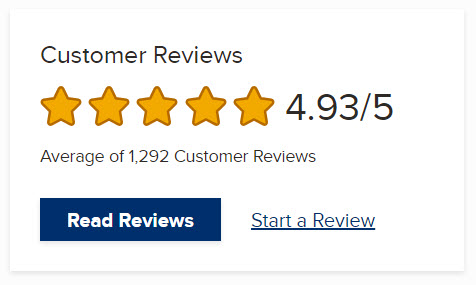
- BBB: A+ rating; customer reviews about ★ 4.87/5 (1,300+ reviews)
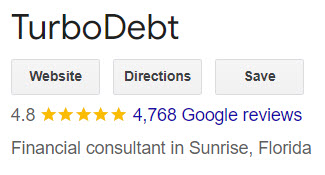
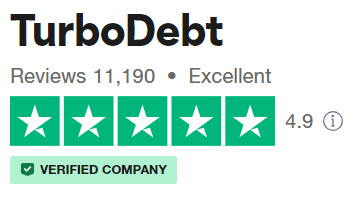
- Trustpilot: ★ 4.9/5 (14,000+ reviews)
What TurboDebt actually does (and the question you should ask)
TurboDebt describes itself as a service that connects clients to debt relief programs. In practice, that can mean your case may be handled by a partner program (example partners listed publicly include National Debt Relief and others). That isn’t automatically “bad,” but it changes what you should ask on your first call:
- Who will be the actual program provider negotiating with my creditors?
- What is the total cost (program fees + any dedicated account fees), and when do those costs get charged?
- Will I be asked to stop paying creditors during the program, and what happens if a creditor sues?
- How will you communicate settlement offers, and do I have to approve each settlement?
How debt settlement usually works (plain English)
- Free consultation: you share your debts, budget, and hardship.
- Program fit: if settlement is recommended, you’ll typically open a dedicated account to build funds for offers.
- Negotiations: once enough funds accumulate, settlements are negotiated one debt at a time.
- Fees: reputable providers generally cannot charge “advance fees” before results (make sure you understand fee timing).
- Finish line: the goal is to resolve each enrolled debt and close the program.
If you’re new to this, two excellent government resources to read first are the FTC’s overview of getting out of debt and the CFPB’s explanation of debt relief programs. Also be aware that canceled debt can sometimes trigger tax forms (like a 1099-C), depending on your situation.
TurboDebt Pros 👍
- Massive review footprint: TurboDebt has a very large volume of consumer reviews across major platforms, which is useful for due diligence.
- Clear “shopping” entry point: If you’re not sure which option fits (settlement vs counseling vs consolidation), TurboDebt can be a starting conversation.
- Availability in most states: While not nationwide, it is available in many U.S. states (confirm via their service area page).
TurboDebt Cons 👎
- Potential “middle layer”: Because TurboDebt can act as a connector, you must confirm who the actual program provider is and what their policies are.
- Costs can be significant: Debt settlement fees are often a percentage of enrolled debt, and you may also pay account fees depending on the setup.
- Credit impact risk: Many settlement programs involve missed payments, which can hurt credit and increase collection pressure before resolution.
New Era is a direct provider (not a loan) with a long operating history. A quick eligibility check is usually the fastest way to see if settlement is realistic for your budget.
See if you qualify with New Era
What types of debt can these programs usually help with?
Most debt settlement programs focus on unsecured debts, for example:
- Credit card balances
- Personal loans
- Medical bills
- Collections
- Some private unsecured lines of credit
They typically do not “settle” secured debts in the usual way (like mortgages or auto loans) because those are tied to collateral. Student loans and tax debts have their own rules and may require different specialists.
Who TurboDebt might be best for (and who should look elsewhere)
- Better fit: You want to explore options, you have meaningful unsecured debt, and you can commit to a structured payoff plan.
- Probably not a fit: Your debt is mostly secured (mortgage/auto), you’re current on everything and just want a lower interest rate, or you need legal protection quickly (in that case, speaking with a bankruptcy attorney may be smarter).
Other reputable options to compare
Even if you like what you hear from TurboDebt, it’s smart to compare at least 1–2 other providers. Two alternatives you can review on our site:
If you want a broader list, here is our rankings page: Best debt settlement companies ranked by ratings & reviews.
Bottom line (Our conclusion for 2026)
TurboDebt appears legitimate and has strong public ratings. The main “watch-out” is clarity: confirm who will actually manage your program, get the total fee schedule in writing, and make sure you’re comfortable with the timeline and credit impact. If you want a direct provider with a long history, New Era is the option we’d check first.
A quick eligibility check with New Era can tell you whether a settlement plan is realistic for your situation, without committing to anything.
Frequently asked questions
Will debt settlement hurt my credit?
It can. Many settlement programs involve missed payments before debts are resolved, which can damage credit scores and increase collection activity. If protecting credit is your top priority, ask about alternatives like a nonprofit debt management plan (DMP) or consolidation.
Can creditors sue me while I’m in a program?
Yes, it’s possible. Not every creditor agrees to settle, and some may pursue collections or lawsuits depending on the balance, timeline, and creditor policies. Ask how your provider handles lawsuits and whether they offer any support or referrals.
How long does debt settlement usually take?
It depends on how much you owe and how much you can set aside each month. Many programs are marketed in multi-year timeframes. The realistic way to judge it is simple: how fast you can build funds for settlement offers.
Are there tax consequences if a debt is forgiven?
Sometimes. If a creditor forgives part of your debt, you may receive a tax form and the forgiven amount may be treated as income, depending on your situation. If you’re close to enrolling, consider checking with a tax pro so you’re not surprised later.
What fees should I expect?
Ask for a complete fee schedule in writing. The big variables are (1) the program fee (often a percentage of enrolled debt), (2) whether the fee is based on enrolled debt or settled debt, and (3) whether there are monthly dedicated-account fees.
What questions should I ask on the first call?
Ask who the actual program provider is, whether you’ll be advised to stop paying creditors, the total cost including any account fees, whether you approve each settlement, and what happens if a creditor refuses to negotiate.
Is a nonprofit debt management plan (DMP) safer?
A DMP can be a good option if your main issue is high interest rates and you can afford to repay the principal over time. It’s not debt settlement, but it may reduce interest and create one structured payment. It’s worth comparing before you commit to settlement.
What if I’m considering bankruptcy?
Bankruptcy can offer stronger legal protections and may be the right move in some situations. If you’re behind, facing lawsuits, or simply can’t make progress, it can be worth speaking with a bankruptcy attorney for an initial consult.


Amine is an entrepreneur, investor and financial writer that covers the US economy, inflation, alternative investments, cryptocurrencies and more. He has been involved in the space for over a decade.